| Author |
Message |
Heiner111
Schrauber

Joined: 01/10/2016
Posts: 91
Karma: +27 / -0 
Location: Darmstadt
Premium Support
|
 21-03-2023, 16:41 Subject: Saugrohrklappe beim 3.0 TDI Euro6? 21-03-2023, 16:41 Subject: Saugrohrklappe beim 3.0 TDI Euro6? |
Quote |
|
hello, now that I have to go to the TÜV, I have the following problem with the A5 3.0 TDI (Euro6 from 2016): the error memory indicates that the intake valve bank 1 is stuck. This is actually an old problem, and I also know roughly how it looks on the old 2.7/3.0 and where they are located. However, on the "new" Euro 6, I can't find anything of that kind on either bank. Is it perhaps sealed off, e.g. under the valve cover (which I can hardly imagine)? I would almost say that the valve doesn't exist here anymore, at least not on either bank. But I can't find a central valve for all 6 cylinders yet, like in the old 2.5 TDI...
Who knows this engine better and can provide more information?
Thank you in advance.
Translated on 03-07-2026, 15:19.
|
|
| Back to top |
Profile PM |
 |
dieselschrauber
Administrator

Joined: 04/12/2002
Posts: 18095
Karma: +799 / -0
Location: St.Gallen
2018 Volkswagen T6 
|
| 21-03-2023, 20:23 Subject: Saugrohrklappe beim 3.0 TDI Euro6? |
Quote |
|
Hello,
Please provide the error codes from the engine control unit.
Best regards, Rainer
Translated on 03-07-2026, 15:19.
|
|
| Back to top |
Profile PM WWW Garage |
|
Heiner111
Schrauber
Joined: 01/10/2016
Posts: 91
Karma: +27 / -0
Location: Darmstadt
Premium Support
dieselschrauber likes this. |
| 21-03-2023, 22:36 Subject: Saugrohrklappe beim 3.0 TDI Euro6? |
Quote |
|
gerne, hier der Log:
all 3 errors relate to the suction valve, which I can't find....
Address 01: Engine Electronics (J623-CKVC) Label file: None
Part Number SW: 8K5 997 401 B HW: 4G0 907 401 E
Part: 3.0TDI EDC17 H14 0003
Revision: 58H14--- CVN: F8D6D60A15D91B8D755A21130E1FC39E
Encoding: 22254012046603030000
Operating Number: WSC 10627 005 1048576
ASAM Dataset: EV_ECM30TDI0118K5997401B 001003
ROD: EV_ECM30TDI0118K5997401B.rod
VCID: 38788ABC839F5049BD-806C
VINID: 9D196AAAA21625678004004408CBB73687
3 error codes found:
5107 - Bank 1 Sonde 1
P0133 00 [237] - Signal too slow
Warning light ON - confirmed - checked since last discharge
Environmental Conditions:
Error Status: 00000001
Error Priority: 2
Frequency of Errors: 9
Odometer: 103805 km
Date: 2023.02.17
Time: 07:21:13
Motor Speed: 1020.00 /min
Normalized Load Value: 0.0 %
Vehicle Speed: 42 km/h
Coolant Temperature: 42 °C
Intake Air Temperature: 2 °C
Ambient air pressure: 1000 mbar
Voltage Terminal 30: 14.380 V
Fault Counter via OBD: 40
Airflow: Actual Value (mg/cycle): 167.2 mg/cycle
Average Injection Volume: 0.00 mg/stroke
Lambda Sensor 1 Bank 1: Status Check O2 Signal Bits 0-7: 1
Lambda Sensor 1 Bank 1: Raw O2 Signal Voltage: 835.6 mV
Lambda Sensor 1 Bank 1: Voltage of the Ri-Signal: filtered: 1013.4 mV
Lambda Sensor 1 Bank 1: Sensor Heater Ratio: 39.28 %
LSU r O2 Adap 0: 0.14668
9129 - Airflow Control Valve, Bank 1
P2006 00 [096] - closed
Sporadisch - unconfirmed - checked since last deletion
Environmental Conditions:
Error Status: 00000001
Error Priority: 2
Frequency of Errors: 9
Kilometerstand: 103405 km
Date: 2023.02.05
Time: 16:27:00
Motor Speed: 0.00 /min
Normalized Load Value: 0.0 %
Vehicle Speed: 0 km/h
Coolant Temperature: 77 °C
Intake Air Temperature: 3 °C
Ambient air pressure: 1000 mbar
Voltage Terminal 30: 12.140 V
Fault Counter via OBD: 40
Airflow: Actual Value (mg/cycle): 0.0 mg/cycle
Suction Pipe Valve for Airflow Control: Operation: 100.00 %
Intake Valve for Airflow Control: Feedback: 43.12 %
Airflow control valve: Offset closed: 0.00 %
Airflow Control Valve: Offset Open: 0.00 %
Saugrohr Valve Actuator for Airflow Control: Status Bits 0-7: 0
Saugrohr Valve Actuator for Airflow Control: Status Bits 0-7: 0
Saugrohr Valve Actuator for Airflow Control: Status Bits 0-7: 55
Saugrohr Valve Actuator for Airflow Control: Status Bits 0-7: 4
9130 - Suction tube valve for airflow control Bank 1
P2004 00 [096] - open
Sporadisch - unconfirmed - checked since last deletion
Environmental Conditions:
Error Status: 00000001
Error Priority: 2
Frequency of Errors: 5
Odometer: 103478 km
Date: 2023.02.07
Time: 18:20:04
Motor Speed: 0.00 /min
Normalized Load Value: 0.0 %
Vehicle Speed: 0 km/h
Coolant Temperature: 77 °C
Intake Air Temperature: 3 °C
Ambient air pressure: 1000 mbar
Voltage Terminal 30: 12.120 V
Fault Counter via OBD: 37
Airflow: Actual Value (mg/cycle): 0.0 mg/cycle
Suction Pipe Valve for Airflow Control: Operation: 100.00 %
Intake Valve for Airflow Control: Feedback: 107.97 %
Airflow control valve: Offset closed: 0.00 %
Airflow Control Valve: Offset Open: 0.00 %
Saugrohr Valve Actuator for Airflow Control: Status Bits 0-7: 0
Saugrohr Valve Actuator for Airflow Control: Status Bits 0-7: 0
Saugrohr Valve Actuator for Airflow Control: Status Bits 0-7: 55
Saugrohr Valve Actuator for Airflow Control: Status Bits 0-7: 4
Readiness: 1 1 0 0 0
Translated on 03-07-2026, 15:19.
|
|
| Back to top |
Profile PM |
|
dieselschrauber
Administrator
Joined: 04/12/2002
Posts: 18095
Karma: +799 / -0
Location: St.Gallen
2018 Volkswagen T6
|
| 22-03-2023, 20:31 Subject: Saugrohrklappe beim 3.0 TDI Euro6? |
Quote |
|
Hello,
The two intake valve flaps for air flow control appear to be located after the throttle valve and are electrically actuated.
So, there should be one on each intake manifold, with a control motor on the outside, at each intake manifold.
Why don't you search the web for the VAG part number "059129711" (as an example), then you'll find a lot of pictures of it.
Could you please try to take a picture of the engine with the engine cover removed?
Best regards, Rainer
Translated on 03-07-2026, 15:19.
|
|
| Back to top |
Profile PM WWW Garage |
|
Heiner111
Schrauber
Joined: 01/10/2016
Posts: 91
Karma: +27 / -0
Location: Darmstadt
Premium Support
|
| 23-03-2023, 20:15 Subject: Saugrohrklappe beim 3.0 TDI Euro6? |
Quote |
|
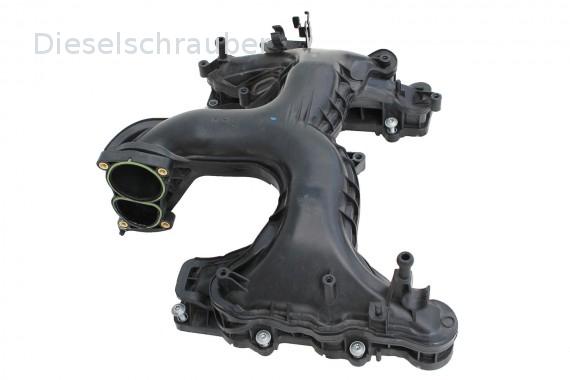
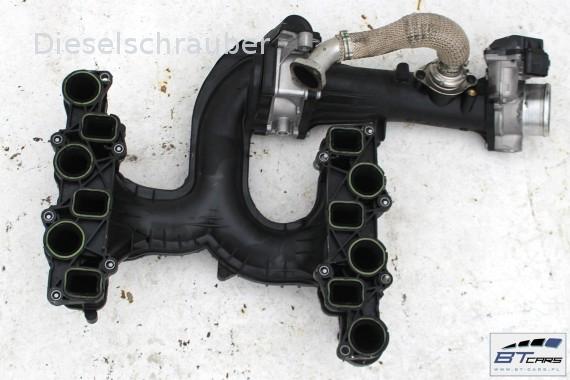
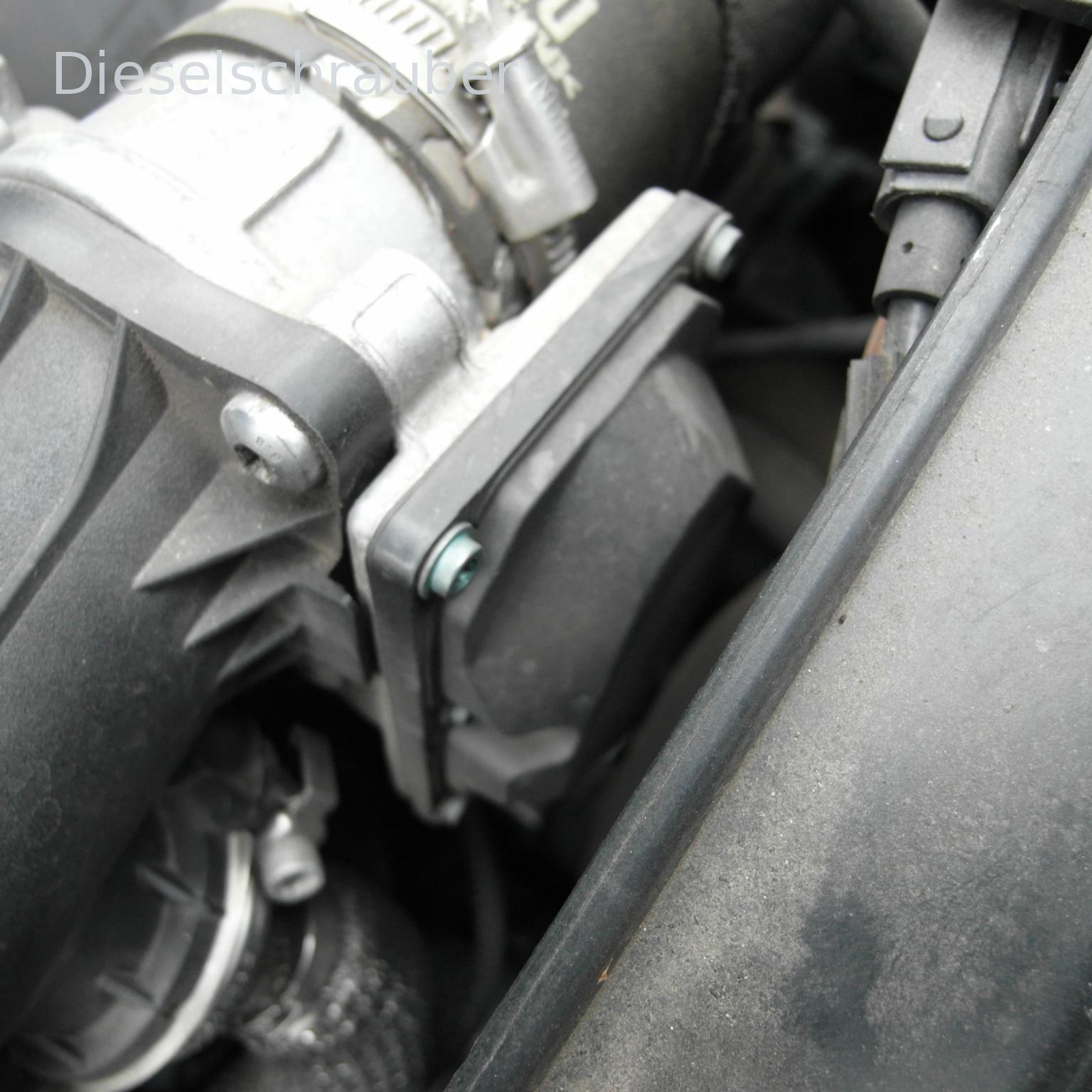
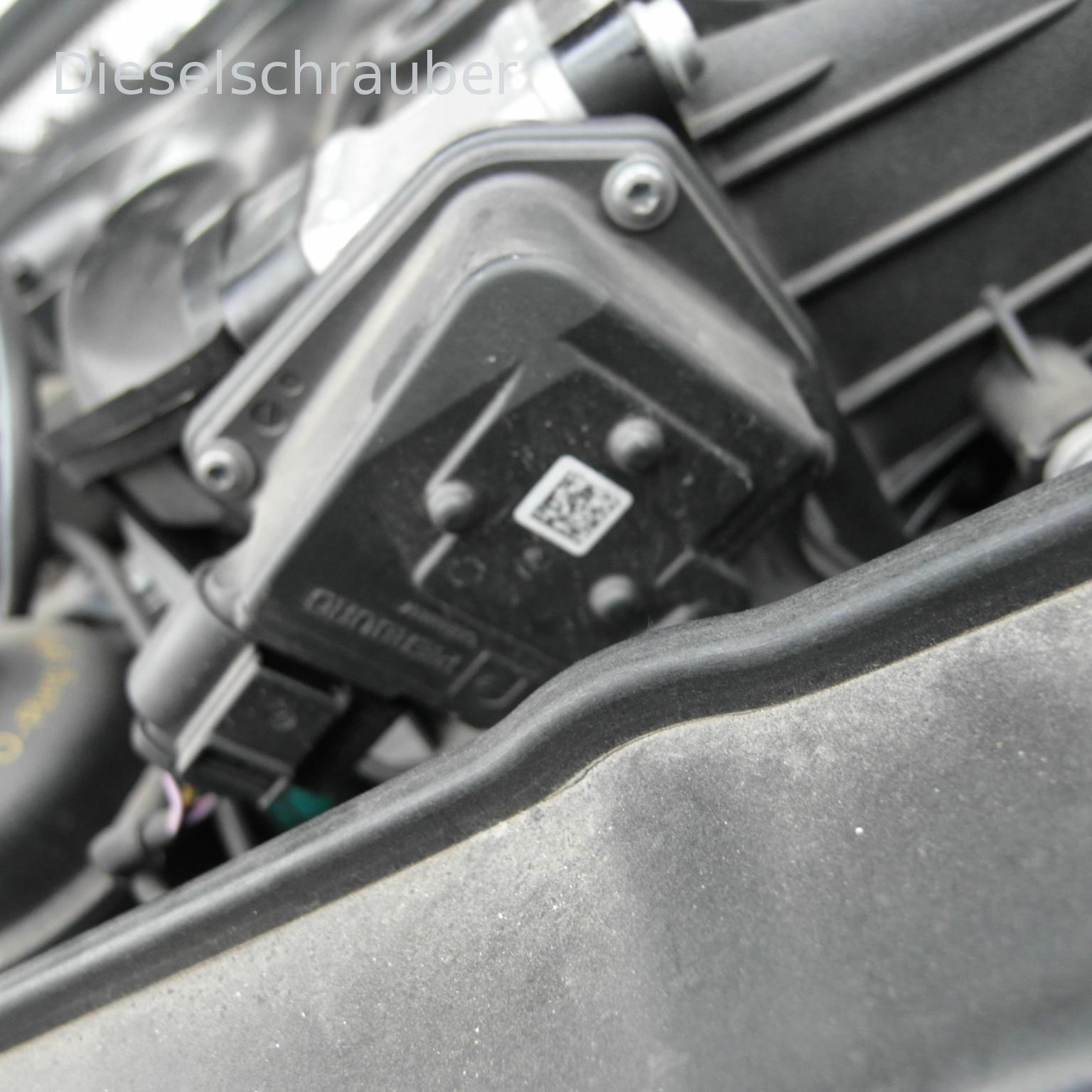
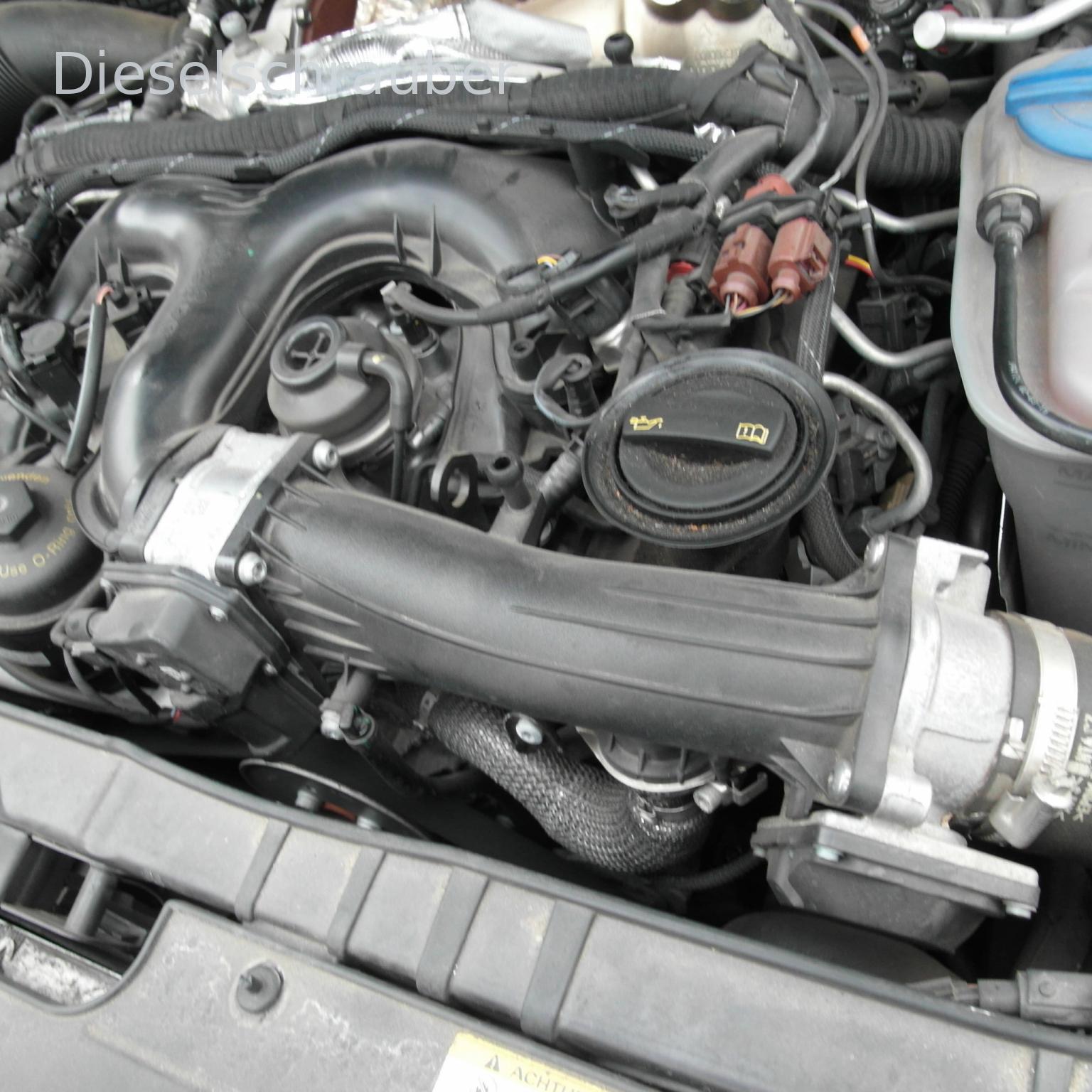
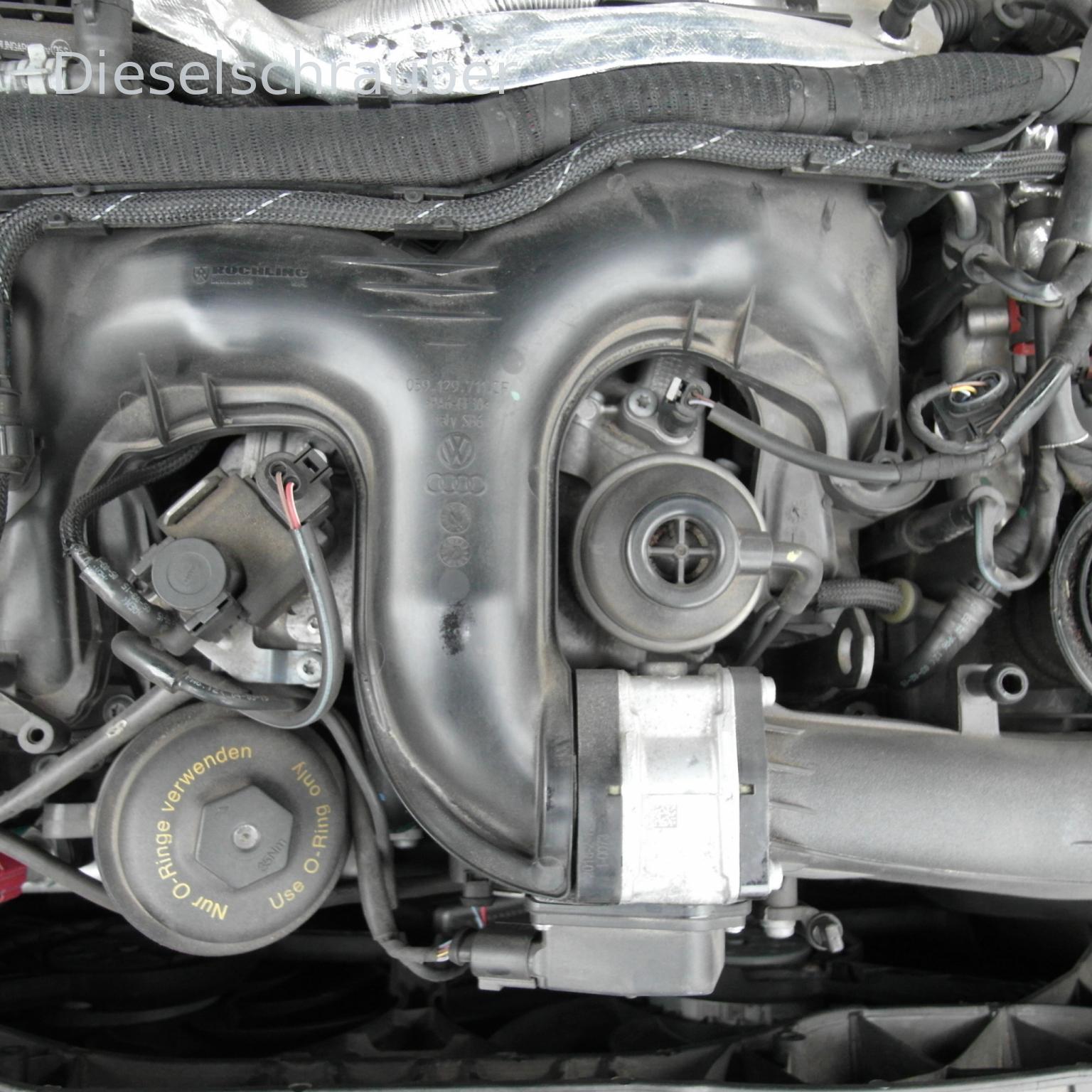
"Thank you, but I'm familiar with the older version, even if only vaguely. I would have easily found the valves there. However, it looks completely different for me. I just took a few pictures. Actually, there are 2 control valves in a row at the very front of the air duct, so centrally for all cylinders. I hadn't noticed them a few days ago because they were so far from the cylinder head." I have also added 2 images of the expanded part from the internet.
One of the two is likely the valve of the pharynx. But which one - and what does the other do?
The notification regarding "Bank1" also caused me some concern. Most likely, after the construction change, they simply deleted the control for the former Bank 2 flap, and the new central flap now also displays the error code for the former Bank 1, and is also incorrectly named "Bank1" in VCDS.
So: Does anyone know which of the two flaps it is? Unfortunately, I can't see any part numbers there either, which I could use to search. And I can't get into a parts catalog anymore, since 7zap is no longer accessible. There, the naming would probably be helpful.
| Description: |
| Saugrohrklappe beim 3.0 TDI Euro6? |
|
| File size: |
25.99 KB |
| Viewed: |
644 times |
|
| Description: |
| Saugrohrklappe beim 3.0 TDI Euro6? |
|
| File size: |
53.59 KB |
| Viewed: |
1006 times |
|
| Description: |
| Saugrohrklappe beim 3.0 TDI Euro6? |
|
| File size: |
945.38 KB |
| Viewed: |
1052 times |
|
| Description: |
| Saugrohrklappe beim 3.0 TDI Euro6? |
|
| File size: |
882.64 KB |
| Viewed: |
506 times |
|
| Description: |
| Saugrohrklappe beim 3.0 TDI Euro6? |
|
| File size: |
1 MB |
| Viewed: |
1104 times |
|
| Description: |
| Saugrohrklappe beim 3.0 TDI Euro6? |
|
| File size: |
1.08 MB |
| Viewed: |
1260 times |
|
Translated on 03-07-2026, 15:19.
|
|
| Back to top |
Profile PM |
|
dieselschrauber
Administrator
Joined: 04/12/2002
Posts: 18095
Karma: +799 / -0
Location: St.Gallen
2018 Volkswagen T6
|
| 23-03-2023, 22:21 Subject: Saugrohrklappe beim 3.0 TDI Euro6? |
Quote |
|
Hello,
If you disconnect the two potentially relevant connectors and turn on the ignition, you should be able to identify which one corresponds to which in the error memory.
Best regards, Rainer
Translated on 03-07-2026, 15:19.
|
|
| Back to top |
Profile PM WWW Garage |
|
Ich_Can_nix
Profi-Schrauber

Joined: 12/06/2020
Posts: 203
Karma: +250 / -0
Premium Support
dieselschrauber likes this. |
| 23-03-2023, 23:09 Subject: Saugrohrklappe beim 3.0 TDI Euro6? |
Quote |
|
Good evening, Heiner111,
To the right of the oil filter is the intake valve, and the other valve is the throttle valve.
Solution: verschandeln the flap, then check the position sensor/suction nozzle flap for plausibility/function.
Best regards
Michael
Translated on 03-07-2026, 15:19.
|
|
| Back to top |
Profile PM |
|
Heiner111
Schrauber
Joined: 01/10/2016
Posts: 91
Karma: +27 / -0
Location: Darmstadt
Premium Support
dieselschrauber likes this. |
| 23-03-2023, 23:23 Subject: Saugrohrklappe beim 3.0 TDI Euro6? |
Quote |
|
Thank you already for the tips. This will help me further. Just now, I thought of something: can the switches in the menu be controlled?
I will contact you.
Translated on 03-07-2026, 15:19.
|
|
| Back to top |
Profile PM |
|
dieselschrauber
Administrator
Joined: 04/12/2002
Posts: 18095
Karma: +799 / -0
Location: St.Gallen
2018 Volkswagen T6
|
| 24-03-2023, 13:19 Subject: Saugrohrklappe beim 3.0 TDI Euro6? |
Quote |
|
Heiner111 wrote: | Thanks for the tips. This will help me further. Just now, I thought of something: can the switches in the menu be controlled?
I will get back to you |
Likely, the test function in the engine control unit (ECU) using VCDS is what's being referred to.
Translated on 03-07-2026, 15:19.
|
|
| Back to top |
Profile PM WWW Garage |
|
Heiner111
Schrauber
Joined: 01/10/2016
Posts: 91
Karma: +27 / -0
Location: Darmstadt
Premium Support
dieselschrauber likes this. |
| 29-03-2023, 20:10 Subject: Saugrohrklappe beim 3.0 TDI Euro6? |
Quote |
|
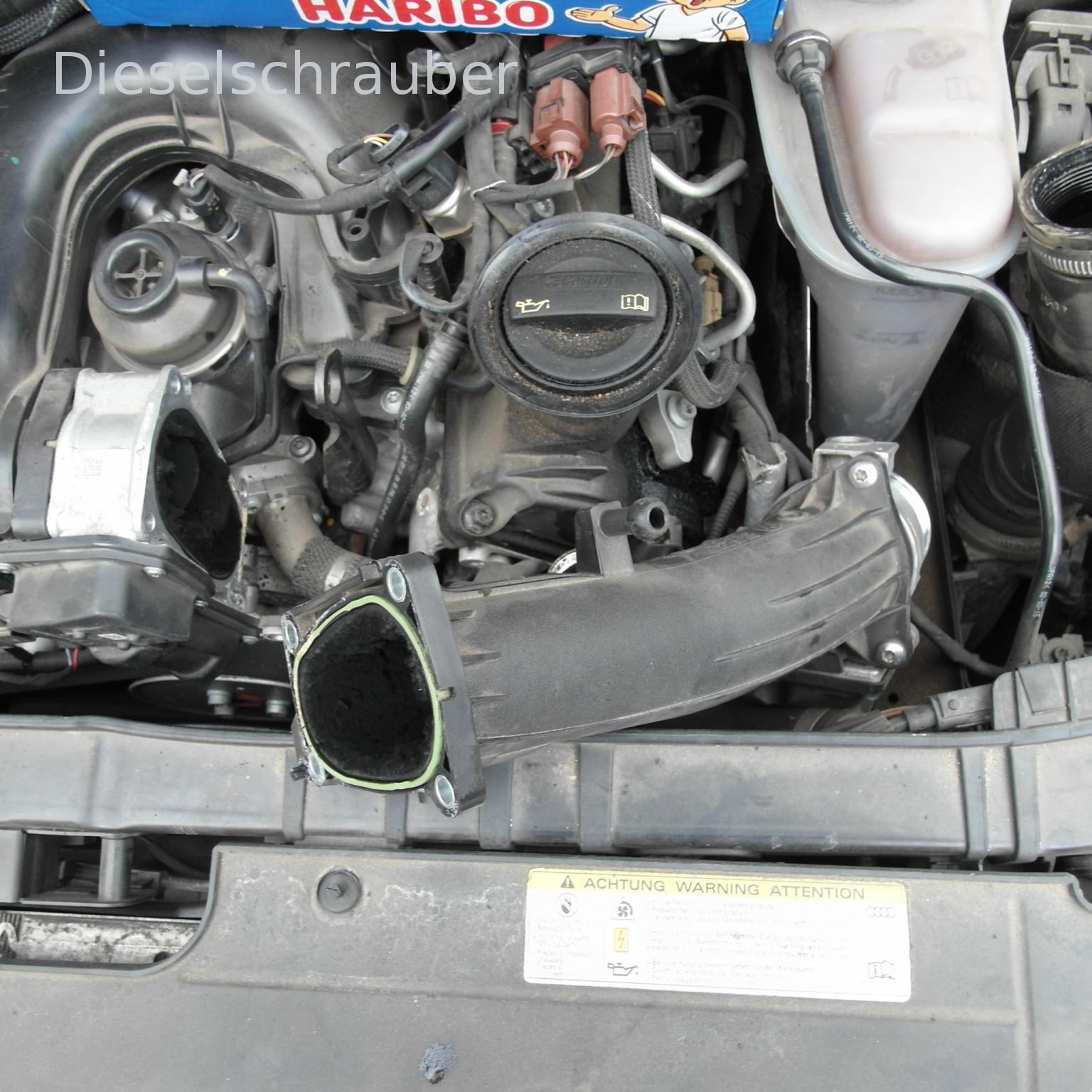
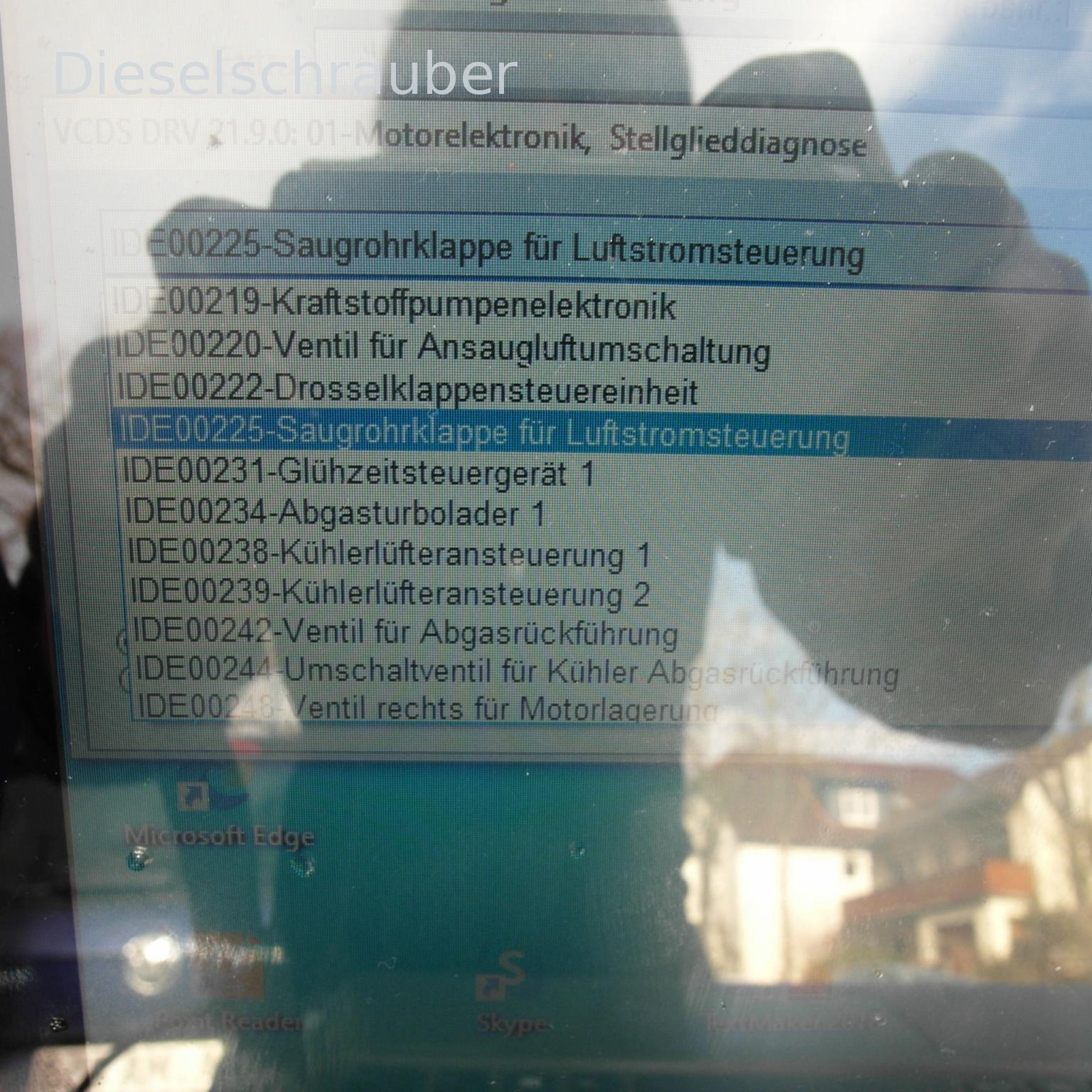
hello again, problem found and (so far) solved! However, first, let's talk about troubleshooting. As the good tips above indicate, the intake valve is located in the middle of the engine, and the other one (when viewed from the front) is the throttle valve. What's unclear to me is why this (unlike other TDI engines) needs 2 similar valves in series. In between is only the introduction of the EGR (which I'll explain later). Since the A5 diagnostic process for the control unit is also selective (unlike the software in the B6/B7), it can be conveniently controlled, and you can then hear (of course, the engine must be turned off).
To access the intake valve, you must remove the entire intake pipe: 3 screws M6 T30 below the brackets/measuring pipe; one of them is barely visible and points upwards. And then the 4 long (5mm Allen key, M6), which go through the housing of the intake valve into the distributor. By the way: I always get a little nervous when I write about this intake pipe, especially since it's related to a turbocharged engine. These pipes don't actually suck in air (unlike the "turbo-free" intake diesel/petrol engine). Remove the two clips for the AGR and the fuel hose, as well as pull out the connectors of both valves.
Finally, loosen the screw under the cover to release the holder and "voilà", it's all done  . I have a size 10 glove, and I can't find my little wrench, so I'm a bit frustrated - but it still works somehow.
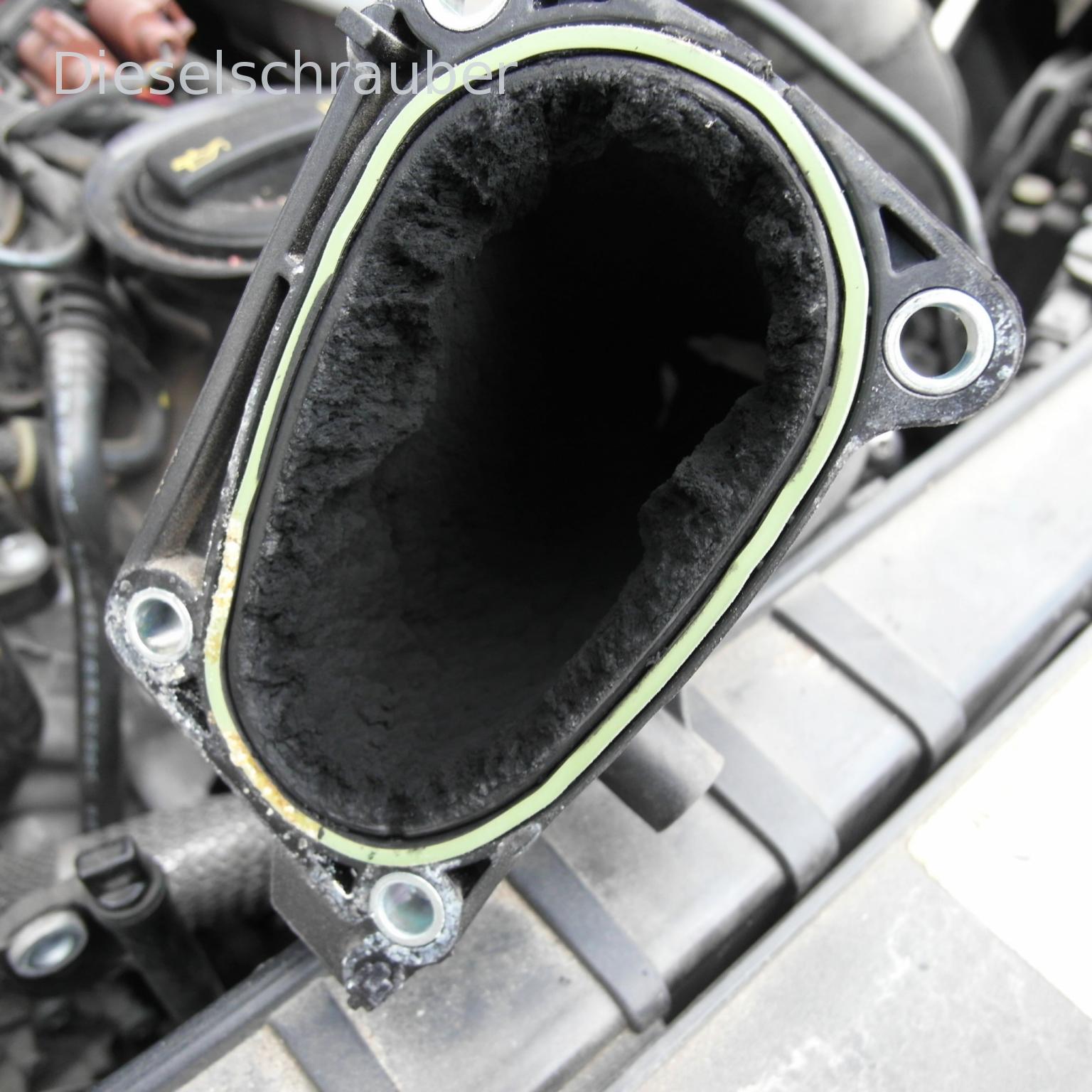
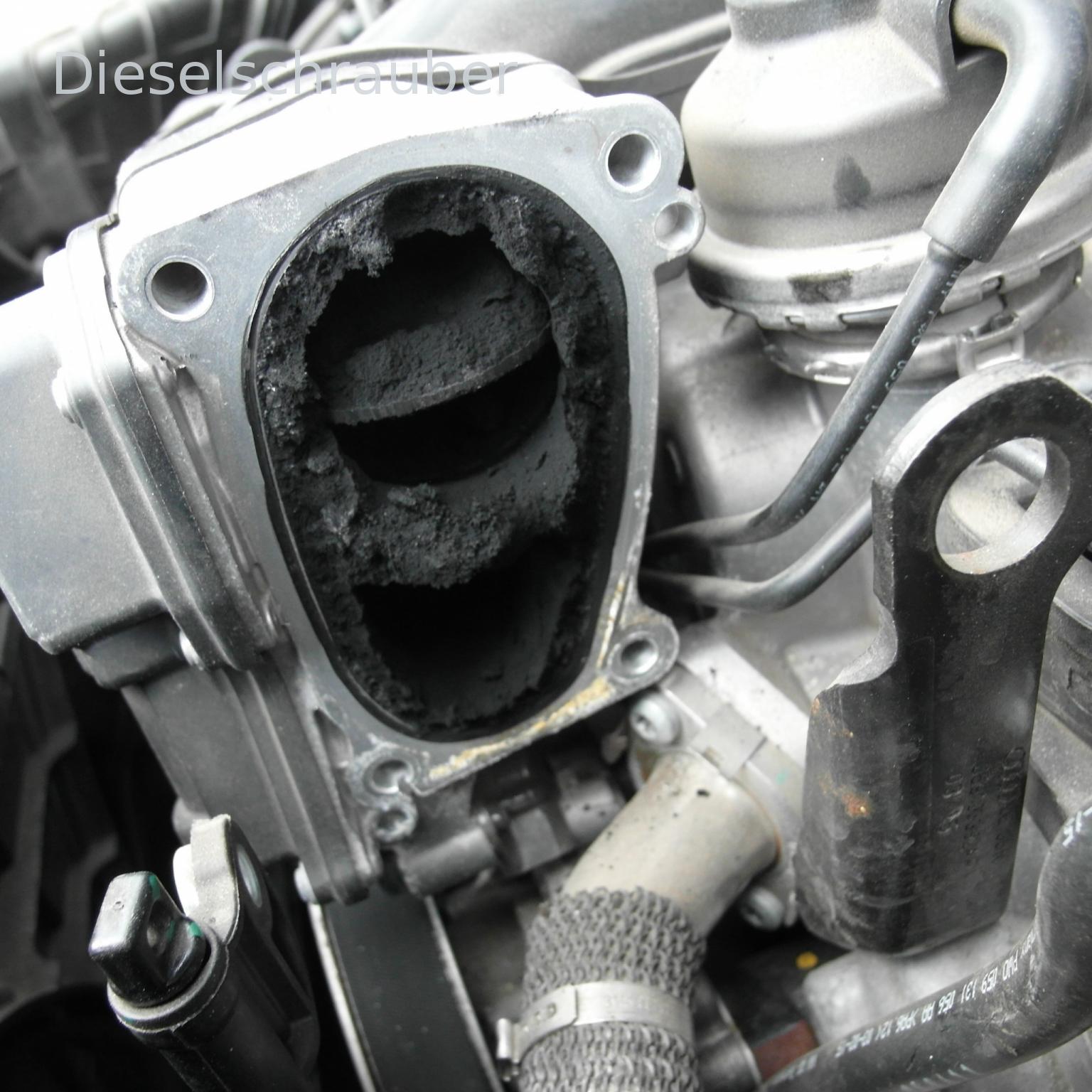
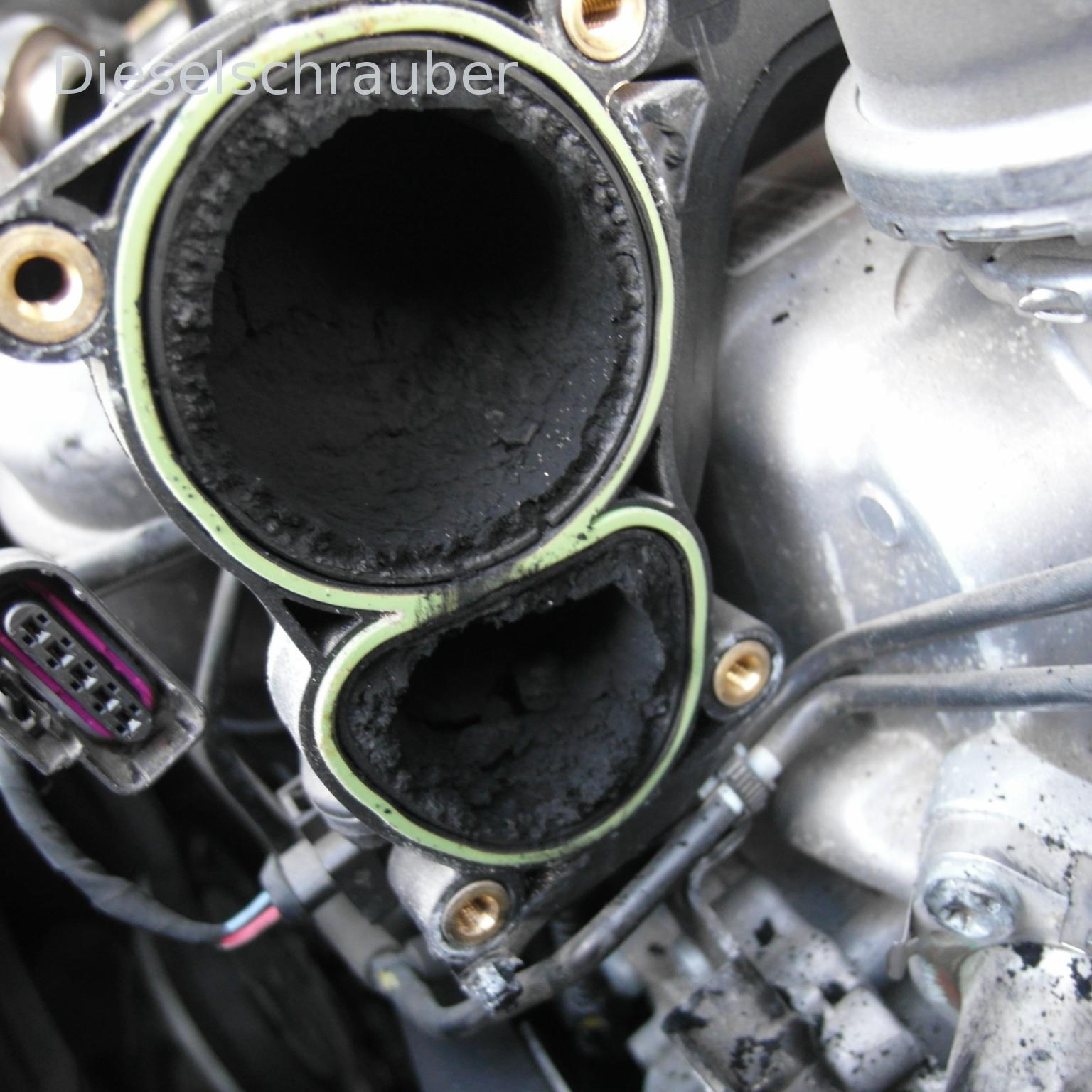
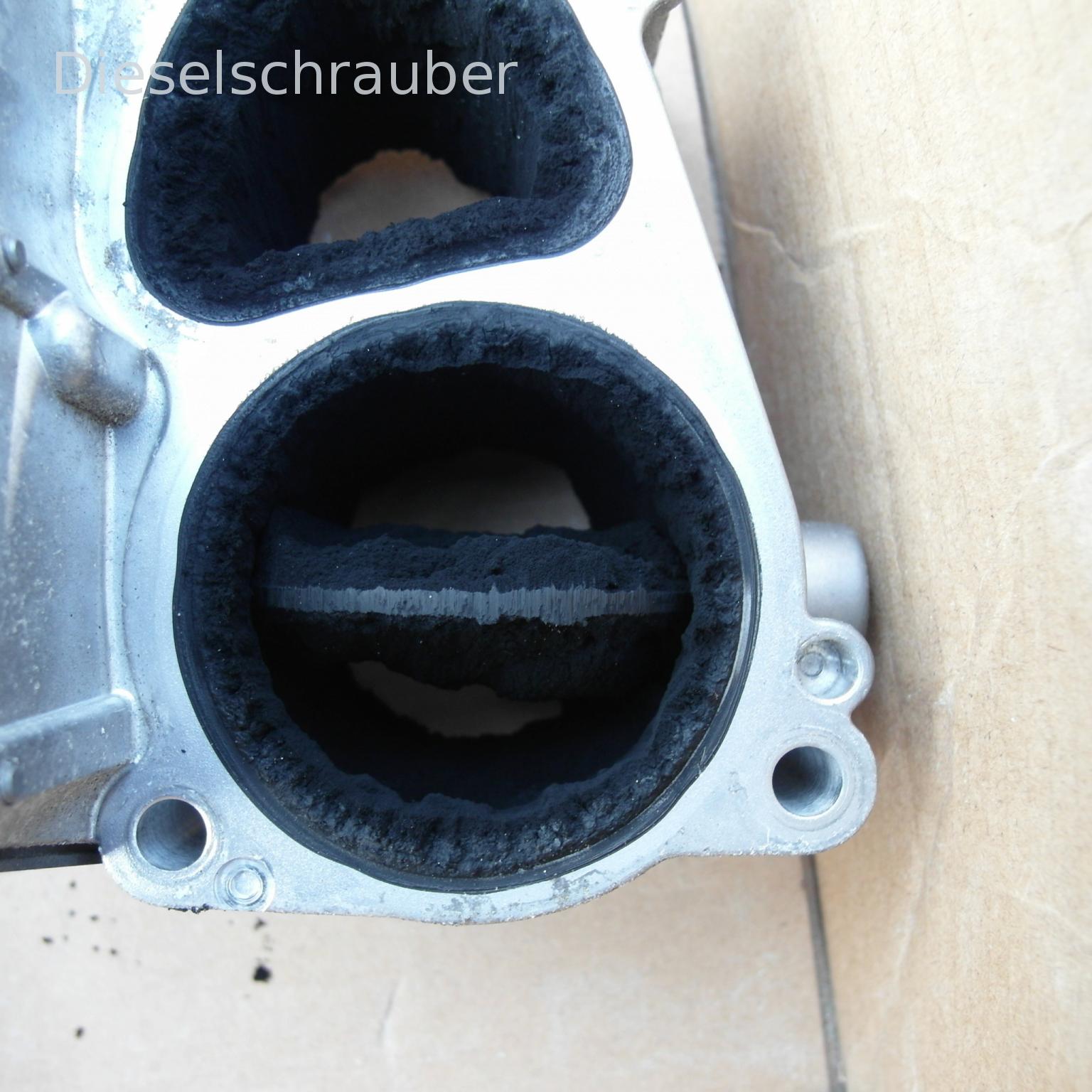
At first glance, everything was clear (see pictures): thick layers of soot in the pipe, valve, and distributor, up to almost 10 mm thick, and oily and greasy. It's a miracle that the valve was even able to function. And it had only 105,000 km on the odometer. I haven't seen this much soot in the AGR valve of my old 2.0 TDI before (those are notorious for it).
Further forensic investigations then showed that the AGR pipe is almost completely free. And this raises the suspicion that the problem is, once again, due to Audi's own design (as with so many others). Of course, some oil vapor always comes through the intake pipe, which was already the case with all TDI engines and should be known to Audi. Especially if you also suck the KG ventilation system with it. And I dare to say that, in this particular example, there is even less oil coming with the air compared to my two older cars and my previous Golf 3. This inevitably leads to oil and soot sticking directly after the intake of the AGR. I can imagine what it looks like inside the distributor itself. I strongly doubt that the airflow/distribution/turbulence is still functioning as it did on the test bench... I'm already relieved that the engine is still running. And I believe cleaning the distributor is almost impossible (possibly with ultrasound and sharp tools, etc.). Removing it would also be a major hassle. Or, this one produces significantly more soot instead of oil, likely due to frequent short trips. However, it should be able to. I could also imagine that the problem worsened after he received the Euro6 recall software update 2 years ago. Although it ran somewhat unevenly afterward, it wasn't really that bad before.
Okay, so far as possible cleaned and everything reassembled: The error is gone. Unfortunately, I now have error code P0133 (Lambda sensor value too slow). Perhaps something has become stuck. Hoping it will burn away
I would appreciate it if someone could share some more ideas for explaining the strong soot crust.
| Description: |
| Saugrohrklappe beim 3.0 TDI Euro6? |
|
| File size: |
869.68 KB |
| Viewed: |
1755 times |
|
| Description: |
| Saugrohrklappe beim 3.0 TDI Euro6? |
|
| File size: |
1.09 MB |
| Viewed: |
1243 times |
|
| Description: |
| Saugrohrklappe beim 3.0 TDI Euro6? |
|
| File size: |
967.57 KB |
| Viewed: |
1253 times |
|
| Description: |
| Saugrohrklappe beim 3.0 TDI Euro6? |
|
| File size: |
1.23 MB |
| Viewed: |
412 times |
|
| Description: |
| Saugrohrklappe beim 3.0 TDI Euro6? |
|
| File size: |
931.99 KB |
| Viewed: |
553 times |
|
| Description: |
| Saugrohrklappe beim 3.0 TDI Euro6? |
|
| File size: |
925.81 KB |
| Viewed: |
672 times |
|
Translated on 03-07-2026, 15:19.
|
|
| Back to top |
Profile PM |
|
|


 Bookmarks
 Links
Links Garage
 FAQ, Legal Notice & Privacy
 RSS Feed
 Register
 Login
Login

