| Author |
Message |
tim27
Guest
Free account, no CAN development support
|
 01-06-2002, 21:47 Subject: Air Mass Meter & Intake Air Temp Readings 01-06-2002, 21:47 Subject: Air Mass Meter & Intake Air Temp Readings |
Quote |
|
Hello everyone,
When performing the intercooler temperature measurement, I previously measured the opening with the original cross-sectional area (at the air intake in the front bumper). Afterwards, I measured the openings that were modified. The holes in the wheel arch still need to be significantly larger so that the incoming air can actually escape.
Regarding the sports filter: The almost identical values obtained at (~1190 RPM).
Paper and fabric filters might appear similar because the volume of air passing through them is still relatively small, resulting in only slight differences in 'resistance' between the filters. The measurement speeds would need to be significantly higher, around 4000 RPM.
Translated on 03-08-2026, 14:02.
|
|
| Back to top |
|
 |
Nicolaus--130PD
Guest
Free account, no CAN development support
|
| 01-06-2002, 23:28 Subject: Air Mass Meter & Intake Air Temp Readings |
Quote |
|
'Reaching engine speeds of around 4000 rpm doesn't really achieve much, because the turbo is being restricted at that point to prevent it from generating too much boost... therefore, it doesn't matter how much air the filter allows through, because the turbo always has enough air to build up the desired boost pressure.'
Translated on 03-08-2026, 14:04.
|
|
| Back to top |
|
|
PAUL
Guest
Free account, no CAN development support
|
| 02-06-2002, 0:39 Subject: Air Mass Meter & Intake Air Temp Readings |
Quote |
|
[quote='Nicolaus--130PD']Bringing the revs up to around 4000 rpm doesn't really achieve much, because the turbo is actually being restricted at that point to prevent it from generating too much boost... therefore, it doesn't matter how much air the filter allows through, because the turbo will always have enough air to build the desired boost pressure.[/quote]
'The boost pressure and fuel injection volume are only reduced at 4250 (for the PD130PS engine). Especially in tuned engines, it's crucial that the appropriate amount of air is available for the increased fuel injection in the high-performance range. Otherwise, a portion of the mixture will exit as unburned hydrocarbons through the exhaust. A K&N filter with proper airflow can help, but not to the unrealistic levels advertised in brochures.'
Translated on 03-08-2026, 14:05.
|
|
| Back to top |
|
|
dieselschrauber
Administrator

Joined: 04/12/2002
Posts: 18107
Karma: +799 / -0 
Location: St.Gallen
2018 Volkswagen T6 
|
| 02-06-2002, 10:14 Subject: Air Mass Meter & Charge Air Temp Readings |
Quote |
|
Hello Tim,
tim27 wrote: | Hello everyone,
When performing the intercooler temperature measurement, I would have previously measured the opening with the original cross-sectional area (at the air intake in the front bumper). Then, I measured the openings that were modified. The holes in the wheel arch still need to be significantly larger so that the incoming air can actually escape. |
It's difficult to repair the scratches across the front bumper; I would have needed a new one. It's quite challenging to restore the original shape where parts have been cut or removed.
If you compare the "Series" version to the "Non-Series" version of the images, you will notice that the differences are minimal.
The holes on the back are distributed across approximately 50% of the intercooler surface area. You shouldn't add any more further out, as this could potentially allow foreign objects from the tire to be thrown into the intercooler from behind.
So, if you're driving on a dirt road, otherwise the mud will stick to your rear license plate. That's why I only drill holes in places where dirt and pebbles can't get in, right near the engine side.
Furthermore, if holes covering more than 50% of the back of the intercooler cause a temperature change of approximately 0°C in the intake air temperature, then this will not be different when the coverage is 100%.
Quote: | Sport filters: The almost identical measured values at (~1190 RPM).
Paper and fabric filters might be similar because the air mass passing through the filter is still relatively small, so that the "resistance" of the filters differs only slightly. The measurement speeds would have to be significantly higher, around 4000 RPM | .
I am aware of the problem of smaller differences at low RPMs, but for comparison, the measurement conditions should be as identical as possible in all measurements. It is much more difficult to achieve this during full-load measurements. Furthermore, in those situations, the turbocharger compensates for different flow resistances of the air filter; it always regulates the same boost pressure.
The amount of energy required by the turbocharger to draw air through the filter element varies, but this energy is not easily measurable.
Best regards, Rainer.
Translated on 03-08-2026, 14:09.
|
|
| Back to top |
Profile PM WWW Garage |
|
tim27
Guest
Free account, no CAN development support
|
| 02-06-2002, 11:07 Subject: Filters: Buy Online | Best Prices & Deals |
Quote |
|
Hi, I think you're right about the turbo. You would need to measure the vacuum pressure just after the filter, between the two filters, because that's where you could determine the resistance values of both air filters.
I think that might be more informative than the values from the mass airflow sensor.
Air handling.
I increased the airflow around my car by over 100% (by cutting an opening in the front bumper next to the headlights), and I've achieved noticeable and measurable improvements in terms of oil temperature, which was previously increasing too quickly.
Translated on 03-08-2026, 14:12.
|
|
| Back to top |
|
|
dieselschrauber
Administrator
Joined: 04/12/2002
Posts: 18107
Karma: +799 / -0
Location: St.Gallen
2018 Volkswagen T6
|
| 02-06-2002, 11:17 Subject: Air Mass Meter & Intake Air Temp Readings |
Quote |
|
Hi,
Did you cut slits into the front bumper, to the right of the license plate holders?
I need to check if this would work for me. As I said, I'm skeptical about the temperature-reducing effect.
Best regards, Rainer.
Translated on 03-08-2026, 14:14.
|
|
| Back to top |
Profile PM WWW Garage |
|
tim27
Guest
Free account, no CAN development support
|
| 03-06-2002, 22:30 Subject: LLK: What is LLK? Definition & Explanation |
Quote |
|
Hi, no, not behind the intercooler, but directly under the stock air intake system, still in front of the intercooler, so that more air can flow in. If I can cover the opening with a fine mesh, it will also look good. It's also important that the air can escape; for this, I have made slots directly at the wheel arch (in front of the tire), but in such a way that nothing from the tire can get into the intercooler.
On my old Audi TDI, I even cut a hole about 15x15 cm in size near the wheel and covered it with a perforated metal sheet.
I hope you understood what I meant.
Sure, here's the translation:
'By the way, what are your AU values according to your list?'
Translated on 03-08-2026, 14:15.
|
|
| Back to top |
|
|
dieselschrauber
Administrator
Joined: 04/12/2002
Posts: 18107
Karma: +799 / -0
Location: St.Gallen
2018 Volkswagen T6
|
| 03-06-2002, 23:01 Subject: LLK: Your Guide to [Topic] |
Quote |
|
tim27 wrote: | Hi, no, not behind the intercooler, but directly under the series air intake (inlet), still in front of the intercooler, so that more air can flow in. If I can close the opening with a fine mesh, it will also look good. It's also important that the air can escape; for this, I made slots directly at the wheel arch (in front of the tire), but in such a way that nothing from the tire can get into the intercooler.
"On my old Audi TDI, I even cut a hole about 15x15 cm in size near the wheel and covered it with a perforated metal sheet."
I hope you understood what I meant.
One more thing: what are your AU values according to your list? |
Hi, I don't quite understand what you mean, and it seems like there's not much more to explain.
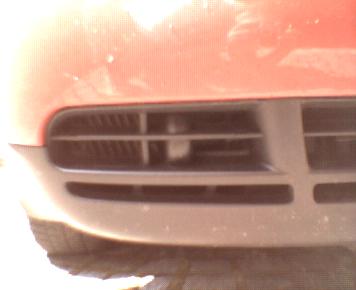
I already made the bottom row of slots about 3-4mm higher in the narrowest areas. If you cut everything out, does it look a little  odd?
What do you mean by "AU values"? An exhaust emissions test has very little to do with the cooling system of the engine. In any case, I passed my last emissions test with quite good margins  .
The k-value was definitely well below 1.
Greetings, Rainer[/img].
Translated on 03-08-2026, 14:18.
|
|
| Back to top |
Profile PM WWW Garage |
|
dieselschrauber
Administrator
Joined: 04/12/2002
Posts: 18107
Karma: +799 / -0
Location: St.Gallen
2018 Volkswagen T6
|
| 04-06-2002, 16:39 Subject: Air Mass Meter & Intake Air Temp Readings |
Quote |
|
PAUL wrote: | | An integrated air conditioning system with appropriate ventilation can definitely make a difference, although not to the fantastic values advertised in brochures. |
Hi @ all 
Yesterday, I repeated Ulf's permeability tests using the three different filter inserts.
As expected, the initial measurements confirmed the results. The use of a fabric air filter definitely does not increase airflow. For those who are skeptical, I have included all the measurement data in a zipped file at the end of the article.
Best regards, Rainer.
Translated on 03-08-2026, 14:20.
|
|
| Back to top |
Profile PM WWW Garage |
|
tim27
Guest
Free account, no CAN development support
|
| 04-06-2002, 19:45 Subject: Air Mass Meter & Intake Air Temp Readings |
Quote |
|
Hi,
Okay, with your A3 models, the openings are pulled quite far outwards, making it difficult to do anything else. With my 35i, it's a bit different.
Regarding tissue filters:
I thought we agreed that fabric filters don't allow 'more' air through than paper filters. However, what speaks in favor of fabric filters is their lower airflow resistance, which results in less suction power being lost when drawing air in.
Translated on 03-08-2026, 14:22.
|
|
| Back to top |
|
|
dieselschrauber
Administrator
Joined: 04/12/2002
Posts: 18107
Karma: +799 / -0
Location: St.Gallen
2018 Volkswagen T6
|
| 04-06-2002, 21:58 Subject: Air Mass Meter & Intake Air Temp Readings |
Quote |
|
Hi,
Okay, the point is that differences only become visible under load at high engine speeds. However, they don't appear, not even in terms of vehicle performance. The acceleration times measured by Ulf remain relatively constant at around 5.7 seconds, which raises the question of whether the variation in drive power is negligible for the turbocharger.
Best regards, Rainer.
Translated on 03-08-2026, 14:23.
|
|
| Back to top |
Profile PM WWW Garage |
|
SST
Guest
Free account, no CAN development support
|
| 05-06-2002, 8:59 Subject: Air Mass Meter & Intake Air Temp Readings |
Quote |
|
I once heard about a copper-based liquid coolant that is supposed to...
Dissipate heat more quickly.
Translated on 03-08-2026, 14:24.
|
|
| Back to top |
|
|
tim27
Guest
Free account, no CAN development support
|
| 05-06-2002, 19:09 Subject: 81kW Engine: Specs & Performance Details |
Quote |
|
Hello,
Perhaps the same airflow values (with different filters) could lead someone to believe you have the 81 kW TDI engine, because it is primarily better optimized with its VTG turbocharger compared to the 66 kW 1Z engine. The VTG turbocharger also has less flow loss. These losses in the turbocharger might not be further reduced by a filter on the 81 kW TDI (much more), whereas different filters could potentially reduce the cross-sectional losses more significantly on the 1Z engine.
I once saw two performance graphs for a 1981 TDI, one with the standard air filter and the other with a K&N filter.
With the K&N filter, it was clearly visible that the performance didn't decrease significantly compared to the stock filter; instead, it became slightly flatter, resulting in more power being available at higher RPMs.
While the measurements also showed an increase of 3-4 horsepower (approximately 8 Nm), this can be considered negligible.
Translated on 03-08-2026, 14:25.
|
|
| Back to top |
|
|
ulf
Profi-Schrauber

Joined: 04/13/2002
Posts: 11058
Karma: +18 / -0
Location: Saarland
2023 MG ZS
Premium Support
|
| 05-06-2002, 21:05 Subject: Black and White: What's Really True? |
Quote |
|
Hi.
What one has before them in a readable form can only be true, or not?
@ Tim :
Were you present when the performance charts for standard and K&N filters were determined?
Was wurde tatsächlich nur ausgetauscht, das Filterelement, oder wurden auch andere Dinge geändert, wie z.B. die Position des Gebläses für den Kühlmittelkühler, wurde vor dem zweiten Lauf noch Benzin nachgefüllt, wurde die VTG justiert oder irgendetwas anderes verändert?
When such comparisons are published in connection with advertising, I don't give a damn about it!
Even if an ostensibly "objective" automotive magazine publishes such things, who knows what kind of behind-the-scenes dealings have taken place between the filter supplier and the editor?  Gruß Ulf
_________
MG4 Electric
Translated on 03-08-2026, 14:28.
|
|
| Back to top |
Profile PM Garage |
|
dieselschrauber
Administrator
Joined: 04/12/2002
Posts: 18107
Karma: +799 / -0
Location: St.Gallen
2018 Volkswagen T6
|
| 06-06-2002, 10:26 Subject: Air Mass Meter & Intake Air Temp Readings |
Quote |
|
Hello,
Ulf described it perfectly.
"@tim: As you can see from the LMM values, there is always some degree of variation, which is why I also averaged several measurements."
If you don't do that, you can easily find a measurement that fits the desired statement.
Regarding copper heat sinks: For heat sinks of the same size, it's pointless, as you probably already know, because the thermal conductivity of air to aluminum/copper is much lower. Therefore, what matters is the surface area for heat transfer, not whether there's a temperature difference of, say, 0.4°C or 0.8°C within the material of the heat sink.
Since there's nothing really new to expect on this topic, I would like to close the discussion.
Best regards, Rainer.
Translated on 03-08-2026, 14:30.
|
|
| Back to top |
Profile PM WWW Garage |
|
eike
Guest
Free account, no CAN development support
|
| 06-06-2002, 12:28 Subject: Air Mass Meter & Intake Air Temp Readings |
Quote |
|
Hi there,
There should be a noticeable difference when driving on the highway in rainy conditions. If water splashed up from the vehicle ahead and hits the radiator, wetting it, then the cooling effect should be significantly enhanced due to the additional evaporative cooling. It's a similar principle to water injection, but with separate 'circuits.'
Translated on 03-08-2026, 14:31.
|
|
| Back to top |
|
|
|


 Bookmarks
 Links
Links Garage
 FAQ, Legal Notice & Privacy
 RSS Feed
 Register
 Login
Login

