| Author |
Message |
a dancer
Blaumann

Joined: 09/08/2006
Posts: 55
Karma: +2 / -0 
Location: Wertheim
Premium Support
|
 01-02-2009, 2:11 Subject: Airflow Turbulence: Reduce Drag & Improve Efficiency 01-02-2009, 2:11 Subject: Airflow Turbulence: Reduce Drag & Improve Efficiency |
Quote |
|
Hello fellow thinkers,
I found something very curious online.
http://de.youtube.com/watch?v=cW0cfbzZnUM
The part is designed to create turbulence in the air above the car roof, which helps to reduce aerodynamic drag.
Normally, I would have taken that as a joke, but as a young aerodynamics enthusiast, I realized that sometimes turbulence generators are intentionally placed on surfaces to transition a laminar boundary layer into a turbulent boundary layer, thereby reducing long vortices and induced drag.
See, for example, the wing-fuselage junction of a Grob Astir (with large vortex generators).
Or the familiar vortex generators on the underside of wings.
Okay, here's the translation:
"So, the question is: What do you think about this? Could something like this really reduce the energy of the turbulent flow behind an object (in this case, a vehicle)?"
I probably wouldn't have watched the entire video if I hadn't, and I would have just done other pointless things in my free time. However, the guy who believes in this lives in the same small town as me, and I've seen him driving around several times with his red Peugeot and all that stuff on top of it.
I always thought it was just a cheap, low-quality auxiliary light.
I'm looking forward to hearing your opinions.
Best regards, Alex.
Translated on 07-08-2026, 4:10.
|
|
| Back to top |
Profile PM |
 |
christians
Profi-Schrauber

Joined: 09/05/2002
Posts: 2105
Karma: +17 / -0
Location: Sauerland
Premium Support
|
| 02-02-2009, 13:54 Subject: Airflow Turbulence: Reduce Drag & Improve Efficiency |
Quote |
|
I can't see the video here. Turbulators are supposed to prevent premature separation because the turbulent boundary layer is thinner than the laminar one.
For a car roof, a spoiler is usually pointless because the airflow doesn't have any issues reaching the trailing edge, and beyond that, it can never follow the contour, especially in typical station wagons.
In the case of a poorly designed fastback sedan, this might be different in specific instances, but the question is whether the airflow already deflects off the top edge of the windshield.
Gruß Christian
A6 BPP, Ex-A6 AKN (Gurke), Ex-Audi100 92 AAT (5Zyl.)
Translated on 07-08-2026, 4:12.
|
|
| Back to top |
Profile PM |
|
dieselmartin
Profi-Schrauber
Joined: 03/13/2003
Posts: 10121
Karma: +29 / -0
Location: in der Werkstatt
2007 Volkswagen Passat
Premium Support
|
| 02-02-2009, 15:15 Subject: Airflow Turbulence: Reduce Drag & Improve Efficiency |
Quote |
|
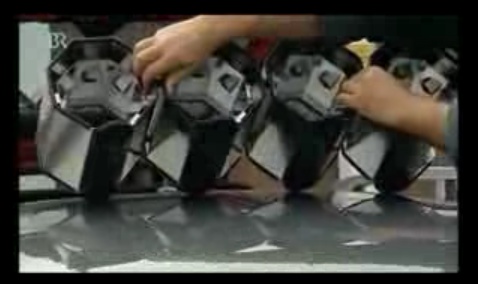
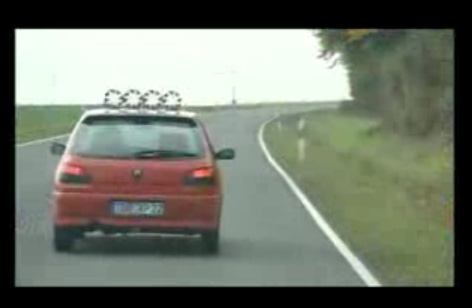
He installed those four diamond-shaped pieces on a very old 306 diesel engine.
I could tolerate the calculations about air resistance, but when he started talking about a "much smoother running diesel engine," that's when I decided he was just full of hot air.
The old steam hammer machine in that car can only be silenced by stopping it completely; you won't achieve silence by simply putting a V2A mesh on the roof.
Please note the bulky edge protectors, also known as "bump strips." Just those alone create turbulence that must increase fuel consumption. Apparently, some "enthusiast" with a 3C Highline had magnets attached to the roof to hold pipes in place... completely freehand and unaligned.
Magnets in the sprinkler system are much better!!!
| Description: |
| Airflow Turbulence: Reduce Drag & Improve Efficiency |
|
| File size: |
33.55 KB |
| Viewed: |
4754 times |
|
| Description: |
| Airflow Turbulence: Reduce Drag & Improve Efficiency |
|
| File size: |
24.99 KB |
| Viewed: |
4872 times |
|
Transparency, Teamwork
... there was another T.
I don't know what the f*ck it was.
Translated on 07-08-2026, 4:14.
|
|
| Back to top |
Profile PM Garage |
|
christians
Profi-Schrauber
Joined: 09/05/2002
Posts: 2105
Karma: +17 / -0
Location: Sauerland
Premium Support
|
| 02-02-2009, 17:47 Subject: Airflow Turbulence: Reduce Drag & Improve Efficiency |
Quote |
|
There's nothing you can do with a car like that. They just brake poorly and are noisy. Maybe you won't hear the old diesel engine as much anymore...
Gruß Christian
A6 BPP, Ex-A6 AKN (Gurke), Ex-Audi100 92 AAT (5Zyl.)
Translated on 07-08-2026, 4:15.
|
|
| Back to top |
Profile PM |
|
a dancer
Blaumann
Joined: 09/08/2006
Posts: 55
Karma: +2 / -0
Location: Wertheim
Premium Support
|
| 02-02-2009, 21:31 Subject: Airflow Turbulence: Reduce Drag & Improve Efficiency |
Quote |
|
Admittedly, the good man in the video doesn't really know anything about fluid dynamics.
A turbulent boundary layer is not necessarily thinner than a laminar one; it simply contains more energy.
In most vehicles, the laminar boundary layer either separates at or just behind the windshield, approximately around the area of the passenger-side door when viewed from the side.
Perhaps there's a vehicle aerodynamics expert in this forum who can provide more specific information?
The strong airflows that form behind every car create a lot of additional resistance. The trick with spoilers is to reduce these strong airflows or prevent them altogether. In simple terms: it's better to have turbulent airflow than separation (of the airflow), although this only applies within certain limits, as things can sometimes backfire).
Just as in the example where it was measured that the detachment bubbles could not be measured: http://www.akaflieg.uni-karlsruhe.de/jahresberichte/jb98/moproma.html
Too bad I don't have a power consumption display; otherwise, I would have stuck this thing on my roof and experimented with cruise control.
Translated on 07-08-2026, 4:16.
|
|
| Back to top |
Profile PM |
|
Malte1408
Schrauber

Joined: 06/23/2005
Posts: 427
Karma: +12 / -0
Location: Hannover
Premium Support
|
| 02-02-2009, 23:29 Subject: Airflow Turbulence: Reduce Drag & Improve Efficiency |
Quote |
|
dieselmartin wrote: |
The old rotary vane steam hammer machine in the car can only be stopped quietly by turning it off. |
Are you sure about that? 
Translated on 07-08-2026, 4:18.
|
|
| Back to top |
Profile PM |
|
christians
Profi-Schrauber
Joined: 09/05/2002
Posts: 2105
Karma: +17 / -0
Location: Sauerland
Premium Support
|
| 03-02-2009, 10:54 Subject: Airflow Turbulence: Reduce Drag & Improve Efficiency |
Quote |
|
In the vehicle shown, the airflow always separates from the roof edge spoiler, regardless of whether the flow is laminar, turbulent, or broadly disturbed.
I'm not a professional automotive aerodynamicist, but I certainly know what I'm talking about.
If you want to further your education, you should buy or borrow a "Hucho."
Gruß Christian
A6 BPP, Ex-A6 AKN (Gurke), Ex-Audi100 92 AAT (5Zyl.)
Translated on 07-08-2026, 4:19.
|
|
| Back to top |
Profile PM |
|
R.M.
Schrauber
Joined: 06/15/2004
Posts: 389
Karma: +14 / -0
Location: DD
Support
|
| 03-02-2009, 11:31 Subject: Airflow Turbulence: Reduce Drag & Improve Efficiency |
Quote |
|
I hope I'm not infringing on any copyrights right now.
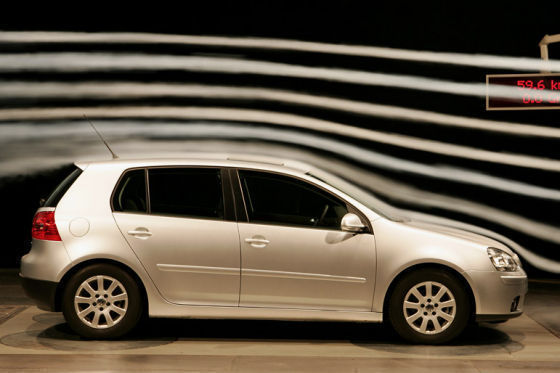
That's probably what it looks like in the compact car class.
| Description: |
| Airflow Turbulence: Reduce Drag & Improve Efficiency |
|
| File size: |
37.67 KB |
| Viewed: |
5541 times |
|
Translated on 07-08-2026, 4:19.
|
|
| Back to top |
Profile PM |
|
dieselmartin
Profi-Schrauber
Joined: 03/13/2003
Posts: 10121
Karma: +29 / -0
Location: in der Werkstatt
2007 Volkswagen Passat
Premium Support
|
| 03-02-2009, 11:41 Subject: Airflow Turbulence: Reduce Drag & Improve Efficiency |
Translating... |
|
[Translating...] http://www.aerowolf.de/ Transparency, Teamwork
... there was another T.
I don't know what the f*ck it was. |
|
| Back to top |
Profile PM Garage |
|
a dancer
Blaumann
Joined: 09/08/2006
Posts: 55
Karma: +2 / -0
Location: Wertheim
Premium Support
|
| 04-02-2009, 9:40 Subject: Airflow Turbulence: Reduce Drag & Improve Efficiency |
Quote |
|
"Wow, that's a great link!"
thank you!
I'll borrow the book from you during the semester break!
Translated on 07-08-2026, 4:20.
|
|
| Back to top |
Profile PM |
|
jarobaldu
Profi-Schrauber
Joined: 01/03/2007
Posts: 268
Karma: +40 / -0
Premium Support
|
| 04-02-2009, 13:20 Subject: Airflow Turbulence: Reduce Drag & Improve Efficiency |
Quote |
|
Hi there,
The transition from laminar to turbulent flow occurs as early as on the hood of the car.
A modern sailplane airfoil profile (as a reference here) achieves laminar flow lengths of approximately 70% on the upper surface of the airfoil (which translates to about 60-70 cm). And that's in still air! For a vehicle on the road, this transition happens much earlier.
The use of turbulators induces a controlled transition to turbulent flow because the latter can overcome higher pressure gradients, thus preventing the formation of a laminar separation bubble.
One thing you must not forget: I'm talking about a boundary layer thickness of approximately 5mm (with a length of 1 meter). A "turbulator" that protrudes 200mm into the air wouldn't fit in this situation.
With gliders, we have a drag coefficient (Cw) of approximately 0.01, which is why it makes sense to talk about laminar flow; this doesn't apply to cars...
One should point out to magazines like Auto Bild and others that they should measure this on a test track. I can imagine the result  . It could be competition for Magneți!
Regards,
Adrian. Renault Espace 16V Bj. 2000 mit LPG
AUDI A6 C4 1995 ABC/CRD
Fiat 124 Spider, Bj. 80
Translated on 07-08-2026, 4:22.
|
|
| Back to top |
Profile PM |
|
a dancer
Blaumann
Joined: 09/08/2006
Posts: 55
Karma: +2 / -0
Location: Wertheim
Premium Support
|
| 07-02-2009, 4:13 Subject: Airflow Turbulence: Reduce Drag & Improve Efficiency |
Quote |
|
jarobaldu wrote: |
With gliders, we have a drag coefficient (Cw) of approximately 0.01, which is why it makes sense to talk about laminar flow; this doesn't apply to cars...
|
For gliders, the drag coefficient (Cw) is calculated based on the wing area, while for other applications, such as cars, it's calculated based on the frontal area. When converted to a comparison based on frontal area, gliders don't even have as good a Cw value because of their limited surface area.
The unusual specification of the Cw value (drag coefficient) in glider design makes sense precisely because of the friction on the surface being affected by the airflow. This is also why there was a development towards laminar airfoils.
Regarding the car, we have only very small wetted surfaces, and the greatest resistance likely doesn't come from friction, but rather from boundary layer separation.
The method with AutoBild (or testing it yourself) would be the practical solution. However, the theoretical approach is much more appealing to me. The ultimate goal would then be to verify theoretical results with an experiment  .
Translated on 07-08-2026, 4:24.
|
|
| Back to top |
Profile PM |
|
Benni
Blaumann
Joined: 11/19/2005
Posts: 302
Karma: +15 / -0
Location: Braunschweig
Premium Support
|
| 07-02-2009, 9:56 Subject: Airflow Turbulence: Reduce Drag & Improve Efficiency |
Quote |
|
"So, I'd rather cover my car – uh, plane – with sharkskin; at least then I could be reasonably sure that it would make a slight difference."
This has already been proven by sharks in the water and by airplanes in the air.
You would have to be able to measure at least minimal advantages when driving on a fast highway.
Audi A5 B8 Cabrio 2.0 TFSI/CNCD 225PS
Audi A4 B7 Cabrio 2.0 TFSI/BWE - sold
Passat Variant Highline 3BG EZ 2/04 2,0 TDI mit DPF 235tkm 2x DPF gespült - RIP dank LKW
Translated on 07-08-2026, 4:26.
|
|
| Back to top |
Profile PM |
|
christians
Profi-Schrauber
Joined: 09/05/2002
Posts: 2105
Karma: +17 / -0
Location: Sauerland
Premium Support
|
| 07-02-2009, 19:37 Subject: Airflow Turbulence: Reduce Drag & Improve Efficiency |
Quote |
|
"This cannot be measured technically. As my predecessor mentioned, losses occur everywhere in a vehicle, except for surface friction. The detachment bubble you mentioned can only be minimized by having a small cross-section at the rear, approaching a Kammback shape. This works relatively well with sedans if the rear window can be made flat enough, but with station wagons, it leads to the fact that you can't really load anything bulky in the back anymore. Wheels, gaps, etc., make it even worse. However, a glider also generates lift as a side effect to keep it airborne."
Gruß Christian
A6 BPP, Ex-A6 AKN (Gurke), Ex-Audi100 92 AAT (5Zyl.)
Translated on 07-08-2026, 4:27.
|
|
| Back to top |
Profile PM |
|
dieselmartin
Profi-Schrauber
Joined: 03/13/2003
Posts: 10121
Karma: +29 / -0
Location: in der Werkstatt
2007 Volkswagen Passat
Premium Support
|
| 07-02-2009, 20:30 Subject: Airflow Turbulence: Reduce Drag & Improve Efficiency |
Quote |
|
Then I'll attach my paragliders to the Variant.
I'm still generating lift.
2. I don't have to transport those bulky duffel bags in the trunk.
Will a great private broadcaster now contact me and do a report about me?
Okay, please provide the German text you would like me to translate into English. I will only provide the translation.
Transparency, Teamwork
... there was another T.
I don't know what the f*ck it was.
Translated on 07-08-2026, 4:28.
|
|
| Back to top |
Profile PM Garage |
|
jarobaldu
Profi-Schrauber
Joined: 01/03/2007
Posts: 268
Karma: +40 / -0
Premium Support
|
| 09-02-2009, 11:11 Subject: Airflow Turbulence: Reduce Drag & Improve Efficiency |
Quote |
|
a dancer wrote: |
The unusual specification of the Cw value (drag coefficient) in glider design makes sense precisely because of the friction on the surface being exposed to airflow. This is also why there was a development towards laminar airfoils.
Regarding the car, we have only very small, flush surfaces, and the greatest resistance likely doesn't come from friction, but rather from boundary layer separation.
The method using AutoBild (or testing it yourself) would be the practical solution. However, the theoretical approach is much more appealing to me. The ultimate goal would then be to verify the theoretical results with an experiment | .
Hi there,
The word itself, "laminar separation bubble," indicates the phenomenon: after 1 meter of hood length, there is no longer laminar flow. Therefore, there are no separation bubbles in that area.
After a few years of experimentation, I believe the following approach is worthwhile: First, simply measure. If you get positive results, then it's worth considering "why?"
Have a nice week still . Renault Espace 16V Bj. 2000 mit LPG
AUDI A6 C4 1995 ABC/CRD
Fiat 124 Spider, Bj. 80
Translated on 07-08-2026, 4:30.
|
|
| Back to top |
Profile PM |
|
|


 Bookmarks
 Links
Links Garage
 FAQ, Legal Notice & Privacy
 RSS Feed
 Register
 Login
Login
