The following text discusses the construction and function of hydraulic shock absorbers, as they are likely to be used in most VW TDI engines, here as an example using part number 034 109 309 AD, as used in the 1Z TDI.
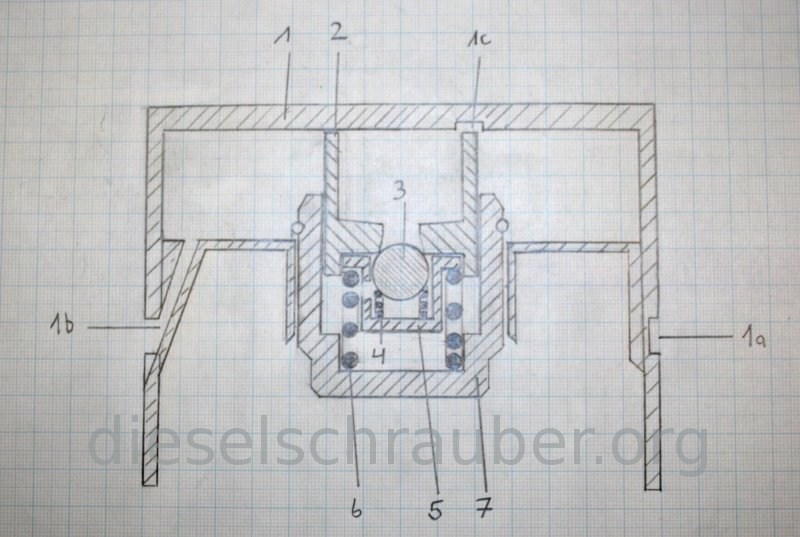
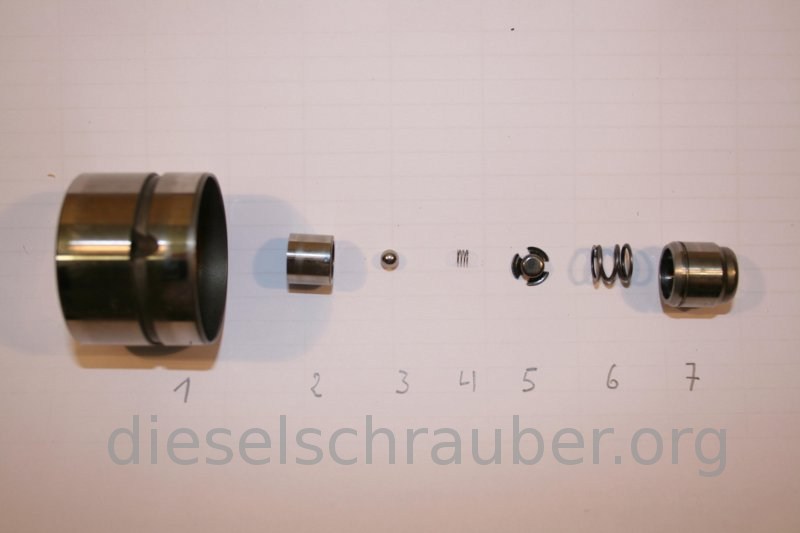
Image 1 shows a cross-sectional view, and Image 2 shows the individual components of the disassembled hydraulic piston.
Function:
Inside the engine, the hydraulic piston is filled with pressurized engine oil through the ring groove 1a and the oil channel 1b. The oil is then further pushed into the piston 2 and into the space between the piston and the piston cylinder through the reservoir 1d and the oil channel 1c. The plunger core is additionally pushed apart from the spring force, so that the plunger housing and plunger core are pushed against the NW (Northwest) or the valve.
The oil pressure is not sufficient to force the valve against the force of the valve spring. The check valve closes when the oil pressure in the piston cylinder is equal to or higher than the pressure in the reservoir. This makes the piston core rigid. The rising lever of the NW can open the valve.
Through the gap between the piston and the cylinder, as well as between the cylinder and the cylinder housing, leakage oil flows into the ZK.
As the cam lobe wears, the tappet is relieved of pressure. Oil leaks are compensated for by the oil being pushed back into place. The spring and the oil, which is compressed by the check valve, ensure that the piston housing and piston remain in the fully extended position.
Differential thermal expansion is maintained through the interplay between oil leakage and filling due to oil pressure.
Handling:
Since the piston rod of the hydraulic piston is essentially pushed outwards against the piston head, it extends fully from the expanded hydraulic piston or the hydraulic piston in its NW-extended position. The cylinder fills up due to the pressure difference created from the storage chamber.
Therefore, it is absolutely necessary that the hydraulic lifters have time to drain (leak oil) after the installation of the camshaft, so that the valves do not inadvertently protrude. The manufacturer provides 30 minutes prior.
The reservoir for the hydraulic shock absorbers becomes empty when they are stored with the NW (North-West) running surface facing upwards. This leads to a longer venting time. It is recommended to store hydraulic plungers with the running surface facing downwards. "Incorrect" storage does not cause the plunger core to expand.
Errors and Defects:
Oil residues, etc. can lead to sticking. Used pistons should be checked for functionality and the permeability of the oil leak passage before re-installation, to ensure that the piston core can be emptied to the required length.
Use the connecting rod with suitable accessories in the vise and press out the empty rod with a firm hand. The empty pressing must be possible in approximately 10 seconds. If in doubt, replace the connecting rod. Alternatively, remove the connecting rod core from the housing with a firm pull, and clean everything with washing solvent. Filling with oil before assembly simplifies the venting process.
The running surface of the NW must not show any exposed areas; if present, replace with a hydraulic shock absorber;
If there are knocking, empty hydraulic cylinders in the engine, other causes must be ruled out (lack of oil, wrong oil, too low oil pressure due to tolerances in the ZK), then an internal mechanical defect or contamination is likely the cause. A sensible solution is also here the replacement, otherwise a cleaning attempt.
| Description: |
Bild 1: Schnittbild des Hydrostößels
1 – Stößelgehäuse mit Ringnut (1a), Ölkanal (1b), (1c), Vorratskammer (1d);
2 – Kolben;
3 – Ventilkugel;
4 – Ventilfeder;
5 – Federkappe;
6 – Stößelfeder;
7 – Stößelzylinder mit Sicherungsring (7a); |
|
| File size: |
84.47 KB |
| Viewed: |
24917 times |
|
| Description: |
Bild 2: Einzelteile des Hydrostößels (Kennzeichnung der Teile wie in Bild 1)
Die Teile 2 – 7 bilden zusammengesetzt den hydraulisch variablen Stößelkern, welcher durch den Sicherungsring 7a im Stößelgehäuse gehalten wird.
Die Stößelfeder 6 drückt den Kolben 2 und den Stößelzylinder 7 auseinander, im komplett integrierten ZK auf Anschlag gegen die NW und den Ventilschaft, ansonsten bis zur Anlage des Sicherungsrings 7a am Stößelgehäuse 1.
Die Teile 2-5 bilden ein Rückschlagventil. |
|
| File size: |
34.61 KB |
| Viewed: |
33549 times |
|
Horch A4 8K CJCD
Golf 7 DDYA
(+ Audi 80 Avant B4 1Z 475Tkm - habe ich vom ersten bis zum letzten Tag gerne gefahren)
(+ Passat Variant 32B CY 400Tkm)
Translated on 03-07-2026, 14:19. |


 Bookmarks
 Links
Links Garage
 FAQ, Legal Notice & Privacy
 RSS Feed
 Register
 Login
Login
 03-02-2013, 19:26


