| Author |
Message |
ttns4
Guest
Free account, no CAN development support
|
 01-07-2002, 15:53 Subject: Loader Charger 115HP & Control Valve 01-07-2002, 15:53 Subject: Loader Charger 115HP & Control Valve |
Quote |
|
Hello,
Does anyone know which turbocharger is used in a Passat PD with a 115 hp engine, manufactured in '99, with the AJM engine?
Does it have a pressure sensor?
'I would also like to know where this often-discussed control valve for the turbocharger is located.'
I suspect that my problem is related to this.
(Top speed achieved with a very long run-up and patience: 195 km/h. No more acceleration possible above 150-160 km/h.)
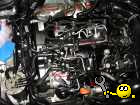
I'm grateful for any ideas you might have, maybe even a picture or something like that?
The engine compartment is really crowded.
Sure, here is the translation of the text from German to English:
'So long' translates to 'Goodbye' or 'See you later'. It can also be used as a farewell message in emails or other forms of communication.
Thorsten 
Translated on 01-08-2026, 1:45.
|
|
| Back to top |
|
 |
dieselschrauber
Administrator

Joined: 04/12/2002
Posts: 18102
Karma: +799 / -0 
Location: St.Gallen
2018 Volkswagen T6 
|
| 01-07-2002, 16:03 Subject: Loader Charger 115HP & Control Valve |
Quote |
|
Hello,
The 115 hp diesel engine features a turbocharger with variable turbine geometry (VTG), which is adjusted directly on the turbocharger via a vacuum actuator.
You can find the solenoid valve by going backwards from the vacuum hose connection on the turbocharger.
Without a diagnostic tool, troubleshooting will be nothing more than guesswork.
By the way, I've driven two workshop replacement cars, both were fourth-generation Golfs with the 115 hp common rail engine. In both cases, the speed limiter kicked in at 200 km/h on a flat road.
If that's the case, then you don't have much left to do.
Also, check for leaks in the charge air system and make sure the EGR valve is 100% leak-free. The mass airflow sensor could also be a problem, but it can only be reliably and easily checked with a diagnostic tool.
Don't forget even seemingly insignificant things like a completely clogged air filter or diesel filter.
Best regards, Rainer.
Translated on 01-08-2026, 1:47.
|
|
| Back to top |
Profile PM WWW Garage |
|
ttns4
Guest
Free account, no CAN development support
|
| 01-07-2002, 16:10 Subject: Loader Charger 115HP & Control Valve |
Quote |
|
Thank you for the quick response.
'I would be perfectly happy with 195 km/h, but the car simply doesn't accelerate beyond 150 km/h. The mass airflow sensor (MAF) and EGR valve have already been replaced.'
Do you know how I can test these diaphragms in the pressure sensor?
(and what I think of it).
Thank you again.
Thorsten
Translated on 01-08-2026, 1:49.
|
|
| Back to top |
|
|
dieselschrauber
Administrator
Joined: 04/12/2002
Posts: 18102
Karma: +799 / -0
Location: St.Gallen
2018 Volkswagen T6
|
| 01-07-2002, 16:40 Subject: Loader Charger 115HP & Control Valve |
Quote |
|
Hello.
The pressure vessel, as mentioned, is located on the charger. If you can't find it, then further tests will be pointless .
Also, one more thing: if the EGR valve itself isn't sealing properly in the intake manifold, even a new EGR solenoid won't help.
Best regards, Rainer.
Translated on 01-08-2026, 1:50.
|
|
| Back to top |
Profile PM WWW Garage |
|
ttns4
Guest
Free account, no CAN development support
|
| 04-07-2002, 10:48 Subject: Rainer: Answering Your Questions Now |
Quote |
|
Hello Rainer,
I understand that the vacuum sensor is located on the turbocharger.
My problem is that the engine compartment is so cluttered that you have to disassemble quite a bit just to see anything.
Do you know the engine compartment of a Passat AJM TDI PD with 85 kW?
'I would also like to know if the chargers might be compatible with different engine types—specifically, the larger pressure canisters.'
Then, it might be possible to adjust the rod coupling between the can and the charger within a certain tolerance - or could it? 
I assume the charger is located on the lower left side when viewed from the front.
I'll probably have to unscrew the two covers; unfortunately, I have to work from above.
The thing about the '2nd' EGR valve is interesting, but I need more information to be able to question it with the people at the workshop.
Since all I know for sure is that an EGR valve was replaced.
I assume you're talking about a solenoid valve. Could you describe its position or appearance in more detail so I know where to look for it?
Otherwise, I would probably have to refrain from making any judgments, as I wouldn't be able to definitively identify them from above.
Perhaps you have some advice; if I go to the workshop with just a 'hunch,' they might not even be able to find the valve position.
Sure, here is the translation of the text from German to English:
'So long' translates to 'Goodbye' or 'See you later'. It can also be used as a farewell message in emails or other forms of communication.
Thorsten
Translated on 01-08-2026, 1:53.
|
|
| Back to top |
|
|
Michael II
Profi-Schrauber

Joined: 04/12/2002
Posts: 1132
Karma: +3 / -0
Location: Stuttgart
Support
|
| 04-07-2002, 11:08 Subject: Loader Charger 115HP & Control Valve |
Quote |
|
Hello,
Before you start taking everything apart based on suspicion, I would suggest doing the following (or having someone else do it):
Read the error codes and make sure the mechanic doesn't clear them.
2. Have the measurement values recorded. Ensure that the operating conditions are met both at idle and under full load (see also the error database). Tschüss
Michael II
Translated on 01-08-2026, 1:56.
|
|
| Back to top |
Profile PM |
|
dieselschrauber
Administrator
Joined: 04/12/2002
Posts: 18102
Karma: +799 / -0
Location: St.Gallen
2018 Volkswagen T6
|
| 04-07-2002, 12:06 Subject: Loader Charger 115HP & Control Valve |
Quote |
|
Hello,
The EGR (Exhaust Gas Recirculation) valve, which was most likely replaced in your vehicle, is a solenoid valve. It's used to regulate vacuum pressure, which then directly actuates the vacuum-operated EGR valve located on the intake manifold.
This valve establishes a connection between the exhaust manifold and the intake manifold depending on the vacuum level. This allows a portion of the exhaust gases to be drawn into the engine instead of fresh air.
Best regards, Rainer.
Translated on 01-08-2026, 1:57.
|
|
| Back to top |
Profile PM WWW Garage |
|
ttns4
Guest
Free account, no CAN development support
|
| 04-07-2002, 13:03 Subject: AGR Valve: Function & Replacement Guide |
Quote |
|
That actually means the following:
The AGR (magnet) valve that was replaced is electrically controlled.
Magnet angezogen ZB. Stellung 1 z. B. Vacuum.
Abgestoßen Stellung 2 z. B. no vacuum.
Under vacuum conditions, the EGR valve on the exhaust manifold is relieved of pressure, or 'sucked open' (likely due to a pre-tensioned spring or similar self-closing mechanism).
by which exhaust gases are drawn in...
[Ignoring for the moment why VW would route one valve through another... (I know that exhaust technology must be precisely adjustable electronically...)]
Question 1:
which presents itself to me in this way:
With magnetic actuation, I essentially only have two states: vacuum/no vacuum, meaning there is absolutely no intermediate regulation!
Question 2:
Can the EGR valve on the manifold be replaced separately?
Question 3:
If the connector or control signal of the solenoid valve is disconnected, there will likely be an error message, but not if there is a reduced ground connection or a changed setpoint value... where is the connector located?
Can you get to it from above?
Just a side note: The workshop probably cut corners again, as they should have checked both valves in this situation (the AGR solenoid valve was quite dirty... and the other one wasn't even mentioned).
==> If that's the case, the existing return force of the spring should ideally be replaceable with a different spring... which in turn means that you can obtain other springs from pneumatic accessories or valve manufacturers, allowing you to increase the return force to such an extent that the AGR (Abgasrückführung - Exhaust Gas Recirculation) only starts working at absolute maximum load... or not  .
Or have I missed something, and am I completely wrong?
Sure, here is the translation of the text from German to English:
'So long' translates to 'Goodbye' or 'See you later'. It can also be used as a farewell message in emails or other forms of communication.
Thorsten.
Translated on 01-08-2026, 2:00.
|
|
| Back to top |
|
|
dieselschrauber
Administrator
Joined: 04/12/2002
Posts: 18102
Karma: +799 / -0
Location: St.Gallen
2018 Volkswagen T6
|
| 04-07-2002, 13:23 Subject: AGR Valve: Problems, Solutions & Repair |
Quote |
|
Hello.
ttns4 wrote: | That would actually mean the following:
The AGR (magnet) valve that was replaced is electrically controlled.
Magnet angezogen ZB. Stellung 1 z. B. Vacuum.
Abgestoßen Stellung 2 z. B. no vacuum.
Under vacuum conditions, the EGR valve on the exhaust manifold is relieved of pressure, or "sucked open" (likely due to a pre-tensioned spring or similar self-closing mechanism).
by which exhaust gases are drawn in... |
Right, the solenoid valve is pulsed, which means that the vacuum and, consequently, the EGR intermediate values can take on values between fully open and fully closed.
ttns4 wrote: | | [ignoring for the moment why VW controls one valve by steering it with another... (I know that exhaust technology must be precisely adjustable electronically)...] |
Electrically controlled EGR valves that don't rely on vacuum have only been around for a relatively short time. You can find an article about them (in PDF format) on the left-hand side of the 'all4engineers' website. Just search for "AGR".
ttns4 wrote: | Question 1:
which presents itself to me in this way:
By applying magnetic force, I essentially only have 2 positions: vacuum/no vacuum, therefore there is absolutely no intermediate regulation!!!! |
As mentioned before, the adjustments are made by controlling the timing of the solenoid valve.
ttns4 wrote: | Question 2:
Can the EGR valve on the manifold actually be replaced separately? |
In my case, it's connected with  using 3 screws to the intake manifold and with 2 screws to the connecting pipe for the exhaust manifold (A3, AHF).
ttns4 wrote: | Question 3:
If the connector or control signal of the solenoid valve is disconnected, there will likely be an error message, but not if there's a reduced ground connection or a changed setpoint value... where is the connector located?
Can you get to it "from above" | ?
Yes, but I don't know the exact values for which deviations the control unit will generate an error entry. It's certainly true for short circuits or open circuits.
The solenoid valve has a two-pole electrical connection and 3 hose connections; it is located on my spray nozzle.
ttns4 wrote: | | By the way, I suspect that the workshop cut corners again, as they should have checked both valves in this situation (the AGR solenoid valve was quite dirty, and the other one wasn't even mentioned...) |
Nicht gut... der 'Dreck' wird durch die Unterdruckpumpe ins Freie befördert, falls da nicht noch ein Filter sitzt. Check it out...
Dirt is never a good thing... if it wasn't caused by the faulty solenoid valve, check the ventilation of the vacuum system. It's possible that the hose has come loose and is dangling around, allowing bees, flies, small stones, or anything else small enough to get inside.
ttns4 wrote: |
==> If that's the case, the existing return force of the spring should ideally be replaceable with a different spring... which in turn means that you can obtain different springs from pneumatic accessories or valve manufacturers, allowing you to increase the return force to such an extent that the AGR (Abgasrückführung - Exhaust Gas Recirculation) only starts working at absolute maximum load...or not | .
Hmm??? The EGR system is only activated at idle or partial load. As far as I remember, the EGR solenoid valve doesn't appear to be designed for disassembly.
Furthermore, the question arises whether the amount of exhaust gas recirculation is controlled or regulated (e.g., via air mass measurement).
If there's a regulation in place, a stiffer spring won't make any difference.
Best regards, Rainer.
Translated on 01-08-2026, 2:07.
|
|
| Back to top |
Profile PM WWW Garage |
|
dieselschrauber
Administrator
Joined: 04/12/2002
Posts: 18102
Karma: +799 / -0
Location: St.Gallen
2018 Volkswagen T6
|
| 04-07-2002, 13:40 Subject: Loader Charger 115HP & Control Valve |
Quote |
|
Translated on 01-08-2026, 2:13.
|
|
| Back to top |
Profile PM WWW Garage |
|
ttns4
Guest
Free account, no CAN development support
|
| 04-07-2002, 15:03 Subject: Rainer: Meaning, Origin & Popularity |
Quote |
|
Interesting, interesting.
But there's a contradiction here:
If the EGR valve only regulates within a certain range, why doesn't it activate in the 'upper range'?
Sure, I'll translate the text from German to English and provide only the translation without any explanations. Please provide the text you want me to translate.
A) It's not the EGR valve that's causing the problem, but something else.
B) The valve remains open even at full load => in that case, it would run significantly less than 180 (I assume).
That reminds me of something else:
During the TÜV inspection, they noticed that when the dipstick was pulled out, oil vapor was being blown out. They suggested that the crankshaft ventilation system might not be properly vented. What could be the cause of this?
It definitely can take a lot of effort...
Sure, here is the translation of the text from German to English:
'So long' translates to 'Goodbye' or 'See you later'. It can also be used as a farewell message in emails or other forms of communication.
Thorsten 
Translated on 01-08-2026, 2:14.
|
|
| Back to top |
|
|
dieselschrauber
Administrator
Joined: 04/12/2002
Posts: 18102
Karma: +799 / -0
Location: St.Gallen
2018 Volkswagen T6
|
| 04-07-2002, 15:25 Subject: Rainer: A Response or Reply |
Quote |
|
ttns4 wrote: | A) It's not due to the EGR valve, but something else.
B) The valve remains open even at full load => in that case, it would run significantly less than 180 | .
It's almost right, but it depends on how far valve B closes. If the valve is only slightly leaky in its 'closed' state – for example, due to carbon buildup – you will only experience a slight loss of power.
With A, you can proceed if you have excluded B  .
Take the EGR valve out and you'll see what I mean, and while you're at it, you can clean it.
Best regards, Rainer.
Translated on 01-08-2026, 2:17.
|
|
| Back to top |
Profile PM WWW Garage |
|
ttns4
Guest
Free account, no CAN development support
|
| 05-07-2002, 10:37 Subject: Rainer's Answer: Test & Review |
Quote |
|
Attached are the results of the inspection.
A) AGR valve manifold.
B) AGR-E magnetic valve.
A) The replaced valve could not be cleaned because it was newly installed.
After starting the engine, I disconnected the 'thick vacuum hose' (which comes from the EGR solenoid valve) => it had vacuum pressure, so I disconnected it and plugged the opening. It seemed like the turbocharger started producing power around 1300 RPM, and it pulled well.
Question: The second small hose that connects to the electric valve on the LLM (attached above it!) – where does it lead to? What is its function? Also, the plug for this 'valve' was briefly disconnected at one point.
I don't think it had any effect during the trip, maybe something was stuck or blocked?
My suspicion is that this solenoid valve, controlled by an LLM (Large Language Model), regulates the vacuum function for the charger.
B) Then, attempt number 2:
All vacuum hoses reconnected.
Unplugged the connector from the solenoid valve.
Impression (subjectively, better traction?!)
Question: Does an error code get logged when the EGR electric solenoid valve is disconnected?
What effects does that have? (I don't care about the error message.)
1. The EGR valve has absolutely no vacuum pressure.
2. The solenoid valve at the low-pressure manifold is not receiving vacuum from above, but apparently it is getting it from below (possibly from the turbocharger).
???=>>>> Then everything was assembled, and I tapped the screwdriver against the solenoid valve (like how you used to detach hanging starter solenoids!).
This morning: The car pulled well. Starting at approximately 3000 RPM, it accelerated quite nicely. Fuel consumption was around 5.5-6 liters per 100 km at 140 km/h (previously, it was up to about 6.8 liters per 100 km at 140 km/h!).
Question for everyone: How high can the maximum speed in the highest gear be set, assuming the engine has enough power?
Where can a slight tolerance in boost pressure be utilized (perhaps only through the wastegate, for more precise information?) (to achieve a small increase in final power/speed???).
Conclusion: I won't really know until I get home (and can check it more thoroughly) whether the problem was simply a stuck valve.
Open question:
Please provide the German text you would like me to translate into English. I will then give you only the translation, without any explanations.
Das E-Ventil drüber am LLM ist das zur weiterleitung Unterdruck -Schläuche dünn T-Lader? Odfor what?
If not, where is it located?
So long .
Thorsten.
Translated on 01-08-2026, 2:21.
|
|
| Back to top |
|
|
|


 Bookmarks
 Links
Links Garage
 FAQ, Legal Notice & Privacy
 RSS Feed
 Register
 Login
Login
