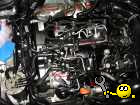
P0299 is set when the actual boost pressure remains below the target value for a certain period. The code describes the result, not the cause; the engine control unit (ECU) only indicates that the target range is not being reached. The most common cause is a leak in the boost pressure system, rather than the turbocharger itself.
What does P0299 mean?
The engine control unit compares the target boost pressure with the actual boost pressure. If the actual value remains below the target value for a defined period, the P0299 code is set. The code does not explicitly indicate which component is causing the deviation.
Typical symptoms:
- Power loss
- Emergency mode
- Engine check light is on.
Most common causes:
- Hoses/tubes incorrectly connected, slipped off, or leaking.
- Turbocharger pressure control defective.
- Turbocharger failure.
- Faulty boost pressure control valve (diverter valve).
Diagnosis with VCDS:
-
Autoscan: P0299 code detected in the engine control unit (01 - Engine).
- Check the turbocharger system for leaks (pressure test).
- Check, clean, or replace the turbocharger boost control system.
- Check the boost pressure limiting valve.
- Check the turbocharger for mechanical damage.
Special note:
If the turbocharger is mechanically defective or the exhaust system is blocked (typically by the catalytic converter), P0299 can be the result – not the actual cause. In 2.0 TFSI engines, the boost pressure control valve N249 is known to fail (due to a torn rubber membrane), and an optimized valve is available as a replacement.


 Bookmarks
 Links
Links Garage
 FAQ, Legal Notice & Privacy
 RSS Feed
 Register
 Login
Login