| Author |
Message |
ulf
Profi-Schrauber

Joined: 04/13/2002
Posts: 11058
Karma: +18 / -0 
Location: Saarland
2023 MG ZS
Premium Support
|
 23-08-2005, 17:16 Subject: Dwell Time: How Long Do Users Stay? 23-08-2005, 17:16 Subject: Dwell Time: How Long Do Users Stay? |
Quote |
|
olbetec wrote: | | You must free yourselves from the idea that this convective heat transfer has something to do with time! |
Since real liquid cooling systems also involve thermal resistance [K per Watt], which cannot be reduced arbitrarily, doesn't the time component inevitably come into play? Gruß Ulf
_________
MG4 Electric
Translated on 20-09-2026, 5:22.
|
|
| Back to top |
Profile PM Garage |
 |
olbetec
Schrauber

Joined: 08/14/2002
Posts: 76
Karma: +4 / -0
Location: Garbsen bei Hannover
Support
|
| 23-08-2005, 19:07 Subject: LLC Performance: Metrics and Optimization |
Quote |
|
You want to increase the effectiveness, or performance, of your LED lighting system. You have two LED light sources of the same type. You want to operate the LED light sources in a pure cross-flow configuration (meaning side-by-side, not one behind the other, otherwise it would be a cross-flow mixing configuration...). Question: Is a parallel or a series connection better?
The heat transfer area remains the same; only the convective heat transfer and the pressure loss are different.
First of all, regarding point 1:
The performance of the heat transfer device is calculated as Q' = k * A * Tm, where k is the heat transfer coefficient, A is the heat transfer area, and Tm is the average temperature difference.
Whether the flow is parallel or serial determines the flow velocity for a given mass flow rate, and consequently, the heat transfer coefficient. This coefficient is composed of the internal heat transfer coefficient (which varies), the heat conduction through the wall (which remains constant), and the external heat transfer coefficient (which depends on the flow velocity, but remains constant for comparison purposes). The internal heat transfer coefficient is calculated using the Nusselt number, which in turn is a function of the Reynolds number (which depends on the flow velocity), the Prandtl number (a material property, and therefore constant), and the geometry (which is also constant). Thus, the dependence on the flow velocity is evident. And as you can see, there's no mention of time anywhere in this...
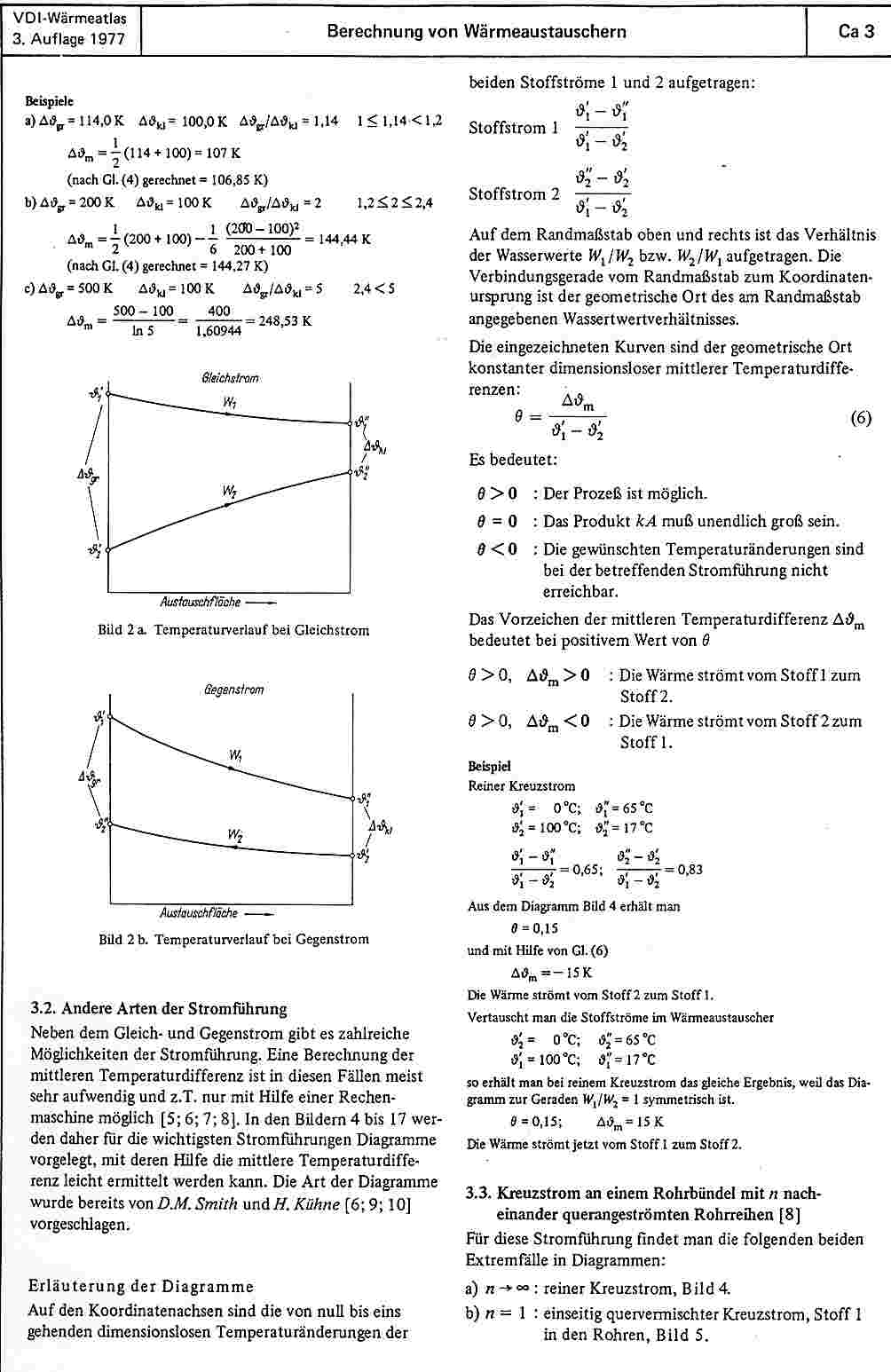
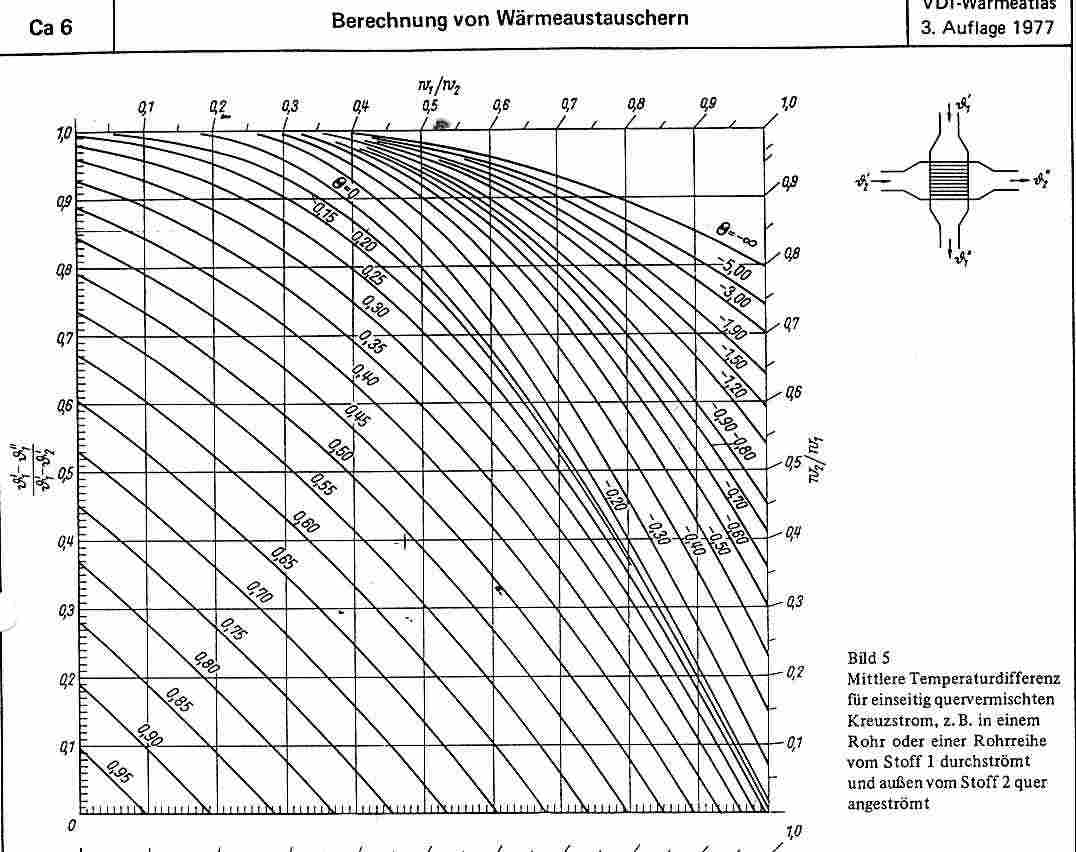
Given a specific mass flow rate, the power of the heat sink is therefore fixed. The resulting temperatures depend only on the operating characteristics (i.e., the design and current carrying capacity of the heat sink) (see diagrams from the VDI Heat Atlas).
Regarding point 2: The pressure loss is relevant for the delivery rate. It is lower in a parallel configuration and higher in a series configuration. (I will continue working on this tomorrow.)
Stay cheerful.
OlBe.
Fabia I TDI, EZ06/01 (1,9/74kW, ATD)
Octavia II TDI DSG EZ11/06 (2,0/103kW, BMM)
Translated on 20-09-2026, 5:25.
|
|
| Back to top |
Profile PM |
|
ulf
Profi-Schrauber
Joined: 04/13/2002
Posts: 11058
Karma: +18 / -0
Location: Saarland
2023 MG ZS
Premium Support
|
| 23-08-2005, 21:22 Subject: LLC Performance: Tips & Tricks |
Quote |
|
olbetec wrote: | | Therefore, one can recognize the dependence on the flow velocity. And the time is nowhere to be found here... | In my opinion, it is contained within the time: half the flow velocity (in the case of 2 parallel, identical liquid crystal devices) equals double the residence time in the liquid crystal device.
The same result could also be achieved, for example, by doubling the width of the cooling system in a single LLK (increasing the number of charge air ducts by a factor of two).
EDIT
Perhaps we're just talking past each other.
It is easy to imagine that the power transmitted via a liquid-filled cable increases with the internal and external flow velocity, and I do not dispute this.
The question is only how much of the transferred (cooling) power does each gram of charge air receive?
If the transmitted power only increases by 50% when the LL (charge air) flow doubles, then the cooling capacity per gram of charge air decreases to 1.5 / 2 = 75% of the initial value.
Result: Higher LLT (low-level temperature), even though the LLK (low-level cooler) provides more cooling capacity – but not enough to keep up with the increasing LL (low-level) current draw.
Conversely, the cooling performance per gram of charge air decreases when the mass flow of charge air through the intercooler decreases, or when the charge air remains in the intercooler for a longer period.
This essentially corresponds to my logs as well: with a practically constant LD (load density), the LLT (local lambda temperature) increases with the engine speed or the LL (local lambda) mass flow. Gruß Ulf
_________
MG4 Electric
Translated on 20-09-2026, 5:29.
|
|
| Back to top |
Profile PM Garage |
|
olbetec
Schrauber
Joined: 08/14/2002
Posts: 76
Karma: +4 / -0
Location: Garbsen bei Hannover
Support
|
| 24-08-2005, 9:14 Subject: Simple Solutions: Easy & Practical Tips |
Quote |
|
I should be more illustrative...
You have two identical micro hydropower systems, each with a power output of 20kW, operating in parallel with a flow rate of X.
Then, in a series configuration, you have double the flow rate, okay, but perhaps only 98% * 2 * X due to the higher pressure loss.
This, however, increases the internal heat transfer coefficient by perhaps 10%, so that at the higher flow rate, you might be able to transfer approximately 21 kW per cooling unit.
And, based on the equation provided above and with a constant value of A, this inevitably leads to higher average temperature differences. And that's what you were trying to achieve...
Stay cheerful.
OlBe.
Fabia I TDI, EZ06/01 (1,9/74kW, ATD)
Octavia II TDI DSG EZ11/06 (2,0/103kW, BMM)
Translated on 20-09-2026, 5:32.
|
|
| Back to top |
Profile PM |
|
ulf
Profi-Schrauber
Joined: 04/13/2002
Posts: 11058
Karma: +18 / -0
Location: Saarland
2023 MG ZS
Premium Support
|
| 24-08-2005, 9:51 Subject: Trivial Matters: A Simple Explanation |
Quote |
|
olbetec wrote: | | So, and based on the equation provided above, with a constant A, this inevitably leads to higher average temperature differences. And that's what you wanted to achieve... |
Für den 1. LLK in der Reihe mag das gelten. Aber der 2 LLK bekommt ja schon vorgekühlte Ladeluft, so daß sein mittleres Delta T erheblich niedriger liegen wird als beim 1. LLK -> geringere Kühlleistung des 2. LLKBitte gib mir den deutschen Text, den du übersetzt haben möchtest.
With 2 parallel intercoolers, the Delta T of both intercoolers is maximized -> resulting in the best cooling performance per gram of charge air with the lowest overall pressure loss.
Okay, hier ist die Übersetzung:
"Is that correct?" Gruß Ulf
_________
MG4 Electric
Translated on 20-09-2026, 5:34.
|
|
| Back to top |
Profile PM Garage |
|
olbetec
Schrauber
Joined: 08/14/2002
Posts: 76
Karma: +4 / -0
Location: Garbsen bei Hannover
Support
|
| 24-08-2005, 10:37 Subject: Temperature Differences: Causes and Effects |
Quote |
|
Yes, that's correct. However, when recalculating the liquid-cooled plate (LCP) performance in parallel or series configurations, the entire heat exchanger is considered when calculating the temperature differences, and they are both based on the same mass flow rate. Therefore, in a parallel configuration, a significantly larger temperature gradient can be created along the length of the LCP being flowed through, especially at low flow rates, compared to a series configuration. So, it cannot be viewed in such a simplified way. Ultimately, it's necessary to perform an example calculation to reach a conclusion. Unfortunately, intuition alone isn't very helpful in this case.
Stay cheerful.
OlBe.
Fabia I TDI, EZ06/01 (1,9/74kW, ATD)
Octavia II TDI DSG EZ11/06 (2,0/103kW, BMM)
Translated on 20-09-2026, 5:35.
|
|
| Back to top |
Profile PM |
|
ulf
Profi-Schrauber
Joined: 04/13/2002
Posts: 11058
Karma: +18 / -0
Location: Saarland
2023 MG ZS
Premium Support
|
| 24-08-2005, 12:22 Subject: Temperature Differences: Causes and Solutions |
Quote |
|
olbetec wrote: | | However, when recalculating the latent heat capacity in parallel or series circuits, the entire heat exchanger is considered when calculating the temperature differences | . So, from a thermodynamic point of view, it's roughly this question.
"Should I build the larger LLK (large language model) to be twice as long or twice as wide as the initial product?"
I have to admit that, only through this reformulation, the decision (for minimal LLT at the output) would not be so easy for me to make instinctively. 
EDIT:
The VDI Heat Atlas would certainly be interesting, but with a price of around 600 euros and a target audience of engineers (and similar professions), it's not really my thing.  Gruß Ulf
_________
MG4 Electric
Translated on 20-09-2026, 5:37.
|
|
| Back to top |
Profile PM Garage |
|
olbetec
Schrauber
Joined: 08/14/2002
Posts: 76
Karma: +4 / -0
Location: Garbsen bei Hannover
Support
|
| 25-08-2005, 16:26 Subject: Dwell Time: How Long Do Users Stay? |
Quote |
|
Quote: | | The VDI heat atlas would certainly be interesting, but with a price of around 600 euros and a target audience of engineers (and similar professionals), it's not really my thing | .
What's the point of libraries? You can just copy the relevant pages, or see below...
On the left and bottom are the dimensionless temperature changes, on the right and top are the heat capacity flow ratios, and Theta represents the constant dimensionless temperature differences (see also the second image). At the bottom (unfortunately cut off in the image) is written: (T2'' - T2') / (T1' - T2') ...
Carefully recalculated.
OlBe.
| Description: |
| Dwell Time: How Long Do Users Stay? |
|
| File size: |
80.92 KB |
| Viewed: |
2605 times |
|
| Description: |
| Auszug aus einer Uraltversion |
|
| File size: |
74.52 KB |
| Viewed: |
6207 times |
|
Fabia I TDI, EZ06/01 (1,9/74kW, ATD)
Octavia II TDI DSG EZ11/06 (2,0/103kW, BMM)
Translated on 20-09-2026, 5:39.
|
|
| Back to top |
Profile PM |
|
ulf
Profi-Schrauber
Joined: 04/13/2002
Posts: 11058
Karma: +18 / -0
Location: Saarland
2023 MG ZS
Premium Support
|
| 25-08-2005, 16:58 Subject: Dwell Time: How Long Do Users Stay? |
Quote |
|
olbetec wrote: | | What's the point of libraries... You can copy the relevant pages there, or see below... |
"Thank you!"
Let's see how much of this I'll be able to understand... Gruß Ulf
_________
MG4 Electric
Translated on 20-09-2026, 5:40.
|
|
| Back to top |
Profile PM Garage |
|
olbetec
Schrauber
Joined: 08/14/2002
Posts: 76
Karma: +4 / -0
Location: Garbsen bei Hannover
Support
Thomas likes this. |
| 25-08-2005, 17:19 Subject: How to... Guide/Tutorial/Steps |
Quote |
|
In my opinion, the following steps are necessary to verify a Large Language Model (LLM):
To calculate the heat capacity flows or the heat transfer capacity of the coolant, measure the air temperature at the inlet (okay, using the outside air temperature from the onboard computer) and the outlet, and determine the volumetric flow rate through reverse calculation. On the liquid coolant side, you essentially have all the data readily available except for the compressor outlet temperature (the inlet temperature of the coolant).
Then, estimate the heat transfer capacity of the parallel double LHE based on the change in the internal heat transfer coefficient (k*A), and recalculate the achievable average temperature differences by referring back to the diagram. For a series double LHE, only double the value of A.
Stay cheerful.
OlBe.
Fabia I TDI, EZ06/01 (1,9/74kW, ATD)
Octavia II TDI DSG EZ11/06 (2,0/103kW, BMM)
Translated on 20-09-2026, 5:41.
|
|
| Back to top |
Profile PM |
|
Marzocchi
Blaumann

Joined: 01/05/2004
Posts: 238
Karma: +2 / -0
Location: Gummersbach
Support
|
| 26-08-2005, 1:33 Subject: Refrigerator: Buy cheap fridges online |
Quote |
|
Okay, so I have a gas refrigerator in my T3. It has both intake and exhaust vents. Because the pipes for these vents are longer than originally intended, I installed a fan in the intake vent (to prevent the flame from going out) - and I was wondering why the stainless steel exhaust pipe was getting much hotter than before. Now I know, thanks guys!
PS: I'm planning to install a digital intercooler temperature gauge in my ALH soon. I'm going to switch to an ARL radiator and want to know how much of a difference it actually makes. I'll let you know what I find out.
Golf IV - ALH - Erstzulassung 9/99
Translated on 20-09-2026, 5:43.
|
|
| Back to top |
Profile PM |
|
dj1
Guest
Free account, no CAN development support
|
| 16-09-2005, 11:50 Subject: Dwell Time: How Long Do Users Stay? |
Quote |
|
Hello everyone,
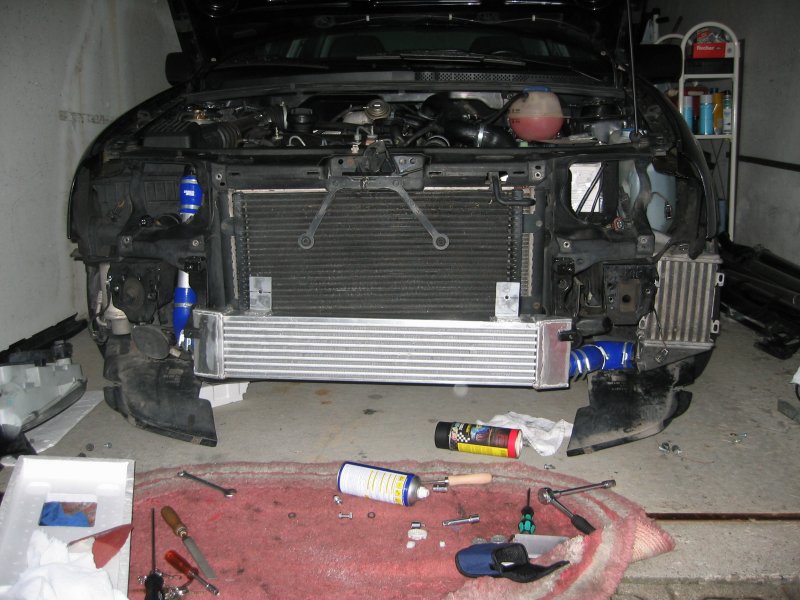
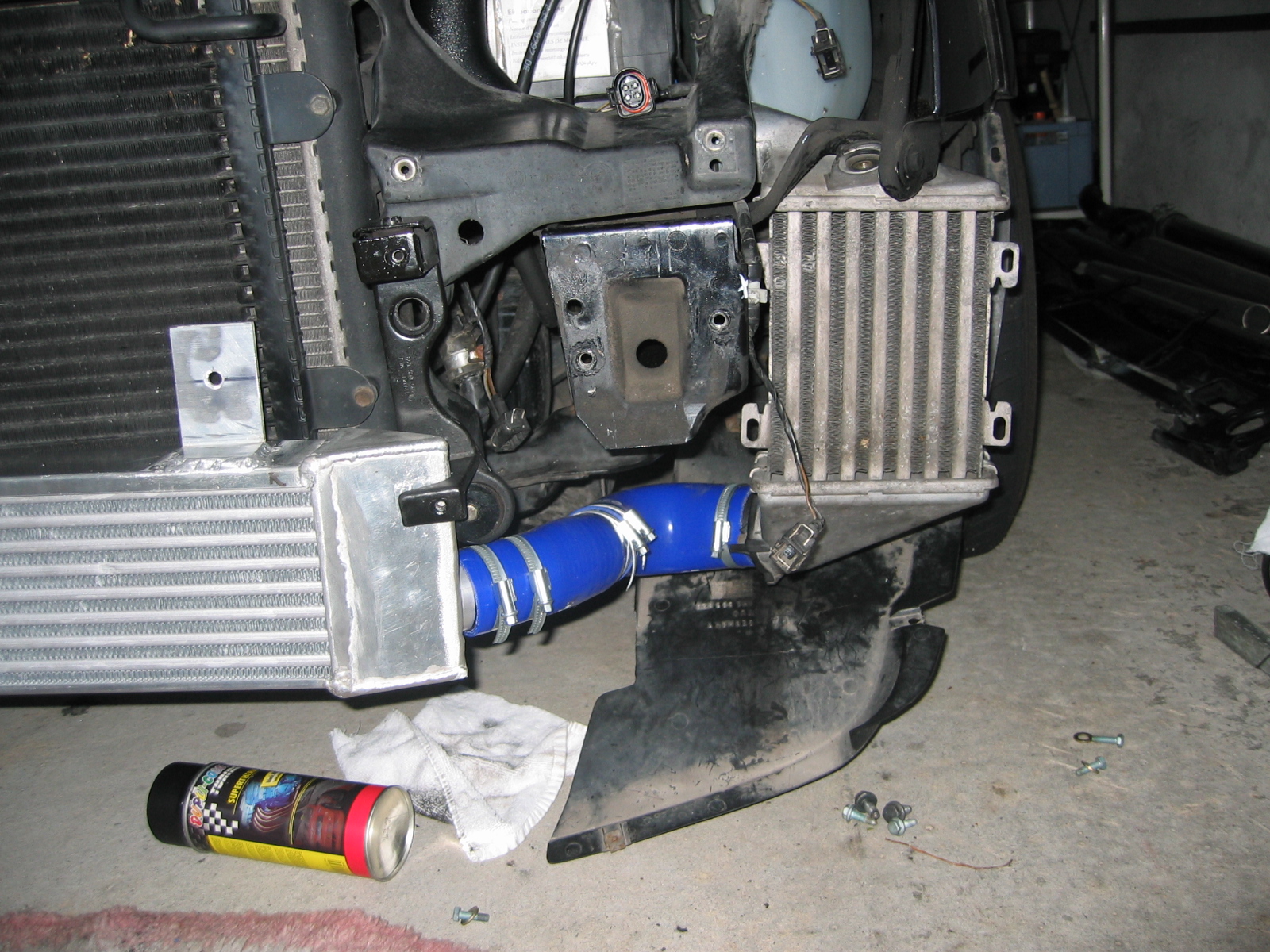
I recently had a second LLK implanted in my AFN.
The renovation took a while, and then I went on vacation.
After the first test drive, it almost seemed like it had less power than before!
Okay, it's been 4 weeks since I last drove, so I couldn't really tell if I have more or less power.
Question:
I've attached 2 pictures.
Can the experts among you tell me if this is a good idea, or should I leave out the original LLK (likely referring to a specific product or component)?
Thank you in advance!
Best regards,
DJ.
| Description: |
| Dwell Time: How Long Do Users Stay? |
|
| File size: |
98.17 KB |
| Viewed: |
11999 times |
|
| Description: |
| Dwell Time: How Long Do Users Stay? |
|
| File size: |
966.65 KB |
| Viewed: |
4905 times |
|
Translated on 20-09-2026, 5:45.
|
|
| Back to top |
|
|
olbetec
Schrauber
Joined: 08/14/2002
Posts: 76
Karma: +4 / -0
Location: Garbsen bei Hannover
Support
|
| 16-09-2005, 13:26 Subject: Lower Performance? Troubleshooting Guide. |
Quote |
|
"Due to the increased volume of the air intake system, you experience a longer turbo spool-up time. This might subjectively make it feel a bit slower. You could potentially reduce this by removing the original intercooler. However, who said that this would necessarily increase power? At most, the engine control unit won't restrict power as much in warm weather. The main reason for intercooler tuning is to reduce thermal stress, allowing for higher boost pressures, which in turn enables further tuning and prevents the engine from being limited prematurely in warm weather."
Stay cheerful.
OlBe
PS: A decrease of 20,000 kPa in the low-pressure temperature reduces the engine's compressor performance by approximately 6%, which means you can expect about 1% higher useful pressure levels. That must be a pretty good indicator...
Fabia I TDI, EZ06/01 (1,9/74kW, ATD)
Octavia II TDI DSG EZ11/06 (2,0/103kW, BMM)
Translated on 20-09-2026, 5:46.
|
|
| Back to top |
Profile PM |
|
dj1
Guest
Free account, no CAN development support
|
| 16-09-2005, 13:37 Subject: Dwell Time: How Long Do Users Stay? |
Quote |
|
Hi,
Okay, I had already noticed significant fluctuations in the outside temperature.
For example, at 20°C, it didn't run as well as it did at 10°C; there was a really significant difference!
I thought, if I installed a second air conditioner and it cooled the air down even further, you would notice it even more.
But that wasn't the only reason I installed a larger LLK.
Sure, I'm planning to run a higher LD soon, and I'll also be adding a 12mm pump piston.
Then I've done everything that can be done  .
Regards,
DJ.
Translated on 20-09-2026, 5:48.
|
|
| Back to top |
|
|
dj1
Guest
Free account, no CAN development support
|
| 20-09-2005, 9:24 Subject: Dwell Time: How Long Do Users Stay? |
Quote |
|
@ Ulf:
Can you explain that to me in more detail?
What is the purpose of actually connecting two LLK devices in series?
Double pressure loss compared to a single intercooler, and the second intercooler is less effective because the intake air is already pre-cooled, resulting in a smaller temperature difference compared to the ambient air.
If I were to do it, I would connect the intercoolers in parallel: this would halve the pressure loss and provide a better overall effect, because the charge air would flow into both intercoolers at a 'fully hot' temperature!
Wouldn't it be better if the air was already a bit cooler before it enters the second LLK?
Pressure loss? I still have 1.2 bar - just like before -> so there's no pressure loss.
Response behavior is the same.
Regards,
DJ.
Translated on 20-09-2026, 5:50.
|
|
| Back to top |
|
|
ulf
Profi-Schrauber
Joined: 04/13/2002
Posts: 11058
Karma: +18 / -0
Location: Saarland
2023 MG ZS
Premium Support
|
| 20-09-2005, 18:11 Subject: Dwell Time: How Long Do Users Stay? |
Quote |
|
dj1 wrote: | | Wouldn't it be better if the air was already a bit cooler before it enters the second LLK? | Then it will come out colder, but the effectiveness of the LLK is wasted: the higher the inlet temperature, the more heat is extracted from the LLK.
Quote: | Pressure loss? I still have 1.2 bar - just like before -> so no pressure loss.
Response behavior is the same. |
Lucky you? If you installed the LD sensor behind the second LLK (likely referring to a specific component), then the LD (likely referring to a light or other parameter) will naturally be controlled for that location.
Assuming that each of your valves causes a pressure drop of 0.1 bar at the maximum flow rate (Pmax).
Previously, your charger had to deliver 1.3 bar at the compressor outlet, and now it's delivering 1.4 bar.
In a parallel configuration, it should theoretically only need to provide about 1.25 bar. And an increase or decrease of 0.15 bar in the target pressure is quite a lot for a TDI turbocharger  . Gruß Ulf
_________
MG4 Electric
Translated on 20-09-2026, 5:53.
|
|
| Back to top |
Profile PM Garage |
|
|


 Bookmarks
 Links
Links Garage
 FAQ, Legal Notice & Privacy
 RSS Feed
 Register
 Login
Login

