| Author |
Message |
dieselschrauber
Administrator

Joined: 04/12/2002
Posts: 18096
Karma: +799 / -0 
Location: St.Gallen
2018 Volkswagen T6 
|
 22-04-2026, 11:00 Subject: 22-04-2026, 11:00 Subject: |
Quote |
|
Hi.
Quote: | | Can one possibly infer a turbocharger failure based on these images/findings? |
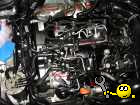
No, because it has nothing to do with the turbocharger, and there's nothing visible in the pictures that would suggest damage to the turbocharger (e.g., debris, oil in the exhaust system, etc.).
The images are missing context, so I'm referring you to the search function for information about each action. There are many related topics that allow for a professional assessment. When measuring the amount of leaked oil, it depends on whether the level readings were achieved in 1 second or 30 seconds.
Sure, here's the translation:
"LG" translates to "Best regards" or "Sincerely" in English.
Translated on 03-07-2026, 15:19.
|
|
| Back to top |
Profile PM WWW Garage |
 |
Herbert
Profi-Schrauber

Joined: 06/22/2005
Posts: 4619
Karma: +1337 / -0
Premium Support
dieselschrauber likes this. |
| 23-04-2026, 19:59 Subject: |
Quote |
|
Hi,
Unfortunately, your images are missing information about what they are or what they should be.
According to your MSG data, there are no measurement values available for rail pressure/zero quantity calibration for this engine (MKB DAUA?). Does the DDYA also appear in your signature?
I can only compare the return flow rates with the target values for the EA 288 for the Golf 2018 (in my case, DDYA 1.6 l TDI EA 288)). It might also depend now on whether it's a Bosch or a Delphi fuel injection system.
The total return flow at idle is acceptable (only Bosch), but the deviation from cylinder 3 is somewhat noticeable.
Does the car now pass the emissions test?
hg
Herbert.
Horch A4 8K CJCD
Golf 7 DDYA
(+ Audi 80 Avant B4 1Z 475Tkm - habe ich vom ersten bis zum letzten Tag gerne gefahren)
(+ Passat Variant 32B CY 400Tkm)
Translated on 03-07-2026, 15:19.
|
|
| Back to top |
Profile PM |
|
fowin
Joined: 07/24/2023
Posts: 35
Karma: +4 / -0
Premium Support
|
| 06-05-2026, 11:04 Subject: |
Quote |
|
Hi,
So, after replacing the DPF and particulate sensor, the emissions test ("AU") showed "only" 160,000 particles. -> The emissions test was passed, as the limit is 250,000 particles.
Compared to the almost 7 million particles previously, this represents a significant difference. I conclude from this that the DPF was actually defective and was damaged by the cleaning process.
Compared to the AU measurement from 2 years ago, however, he only had 300! Particles are still very high at 160,000.
What is the reason for that? That is now my next task.
The error log indicates a fault with the NOx sensor 1 and insufficient SCR catalyst effectiveness.
This error occurred for the first time now.
If I'm interpreting this correctly, the NOx sensor 1 is defective (showing 0 ppm, 0 volts, and is inactive), which is also why the second entry, "SCR NOx catalyst, efficiency too low," appears.
What surprises me is that only one NOx sensor is installed. Where does the VOR/NACH SCR catalyst come from then?
Replacing the NOx sensors should prevent both entries from reappearing.
Could this further reduce the number of particles, or is the problem already caused by incomplete combustion?
Or could the Add Blue injector valve be clogged?
I also decided to try a diesel additive to clean the fuel injection system, given the upcoming ESD (Emission Standard Directive) quantity measurement.
| Description: |
|

Download |
| File name: |
Log-LWF1969-24.4.26-WV1ZZZSYZJ9013901.txt |
| File size: |
4.22 KB |
| Downloaded: |
86 times |
Translated on 03-07-2026, 15:19.
|
|
| Back to top |
Profile PM |
|
dieselschrauber
Administrator
Joined: 04/12/2002
Posts: 18096
Karma: +799 / -0
Location: St.Gallen
2018 Volkswagen T6
Herbert likes this. |
| 06-05-2026, 11:43 Subject: |
Quote |
|
Quote: | | Compared to the AU measurement from 2 years ago, however, he only had 300! Particles, are 160,000 still very high. |
If the exhaust system after the DPF hasn't been replaced, it's probably full of soot... what happens to that soot when you accelerate hard?
Translated on 03-07-2026, 15:19.
|
|
| Back to top |
Profile PM WWW Garage |
|
fowin
Joined: 07/24/2023
Posts: 35
Karma: +4 / -0
Premium Support
|
| 06-05-2026, 13:41 Subject: |
Quote |
|
dieselschrauber wrote: | Quote: | | Compared to the AU measurement from 2 years ago, however, he only had 300! Particles, are 160,000 still very high. |
If the exhaust system after the DPF hasn't been replaced, it's probably full of soot... what likely happens to that soot when you accelerate hard? |
Yes, that's right, I hadn't thought of that. Thank you.
Translated on 03-07-2026, 15:19.
|
|
| Back to top |
Profile PM |
|
|


 Bookmarks
 Links
Links Garage
 FAQ, Legal Notice & Privacy
 RSS Feed
 Register
 Login
Login