| Author |
Message |
Ich_Can_nix
Profi-Schrauber

Joined: 12/06/2020
Posts: 204
Karma: +250 / -0 
Premium Support
dieselschrauber likes this. |
 21-11-2022, 22:36 Subject: 21-11-2022, 22:36 Subject: |
Quote |
|
Good evening.
Here, I can only see the coolant temperature sensor in the circuit diagrams.
If it's the one you're referring to, on one side it would connect to fuse F31 (5A) inside the unit (cable labeled 9964), and on the other side it would go to the radiator fan (8879).
If you have a different switch there, could you please send me the financial details via private message? Then I can go online tomorrow and look at the complete wiring diagram.
Best regards,
Michael.
Translated on 03-07-2026, 15:19.
|
|
| Back to top |
Profile PM |
 |
klahaui
Profi-Schrauber
Joined: 08/13/2009
Posts: 1102
Karma: +125 / -0
Location: Vogtland, Land der Berge
2019 Volkswagen Golf
Premium Support
dieselschrauber likes this. |
| 21-11-2022, 22:56 Subject: |
Quote |
|
Good evening.
So close to the finish line, and yet still missing it.
It wasn't the crankshaft position sensor. The idle is unstable when the engine is cold, but once it warms up, it runs very smoothly.
I can confirm the coolant sensor readings are 2.8V.
It's good to know that if you disconnect the coolant sensor or if it's defective, the fuel temperature will be used as a reference value.
The thermostat switch you described is located directly on the radiator fan.
Boost pressure at an outside temperature of 1 degree Celsius: 0.95 bar.
According to the manual pressure gauge, the wastegate is still fully closed.
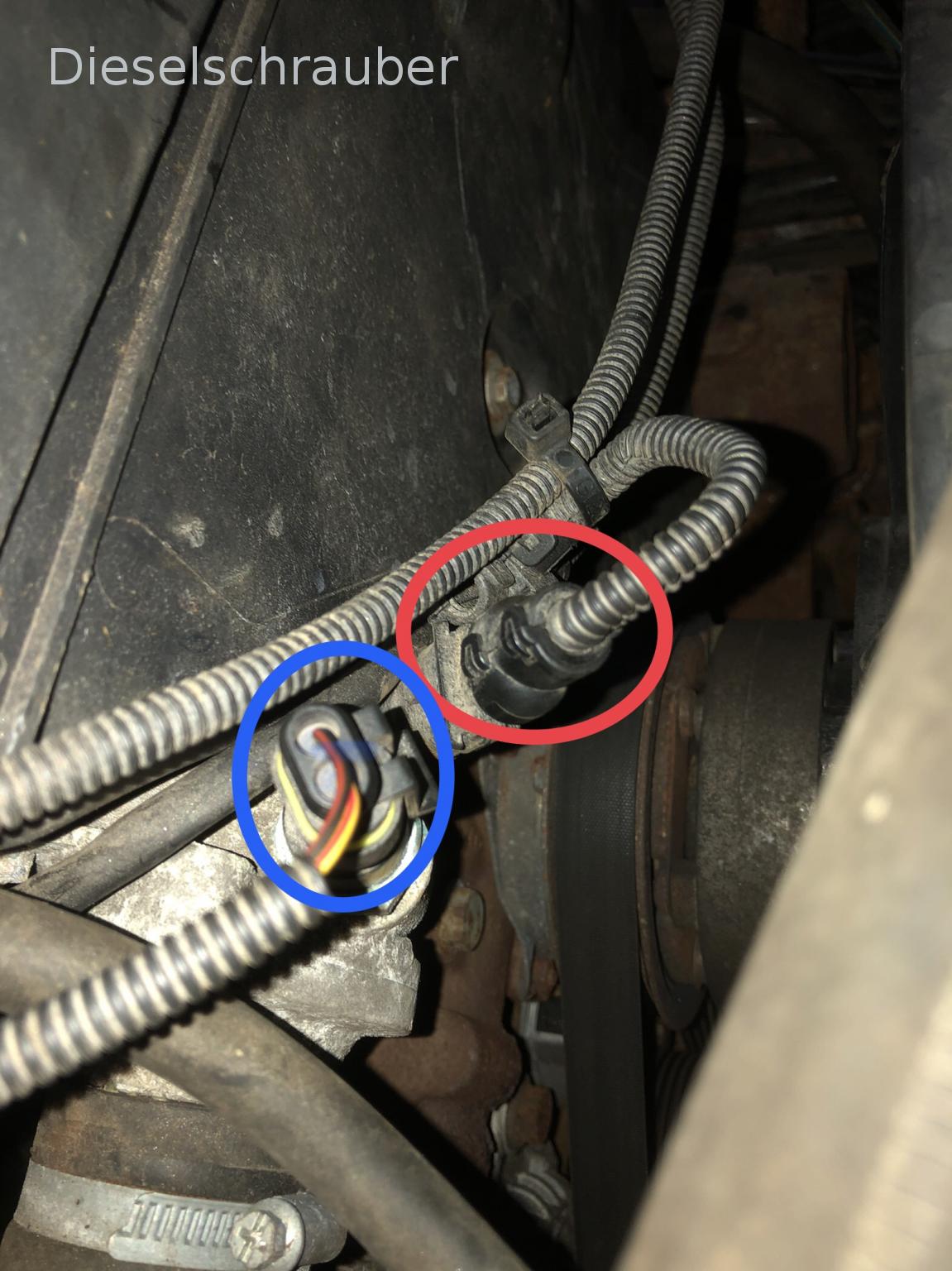
In the image, the coolant sensor, which is used by the control unit and display, is highlighted in red.
There's a blue sensor/switch near the coolant that I'm not familiar with; I suspect it's related to the glow plug system, which only activates at temperatures of 2 degrees Celsius or lower.
| Description: |
|
| File size: |
651.19 KB |
| Viewed: |
2532 times |
|
Kaum macht man es richtig, funktioniert es!
Translated on 03-07-2026, 15:19.
|
|
| Back to top |
Profile PM Garage |
|
klahaui
Profi-Schrauber
Joined: 08/13/2009
Posts: 1102
Karma: +125 / -0
Location: Vogtland, Land der Berge
2019 Volkswagen Golf
Premium Support
dieselschrauber likes this. |
| 22-11-2022, 12:57 Subject: |
Quote |
|
Hello everyone,
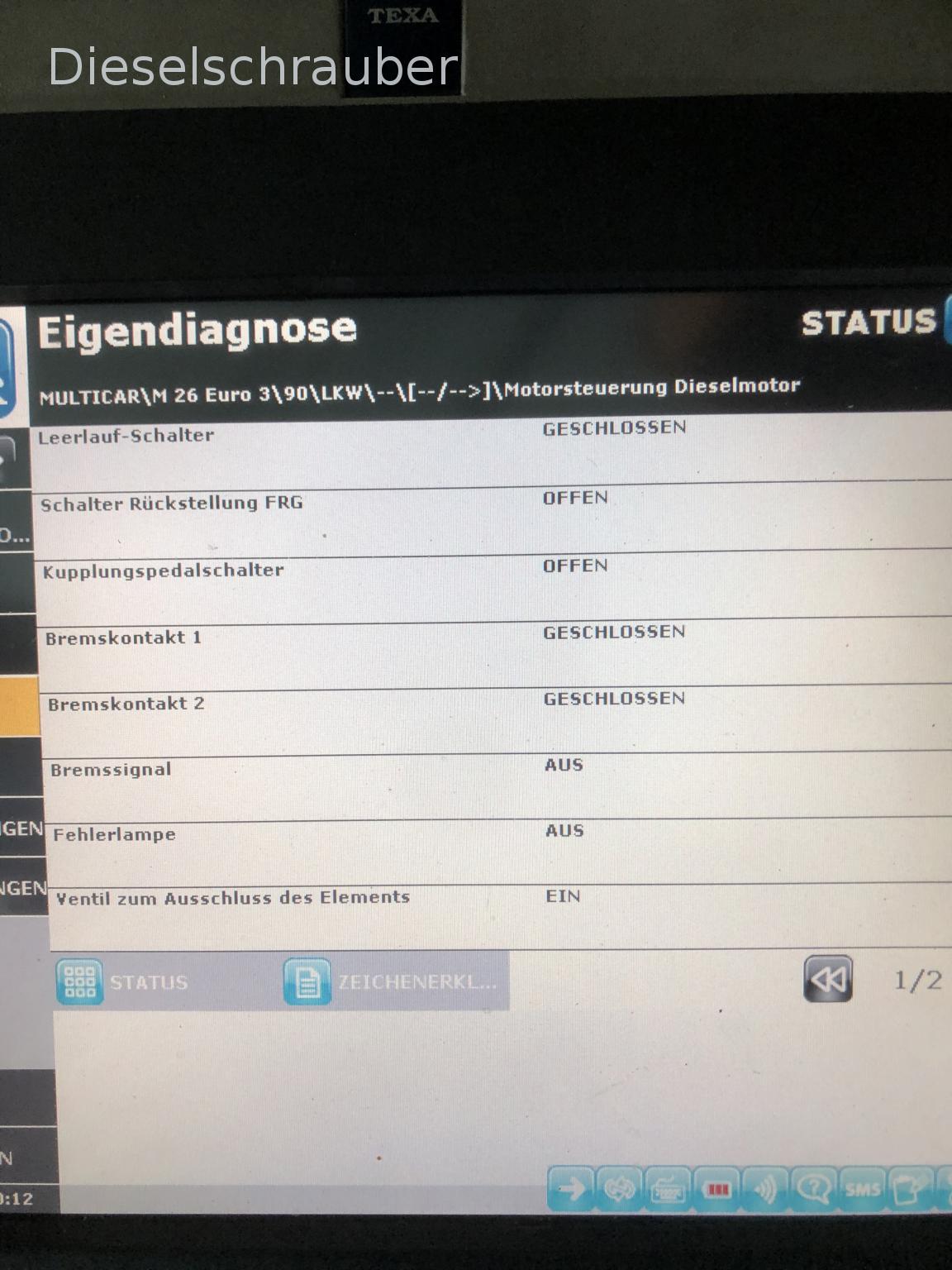
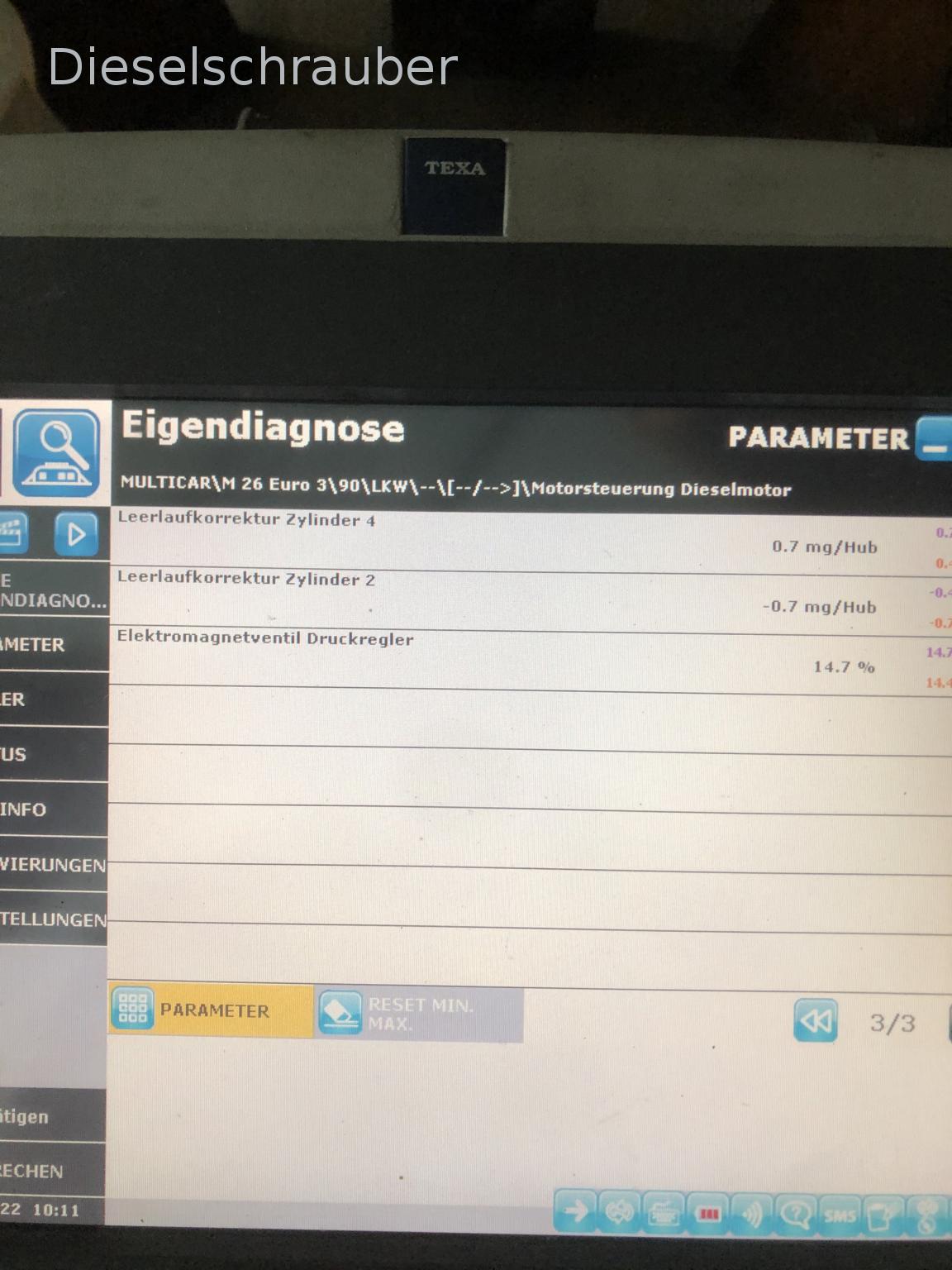
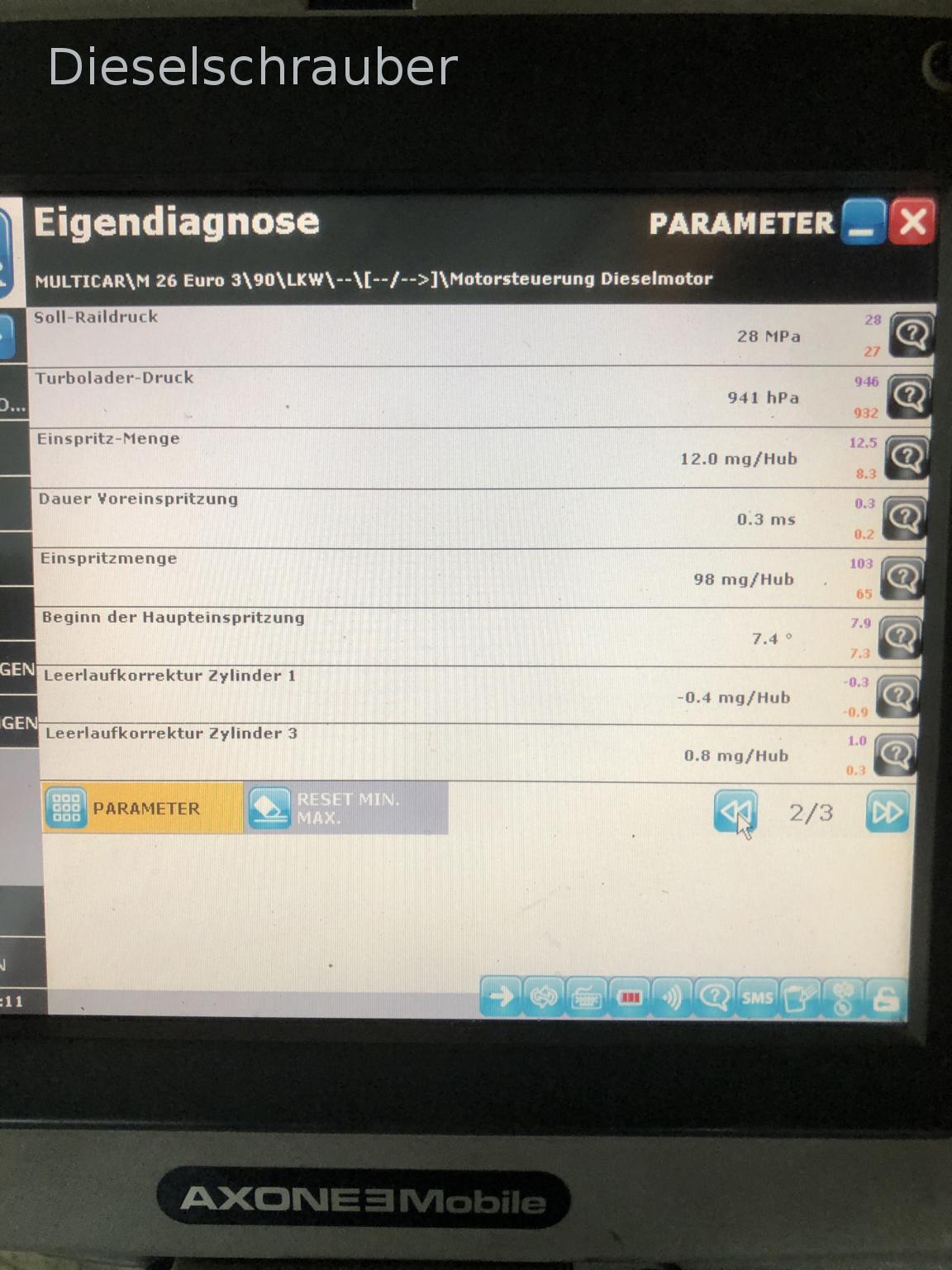
I was able to borrow another diagnostic tool from Texa.
Although she is 15 years old, there is more information available than I previously knew.
Can anyone provide a guideline for the maximum injection volume?
I think the idle speed control is okay, or what do you think?
VG
Thilo.
| Description: |
|
| File size: |
3.57 MB |
| Viewed: |
1027 times |
|
| Description: |
|
| File size: |
3.36 MB |
| Viewed: |
1001 times |
|
| Description: |
|
| File size: |
3.57 MB |
| Viewed: |
1004 times |
|
Kaum macht man es richtig, funktioniert es!
Translated on 03-07-2026, 15:19.
|
|
| Back to top |
Profile PM Garage |
|
dieselschrauber
Administrator

Joined: 04/12/2002
Posts: 18118
Karma: +801 / -0
Location: St.Gallen
2018 Volkswagen T6 
klahaui likes this. |
| 22-11-2022, 21:07 Subject: |
Quote |
|
Hello,
The idle speed correction is within the expected range and is acceptable.
47 mg/H at 4000 rpm results in approximately 130 horsepower.
Does the engine control unit (ECU) accurately measure the fuel temperature?
Websuche wrote: | | 78 kW / 106 hp at 3500 rpm |
It produces approximately 44mg/H at 3500 rpm.
Best regards, Rainer.
Translated on 03-07-2026, 15:19.
|
|
| Back to top |
Profile PM WWW Garage |
|
klahaui
Profi-Schrauber
Joined: 08/13/2009
Posts: 1102
Karma: +125 / -0
Location: Vogtland, Land der Berge
2019 Volkswagen Golf
Premium Support
dieselschrauber likes this. |
| 22-11-2022, 22:15 Subject: |
Quote |
|
Hello Rainer,
Thank you for the information.
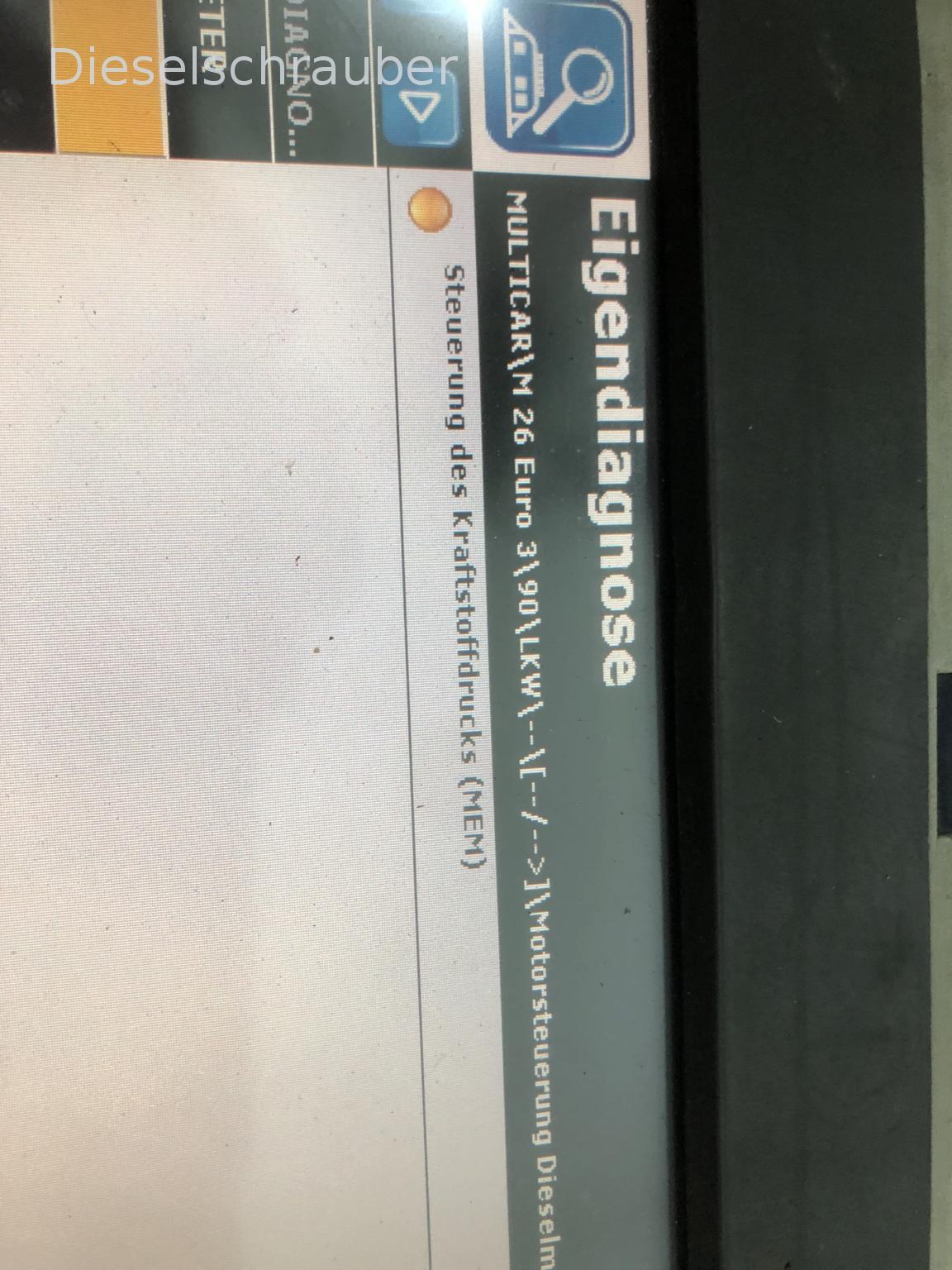
During a test drive with a 2-ton load, it showed me 43 mg/h today while going uphill and with full throttle.
It would mean that I'm at the maximum fuel injection amount, but still not getting any boost pressure, even though the boost is supposed to be regulated by the fuel injection.
The fuel temperature was approximately 37 degrees, so it should be within the acceptable range. In the morning, the intake air, fuel, and coolant temperatures all reflect the ambient temperature.
I'm puzzled by what the higher injection quantity reading on the tester signifies. This even reached over 500mg/hour.
During the test drive, an error message "Fuel pressure control" appeared.
The rail pressure followed the target value perfectly, but with a difference of only a few bar.
I deleted it, and a few minutes later, it reappeared.
This is getting really weird now.
Next week, I'll be able to use the diagnostic tool from an Iveco workshop, and I'm excited to try it out.
Best regards,
Thilo.
| Description: |
|
| File size: |
3.81 MB |
| Viewed: |
992 times |
|
Kaum macht man es richtig, funktioniert es!
Translated on 03-07-2026, 15:19.
|
|
| Back to top |
Profile PM Garage |
|
dieselschrauber
Administrator
Joined: 04/12/2002
Posts: 18118
Karma: +801 / -0
Location: St.Gallen
2018 Volkswagen T6
klahaui likes this. |
| 22-11-2022, 22:32 Subject: |
Quote |
|
Hello.
Without any power output despite the expected fuel injection amount, the engine would likely produce a significant amount of soot.
I thought he wouldn't do that? Then the displayed injection amount may not be the actual amount, for example, because the actual rail pressure is too low, and therefore being measured incorrectly.
Best regards, Rainer.
Translated on 03-07-2026, 15:19.
|
|
| Back to top |
Profile PM WWW Garage |
|
Ich_Can_nix
Profi-Schrauber
Joined: 12/06/2020
Posts: 204
Karma: +250 / -0
Premium Support
klahaui likes this. |
| 23-11-2022, 23:29 Subject: |
Quote |
|
Good evening.
I once looked at the values.
Unfortunately, I don't have any "should/is" data.
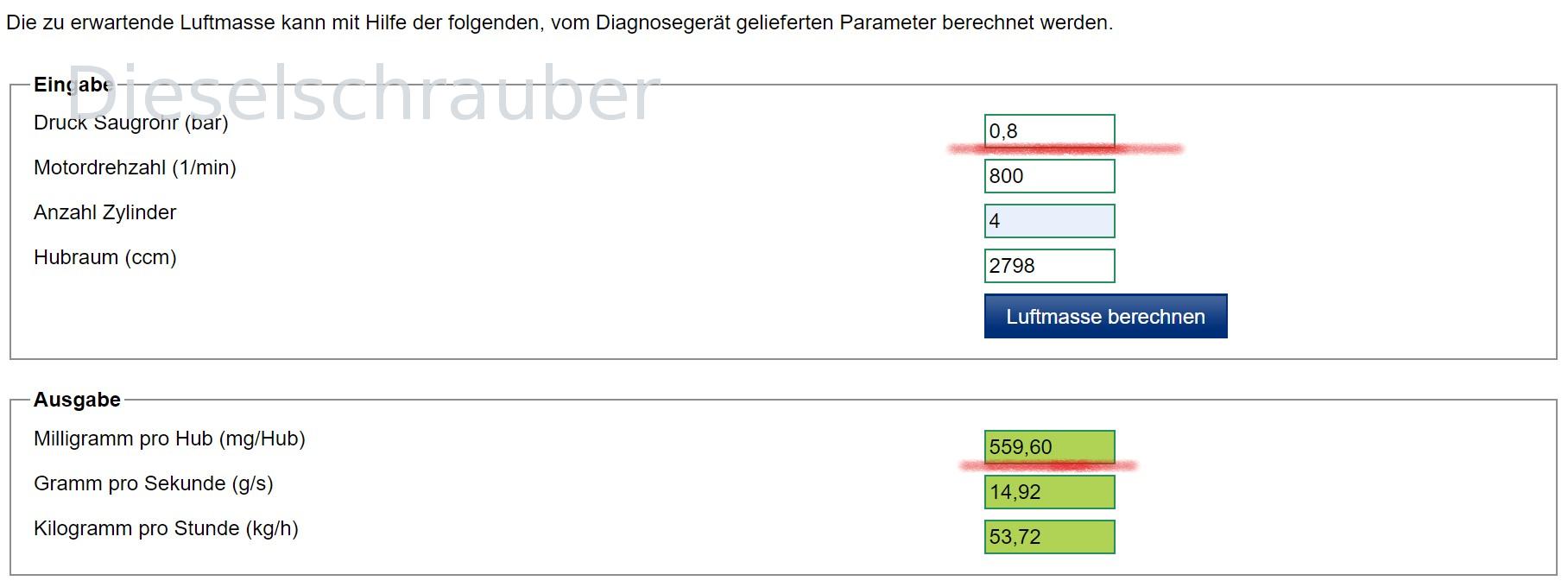
Have you checked the mass airflow sensor?
Something seems to be wrong with the fuel injection/air mixture. Certainly not if you convert them using the Bosch table.
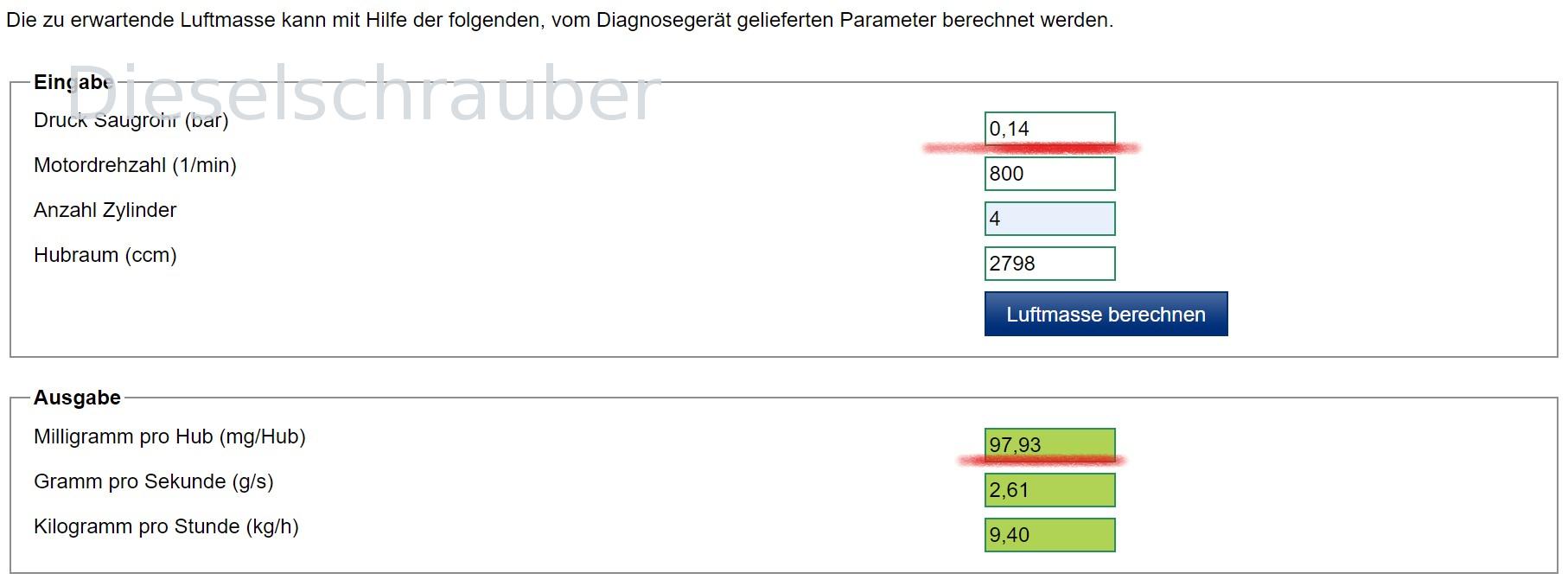
See the two pictures...
Here are some test values:
Intake air temperature/pressure sensor A19 Battery - Ignition on 0 V
Intake air temperature/pressure sensor: A3, Battery -, Ignition on: 4.5 - 5.5 V.
Intake air temperature/pressure sensor: A34, Battery -, Ignition on: 1.6 - 2 V.
Intake air temperature/pressure sensor A34 Battery - Ignition on, at 2500 mbar 4.65 V
Best regards,
Michael.
Please check your private message!
| Description: |
|
| File size: |
119.7 KB |
| Viewed: |
333 times |
|
| Description: |
|
| File size: |
118.25 KB |
| Viewed: |
335 times |
|
Translated on 03-07-2026, 15:19.
|
|
| Back to top |
Profile PM |
|
dieselschrauber
Administrator
Joined: 04/12/2002
Posts: 18118
Karma: +801 / -0
Location: St.Gallen
2018 Volkswagen T6
klahaui likes this. |
| 24-11-2022, 20:01 Subject: |
Quote |
|
Hello,
Without the AGR (Exhaust Gas Recirculation) system, approximately 700mg/hour of air mass should be expected at idle (calculated from a 1.9L 2V TDI engine with 480mg/hour).
I suspect that the strange value is simply a display error, which can happen. 
Best regards, Rainer.
Translated on 03-07-2026, 15:19.
|
|
| Back to top |
Profile PM WWW Garage |
|
klahaui
Profi-Schrauber
Joined: 08/13/2009
Posts: 1102
Karma: +125 / -0
Location: Vogtland, Land der Berge
2019 Volkswagen Golf
Premium Support
dieselschrauber likes this. |
| 24-11-2022, 23:07 Subject: |
Quote |
|
Evening everyone,
Sorry for the brief pause.
I think the amount of fuel being injected is either incorrect or is actually a target value.
I would be happy to have a little bit of soot, but I'm far from that.
The air mass cannot be checked due to the lack of a mass airflow sensor (MAF), as the vehicle does not have one.
I find it baffling how someone can achieve Euro 3 emissions standards without using a catalytic converter (Kat), lambda sensor, or lambda control (LMM).
The pump is a CP1S model, and according to my research, the rail pressure should be 1400 bar.
There's a check valve still attached to the pump body for the third piston. What exactly does it do, and when/for what is it needed?
At Peugeot, I heard about a counter that increases wear and tear on the engine control unit as the vehicle ages, which in turn reduces pressure and performance.
Is this something you're familiar with?
Currently, I am looking for a test setup to measure the rail pressure so that I can check it directly.
Michael: Can you also give me the measurement values for the Zume unit?
Best regards,
Thilo
Edit:
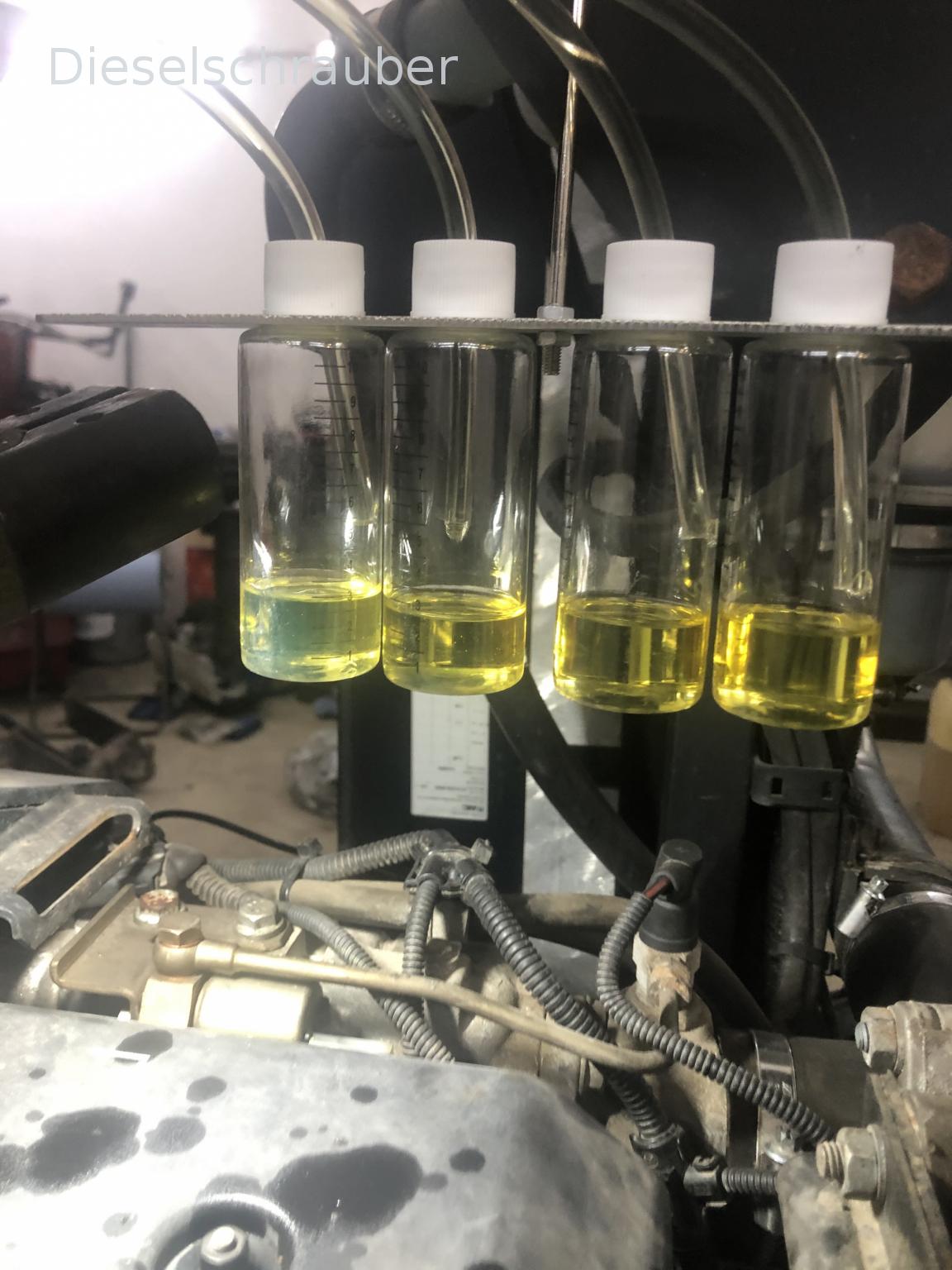
The image shows a measurement of the return flow volume, and the engine ran for approximately 2 minutes at idle.
| Description: |
|
| File size: |
2.4 MB |
| Viewed: |
371 times |
|
Kaum macht man es richtig, funktioniert es!
Translated on 03-07-2026, 15:19.
|
|
| Back to top |
Profile PM Garage |
|
dieselschrauber
Administrator
Joined: 04/12/2002
Posts: 18118
Karma: +801 / -0
Location: St.Gallen
2018 Volkswagen T6
klahaui likes this. |
| 25-11-2022, 13:08 Subject: |
Quote |
|
Hello,
Quote: |
The air mass cannot be checked due to the lack of a mass airflow sensor, as the vehicle does not have one. |
Important information!
Typically, the boost pressure signal is used to estimate the amount of air available.
This is associated with a limitation of the injection quantity, which depends on the boost pressure. The engine control unit (ECU) for this model may be set too low, resulting in insufficient fuel injection.
Best regards, Rainer.
Translated on 03-07-2026, 15:19.
|
|
| Back to top |
Profile PM WWW Garage |
|
klahaui
Profi-Schrauber
Joined: 08/13/2009
Posts: 1102
Karma: +125 / -0
Location: Vogtland, Land der Berge
2019 Volkswagen Golf
Premium Support
dieselschrauber likes this. |
| 02-12-2022, 21:22 Subject: |
Quote |
|
Good evening.
Today, I finally had some time to debug.
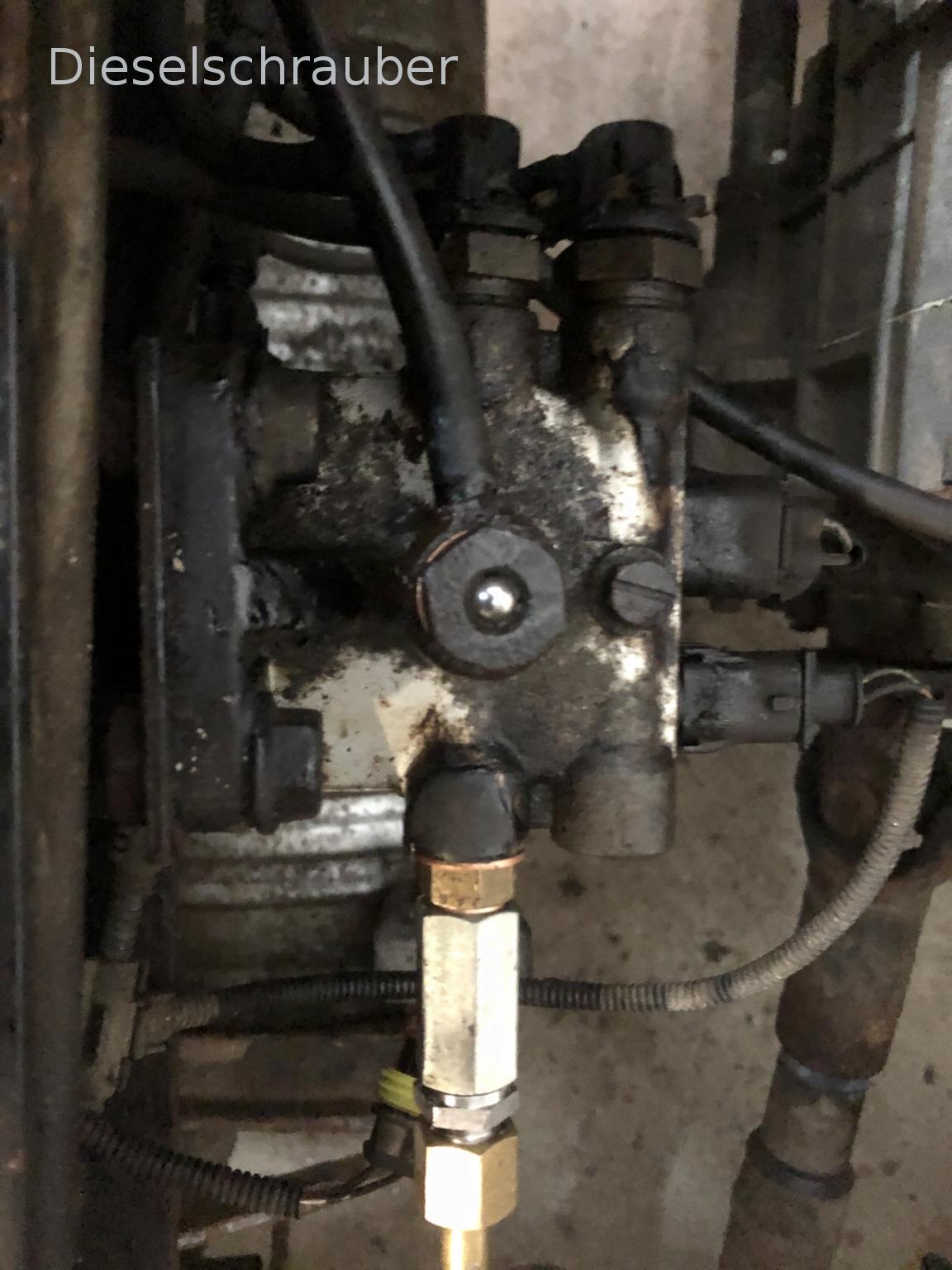
In the picture, you can see the fuel filter combination. During my first measurement, I attached the pressure gauge on top, where the overflow valve with the return line is located, because I didn't have an adapter. If the pre-charge pressure rises too high, this valve opens and allows the fluid to flow back towards the fuel cooler and the fuel tank.
I didn't really think about that during my first measurement.
During today's measurement, I checked the pressure and only got 2.4 bar of pre-charge pressure.
If the actual pressure value of 3.5-4 bar is indeed correct, I think I've found my mistake.
Does anyone have any experience with the pre-charge pressure?
The valve costs €170, and I don't want to replace it without being sure it's faulty.
Unfortunately, the parts supplier was unable to provide me with the torque specifications for that component.
Best regards,
Thilo.
| Description: |
|
| File size: |
2.76 MB |
| Viewed: |
384 times |
|
Kaum macht man es richtig, funktioniert es!
Translated on 03-07-2026, 15:19.
|
|
| Back to top |
Profile PM Garage |
|
klahaui
Profi-Schrauber
Joined: 08/13/2009
Posts: 1102
Karma: +125 / -0
Location: Vogtland, Land der Berge
2019 Volkswagen Golf
Premium Support
|
| 09-12-2022, 17:12 Subject: |
Quote |
|
Hello everyone,
I was able to have the valve on the fuel filter shipped to me and replace it for testing purposes.
The pressure remains at 2.5 bar. When running at full throttle while stationary, this drops back to 2 bar.
The return flow rate in the system is enormous; nearly 4 liters return to the tank in 30 seconds while idling, and it's bubble-free.
I experimentally connected a second pressure sensor and applied a pressure of 1.3 bar (2.3 absolute) to it. During the test drive, the rail pressure reached 1270 bar, and there was no visible soot.
Could it be that an injector valve isn't opening properly under full load, resulting in an insufficient amount of fuel being injected?
The actual amount of fuel injected in a multi-point sequential injection system is likely calculated solely based on the injection duration of the injectors?
Can it be done? How to safely diagnose a faulty power amplifier in the control unit using an oscilloscope?
Also, another noticeable thing is that there is no pressure regulator in the fuel rail itself; instead, this function is handled by the Zume unit. Therefore, the fuel rail pressure should decrease slowly after the engine is switched off, and this should happen within a few seconds.
A leaky valve in the combustion chamber or a pump with internal leakage. Am I understanding this technically correctly?
Best regards,
Thilo.
Kaum macht man es richtig, funktioniert es!
Translated on 03-07-2026, 15:19.
|
|
| Back to top |
Profile PM Garage |
|
dieselschrauber
Administrator
Joined: 04/12/2002
Posts: 18118
Karma: +801 / -0
Location: St.Gallen
2018 Volkswagen T6
|
| 09-12-2022, 19:34 Subject: |
Quote |
|
Quote: | 8140.43S
The 8140.43S, based on the 8140.43, was equipped with common-rail injection and produced 94 kW (128 hp) at 3600 rpm and 300 Nm of torque at 1800 rpm. He was found in the following automobiles:
Fiat Ducato II 2.8 JTD (1999-2006)
Iveco Daily III 2.8 JTD (2000-2006)
Peugeot Boxer I 2.8 HDi (2000-2006)
Citroën Jumper I 2.8 HDi (2000-2006)
Renault Master II 2.8 dCi (2000-2002)
Opel Movano I 2.8 CDTI (2000-2002)
Nissan Interstar 2.8 dCi (2000-2002)
Renault Mascott 130 (1999–2004)
Bremach TGR 35
8140.43C
The 8140.43C was a detuned version of the 8140.43S, with a power output of 78 kW (106 hp) at 3600 rpm and a torque of 260 Nm at 1800 rpm. He was installed in the Renault Mascott 110 from 1999 to 2004. |
Hello,
As I see it, this engine should have been used in mass-produced vehicles as well, such as the Ducato. Do you have a repair manual for the engine?
Power stages/injectors: It's hard to imagine that the electronics would be only partially defective; if there were a problem, it would likely affect all cylinders equally. The injectors could be the issue, but is it possible for them to all be malfunctioning in the same way? I don't know...
Ducato enthusiasts might be helpful with the engine. 
Quote: | The return flow rate in the system is enormous; in 30 seconds, nearly 4 liters return to the tank in idle, bubble-free.
I experimentally connected a second boost pressure sensor and applied a pressure of 1.3 bar (2.3 absolute) to it. During the test drive, the rail pressure reached 1270 bar | .
Is this coming directly from the high-pressure pump? It seems like a rather high return flow volume. Are the 1270 bar rail pressure values the target value, the actual value, or both? Do you see the control signal (PWM, %) for the pressure regulating valve?
What type of high-pressure pump is installed?
Is there a number visible on the rail pressure sensor that can be used to verify if it's the correct one?
Best regards, Rainer.
Translated on 03-07-2026, 15:19.
|
|
| Back to top |
Profile PM WWW Garage |
|
klahaui
Profi-Schrauber
Joined: 08/13/2009
Posts: 1102
Karma: +125 / -0
Location: Vogtland, Land der Berge
2019 Volkswagen Golf
Premium Support
dieselschrauber likes this. |
| 09-12-2022, 23:16 Subject: |
Quote |
|
Hello Rainer,
Thank you for your impressions; the Ducato forum would be my last resort...
The return flow will largely consist of excess fluid from the supply line, and the valve at the top of the image opens and directs it to the return collection tank.
Therefore, the pre-pump forces a large amount of fuel through the radiator.
For me, it's just a sign that the pump is actually delivering the required volume and not just running weakly.
The rail pressure was within the specified range, with only a few brief deviations.
The PWM signal is at 16% in idle mode and approximately 35% at full load.
Without an exhaust system, I achieve approximately 1050 mbar of boost pressure (compared to only about 900-950 mbar), and with short bursts, there are fluctuations up to 1150 mbar.
It features a Bosch CP1S high-pressure pump with a shut-off valve on the pump plunger.
The rail pressure sensor is a Bosch 0281002405, and unfortunately, I don't have a way to measure the rail pressure in analog format.
I think the idea is good, especially if the sensor were to output incorrect values, and for example, consistently show a reading that is 200 bar lower than the actual pressure.
Best regards,
Thilo.
Kaum macht man es richtig, funktioniert es!
Translated on 03-07-2026, 15:19.
|
|
| Back to top |
Profile PM Garage |
|
dleds
Joined: 04/16/2014
Posts: 40
Karma: +14 / -1
Premium Support
dieselschrauber likes this. |
| 10-12-2022, 19:34 Subject: |
Quote |
|
klahaui wrote: | Hello,
I checked the valve timing, removed the injector from cylinder 1, and determined the top dead center (TDC) position using a dial indicator. It fits the camshaft perfectly.
The valve clearance is a bit too tight, at 0.35-0.40mm, which is borderline.
In the attachment, there's the crankshaft sensor; it might be causing the problem... it's questionable why it looks like that. |
I once had the exact same problem with a T4 111kw, and it turned out to be the camshaft.
Typically, Sofim 8160 models are secured with pins or similar devices on the eccentric side, and the camshaft has a notch for the valve cover. If that's not possible, I would opt for using a calibrated transfer gauge. With dial indicators, the devil is in the details, and it's easy to be off by a small amount.
If the boost pressure isn't being reached, there's a fundamental problem. Normally, just before the peak torque, the pressure should be stable and consistent. The turbocharger should be able to produce 2 bar of boost at that operating point. Especially if there is enough diesel available.
The engine is an industrial engine, so it doesn't have a mass airflow sensor or lambda sensor. It simply runs lean to ensure the exhaust values are within the required limits, and to prevent it from overheating. Renault also had something similar in their G9U 2.5 DCI engine with 120 horsepower. I wouldn't expect to see black smoke clouds coming from it if you're pretending it's turbocharged.
Does it even have a boost control valve?
Translated on 03-07-2026, 15:19.
|
|
| Back to top |
Profile PM |
|
|


 Bookmarks
 Links
Links Garage
 FAQ, Legal Notice & Privacy
 RSS Feed
 Register
 Login
Login

