| Author |
Message |
Deus Violentia
Schrauber

Joined: 11/21/2007
Posts: 677
Karma: +15 / -0 
Support
|
 12-07-2010, 15:11 Subject: Self-Cleaning Intake Manifold: 1.9 TDI/2.0 TDI Review 12-07-2010, 15:11 Subject: Self-Cleaning Intake Manifold: 1.9 TDI/2.0 TDI Review |
Quote |
|
Since I'm not sure where this would be best placed, I'm posting it here for now. The administrators can move it if they think it would be better somewhere else.
As you all know, over time, the intake manifold and the intake passages of the cylinder head become coated with a mixture of oil from the turbocharger and soot particles from the EGR system.
On my 1.9 TDI AHF (long-distance vehicle, purchased with 340,000 km, everything was fine!), the carbon buildup in the intake manifold directly behind the EGR unit was considerable, about 5mm thick. The entire manifold was more or less constricted in cross-section all the way to the cylinder head.
On my 2.0 TDI 16V BKD engine, the wear was already devastating after only 25,000 km with a wear of 3 mm.
The only solution here is to close the AGR valve (see Ulf's technical article) and simultaneously carefully clean the AGR valve, the bypass valve (on the BKD engine), and the exhaust manifold.
For the BKD engine, I bought a clean intake manifold on eBay because one of the threads was damaged, and I cleaned the rest. For the AHF engine, I cleaned everything manually.
Having gone through this process with several TDI engines, here's my experience report on the most effective way to clean the intake manifold.
Soaking and placing items in diesel can only achieve limited success, as it's difficult to reach many internal areas. Even a sturdy bottle brush isn't helpful, as the deposits are either too firmly attached or you only end up smearing them around.
My patented recipe for cast iron manifolds, which avoids the use of temperature-sensitive, fixed attachments, is therefore the gas-burning process!
I removed the manifold, scraped off the bulk of the deposits with a flathead screwdriver, and filled the manifold with a small amount(!) of diesel, letting it sit for half a day. Then, I used a gas burner and let the gas flow in on the intake side, igniting it on the flange side. The gas burns inside the manifold, heating the oil residue (and diesel) until it starts to burn on its own (after about 5 minutes of continuous burning). Then, the manifold operates at Lambda=1, and the oil residue burns almost smokelessly with the correct heat. The dried-out remains are knocked out by gently tapping the manifold all around with a hammer, using a wooden block between the hammer and the manifold, and then shaking them out. 
The entire process takes about 2 hours, after which the intake manifold will be clean again. However, I still recommend using a cloth to wipe through all the openings to remove any stubborn residue. Then, rinse it again with alcohol (OF COURSE, ONLY WHEN THE MANIFOLD IS COMPLETELY COOL - the alcohol will change color when it absorbs foreign substances; clear to light yellow is okay, dark yellow to brown means you need to continue cleaning!) and let it air dry.
The special cleaning product for heat-sensitive parts like the EGR unit is, for me, a tar remover, and it makes the whole thing sparkling clean again. When installing, replace the EGR O-rings and metal gaskets!
CONCLUSION:
After only 10,000 km (!), I can report regarding the BKD engine that a significant amount of the oil sludge on the intake channels in the cylinder head has already been broken down by the mass flow of air and oil coming from the crankcase ventilation system.
With the AHF, I noticed a subjective improvement in driving performance and a smoother running culture, similar to what I experienced with an ALH.
Sure, here is the translation of the text from German to English:
"Comments are welcome!"
Translated on 26-09-2026, 20:44.
|
|
| Back to top |
Profile PM |
 |
BM
Profi-Schrauber


Joined: 12/07/2005
Posts: 1857
Karma: +8 / -0
Location: Nähe Düsseldorf
Premium Support
|
| 13-07-2010, 0:17 Subject: Self-Cleaning Intake Manifold: 1.9 TDI/2.0 TDI Review |
Quote |
|
Hmm, that seems like too much effort for me personally. With my AJM, the intake manifold is probably also half-covered in debris, so I'll need to address that soon.
I used a commercial cleaning machine for a long time that was originally manufactured by a company in our town that produced mixing equipment for a large bakery (now Kamps).
This stuff was phenomenal. Today, this product is being sold by its nephew from the Bergisches Land region; here is the link: http://www.bcp-gmbh.de/.
It seems the main ingredient is potassium hydroxide.
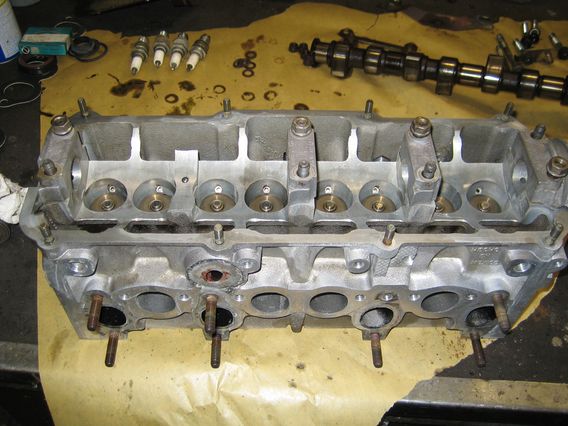
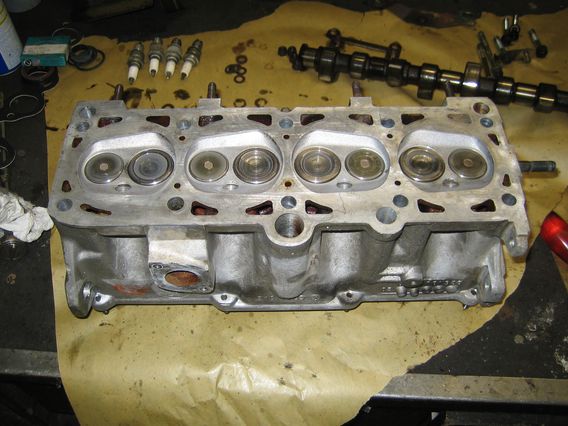
I've used this product to clean all sorts of things, including aluminum rims and cylinder heads. I was even able to remove stubborn engine oil, so the inside of those heads looked brand new.
The photos show a 15-year-old ZK (presumably a piece of machinery or equipment). In the northwest section and at several other points, it's still possible to see what the part looked like before.
I plan to use something similar to clean my intake manifold. I would first remove the heaviest deposits using a steam cleaner. The problem is that this cleaning agent needs time to work.
Perhaps one of us has more knowledge about potassium hydroxide...
| Description: |
| Self-Cleaning Intake Manifold: 1.9 TDI/2.0 TDI Review |
|
| File size: |
63.36 KB |
| Viewed: |
16039 times |
|
| Description: |
| Self-Cleaning Intake Manifold: 1.9 TDI/2.0 TDI Review |
|
| File size: |
60.89 KB |
| Viewed: |
19187 times |
|
3B5 AJM
Wer nichts weiss, muss alles glauben.
**Technische Fragen bitte ins Forum und nicht in mein Postfach**
LG, Onkel BM
Translated on 26-09-2026, 20:50.
|
|
| Back to top |
Profile PM |
|
Steffen W
Profi-Schrauber
Joined: 07/05/2008
Posts: 1276
Karma: +104 / -0
Location: Altenburg
Premium Support
|
| 13-07-2010, 7:21 Subject: Self-Cleaning Intake Manifold: 1.9 TDI/2.0 TDI Review |
Quote |
|
"BM, don't say that. I did it on a Passat with the AJM engine, as mentioned in my signature, at 192,000 km, and the carbon buildup wasn't significant. The walls were just black, and there were some minor carbon deposits. But there was no sign of the 3 or even 5 mm thick crusts that narrow the cross-section. At least, not on that engine."
I cleaned the intake manifold using Liqui Moly throttle body cleaner. I used a spray can with a nozzle (like for underbody protection) and applied it from the front. It worked very well. There wasn't much buildup to remove anyway.
Passat Variant BGW 2005
2024 Dacia Duster blue dci 115
Translated on 26-09-2026, 20:52.
|
|
| Back to top |
Profile PM |
|
dieselmartin
Profi-Schrauber
Joined: 03/13/2003
Posts: 10121
Karma: +29 / -0
Location: in der Werkstatt
2007 Volkswagen Passat
Premium Support
|
| 13-07-2010, 8:01 Subject: Self-Cleaning Intake Manifold: 1.9 TDI/2.0 TDI Review |
Quote |
|
Thank you, Deus, for the text.
Pictures would be great.
Here are a few more notes:
- The BKD engine does not have a shut-off valve; it has a throttle valve. This valve is constantly actuated, moving continuously, and therefore its free movement is crucial for its operation. Shut-off valves are only for convenience.
- My 1Z nozzle was made sparkling clean (as clean as rough cast iron can be) using the diesel brush method.
- My BMR (also the 16V crossflow version, which is the factory chip version of the BKD) has a plastic intake manifold (introduced in MJ 07), so I'll have to be very careful when cleaning it.
- Hat der BKD Drallklappen ? Was hast du mit denen gemacht ? Also exhausted?
Greetings.
m;
Transparency, Teamwork
... there was another T.
I don't know what the f*ck it was.
Translated on 26-09-2026, 20:53.
|
|
| Back to top |
Profile PM Garage |
|
dieselmartin
Profi-Schrauber
Joined: 03/13/2003
Posts: 10121
Karma: +29 / -0
Location: in der Werkstatt
2007 Volkswagen Passat
Premium Support
|
| 14-07-2010, 14:28 Subject: Self-Cleaning Intake Manifold: 1.9 TDI/2.0 TDI Review |
Quote |
|
The BKD engine doesn't seem to have swirl flaps (approximately 200 EUR).
This makes it clear that you can burn out your aluminum exhaust manifold.
I would handle the BMN/BMR model (with swirl flaps, 400 EUR) with a bit more care.
m;
Transparency, Teamwork
... there was another T.
I don't know what the f*ck it was.
Translated on 26-09-2026, 20:55.
|
|
| Back to top |
Profile PM Garage |
|
Deus Violentia
Schrauber
Joined: 11/21/2007
Posts: 677
Karma: +15 / -0
Support
|
| 14-07-2010, 19:28 Subject: Self-Cleaning Intake Manifold: 1.9 TDI/2.0 TDI Review |
Quote |
|
@ dieselmartin : You're absolutely right, it's a throttle valve, but it only functions because this thing adjusts depending on the desired opening degree of the EGR system to create a vacuum towards the exhaust manifold, so that the exhaust gases are drawn in in addition to the engine's own exhaust pressure. However, in principle, you could completely remove this component if, for example, you disable the EGR map in the EDC16 engine control unit, i.e., set the demand to 0 in every load condition. Then the valve wouldn't have any function. Of course, shut-off valves provide comfort by reducing the severity of the shut-off, but could this potentially damage the crankshaft mechanism somewhere in the long run? I can't imagine it, but I'm still asking.
Translated on 26-09-2026, 20:56.
|
|
| Back to top |
Profile PM |
|
Bertil
Profi-Schrauber
Joined: 04/15/2002
Posts: 5628
Karma: +108 / -0
Premium Support
|
| 14-07-2010, 20:07 Subject: Self-Cleaning Intake Manifold: 1.9 TDI/2.0 TDI Review |
Quote |
|
Deus Violentia wrote: | ...
Sure, | bypass valves offer comfort by reducing the impact of the clutch engagement, } but could they potentially damage the crank mechanism somewhere over time? I can't imagine that being the case, } but I'm still asking.
If it were only about the impact itself, it wouldn't be so bad. Unfortunately, there's a lot involved in protecting the mechanics from damage.
I just always wonder what kind of "deckschleudern" you're driving.
My DPF (Diesel Particulate Filter) has been working properly since 191,000 km, and the soot buildup is so minimal that cleaning it isn't worth it.
My old 1Z definitely had more material on the AGR (automatic gear recognition) sensor, but it was certainly not 5mm.
Given this amount of buildup, I suspect there's a defect. Gruß Bertil
Skoda 5E5 CZDA + Mini R50 W10 + VW ID.3 + Fiat Ducato 250 + 161 DX
*** Technische Anfragen per PN werden von mir nicht beantwortet! ***
Translated on 26-09-2026, 20:58.
|
|
| Back to top |
Profile PM |
|
BM
Profi-Schrauber
Joined: 12/07/2005
Posts: 1857
Karma: +8 / -0
Location: Nähe Düsseldorf
Premium Support
|
| 14-07-2010, 21:57 Subject: Self-Cleaning Intake Manifold: 1.9 TDI/2.0 TDI Review |
Quote |
|
Quote: | With this much residue, I have to assume there is a defect.
|
Well, it probably depends on what you consider a defect. I've seen similar things before, but it wasn't 5mm.
Considering how high VW states the possible oil consumption to be, one could almost say that it's normal  . 3B5 AJM
Wer nichts weiss, muss alles glauben.
**Technische Fragen bitte ins Forum und nicht in mein Postfach**
LG, Onkel BM
Translated on 26-09-2026, 20:59.
|
|
| Back to top |
Profile PM |
|
christians
Profi-Schrauber
Joined: 09/05/2002
Posts: 2105
Karma: +17 / -0
Location: Sauerland
Premium Support
|
| 14-07-2010, 22:27 Subject: Self-Cleaning Intake Manifold: 1.9 TDI/2.0 TDI Review |
Quote |
|
"It wasn't even as thick as 5mm. The AKN was better, and the BPP only had a thin layer as well."
I wouldn't use potassium hydroxide on an aluminum part. Have you ever seen those so-called "power pellets" in a drain cleaner?
Gruß Christian
A6 BPP, Ex-A6 AKN (Gurke), Ex-Audi100 92 AAT (5Zyl.)
Translated on 26-09-2026, 21:00.
|
|
| Back to top |
Profile PM |
|
Deus Violentia
Schrauber
Joined: 11/21/2007
Posts: 677
Karma: +15 / -0
Support
|
| 15-07-2010, 8:56 Subject: Self-Cleaning Intake Manifold: 1.9 TDI/2.0 TDI Review |
Quote |
|
The 5mm refers to the accumulated maximum value in the intake manifold behind the EGR valve. Within the EGR valve itself, it might be 1-1.5mm at 350,000 km. That's acceptable. So, please don't imagine a continuous 5mm layer; that would be incorrect. Where the deposits accumulate primarily depends on the flow of the mass airflow and how it's redirected by the geometry of the manifold.
Translated on 26-09-2026, 21:00.
|
|
| Back to top |
Profile PM |
|
BM
Profi-Schrauber
Joined: 12/07/2005
Posts: 1857
Karma: +8 / -0
Location: Nähe Düsseldorf
Premium Support
|
| 15-07-2010, 13:10 Subject: Self-Cleaning Intake Manifold: 1.9 TDI/2.0 TDI Review |
Quote |
|
Quote: | I wouldn't subject an aluminum head to potassium hydroxide solution. Have you ever seen those so-called "power granules" in the drain?
|
I don't either. The cleaner I use only contains certain amounts of this alkali. In any case, aluminum from Zks is not visibly affected.
I was just wondering if anyone among us might be knowledgeable about poisons or capable of concocting a cleaning solution for such purposes. 3B5 AJM
Wer nichts weiss, muss alles glauben.
**Technische Fragen bitte ins Forum und nicht in mein Postfach**
LG, Onkel BM
Translated on 26-09-2026, 21:01.
|
|
| Back to top |
Profile PM |
|
christians
Profi-Schrauber
Joined: 09/05/2002
Posts: 2105
Karma: +17 / -0
Location: Sauerland
Premium Support
|
| 16-07-2010, 20:37 Subject: Self-Cleaning Intake Manifold: 1.9 TDI/2.0 TDI Review |
Quote |
|
There are some other substances, called "carbon solvents," although carbon is hardly soluble in anything other than iron. They are probably highly carcinogenic, likely used to compensate for something.
They can also help if the injectors or glow plugs are stuck in the cylinder head.
http://bgproducts.automechatronik.com/category/22303Gruß Christian
A6 BPP, Ex-A6 AKN (Gurke), Ex-Audi100 92 AAT (5Zyl.)
Translated on 26-09-2026, 21:02.
|
|
| Back to top |
Profile PM |
|
|


 Bookmarks
 Links
Links Garage
 FAQ, Legal Notice & Privacy
 RSS Feed
 Register
 Login
Login
