| Author |
Message |
bubu
Joined: 01/17/2009
Posts: 38
Karma: +2 / -0 
1998 Volkswagen Golf
Premium Support
|
 17-09-2021, 12:10 Subject: BKD: Cause of turbocharger damage on the compressor side? 17-09-2021, 12:10 Subject: BKD: Cause of turbocharger damage on the compressor side? |
Quote |
|
Hello everyone,
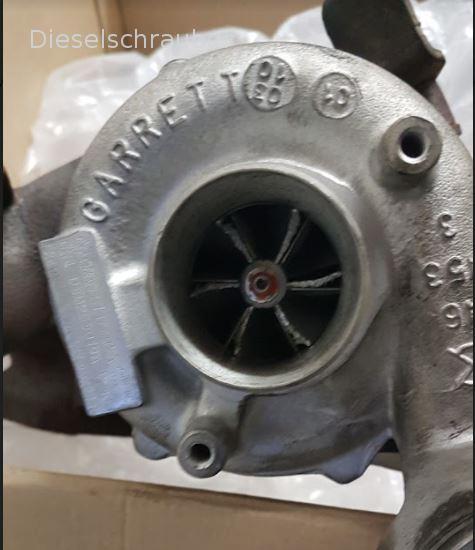
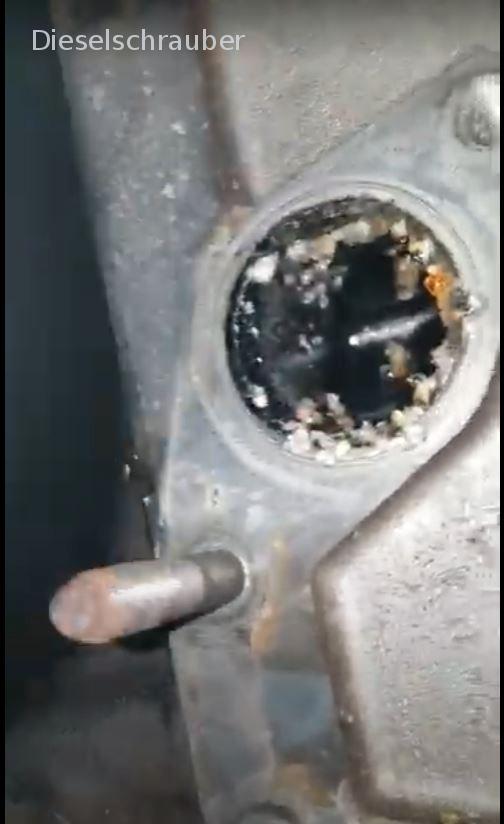
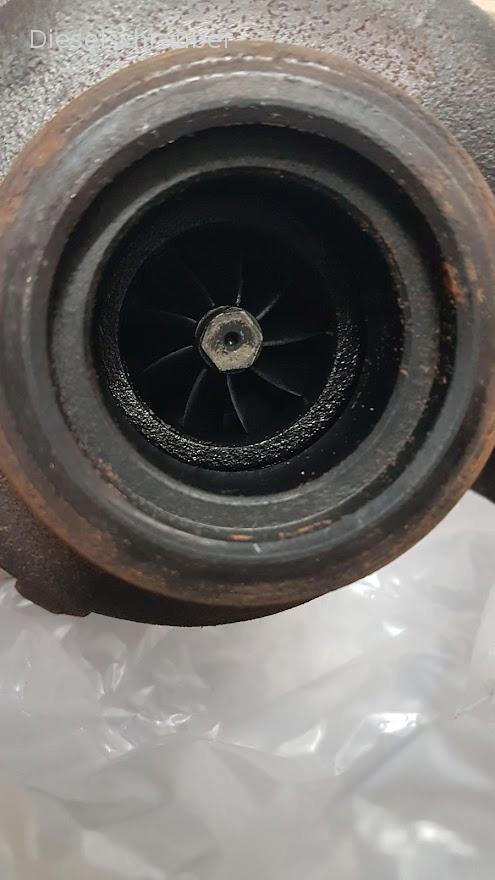
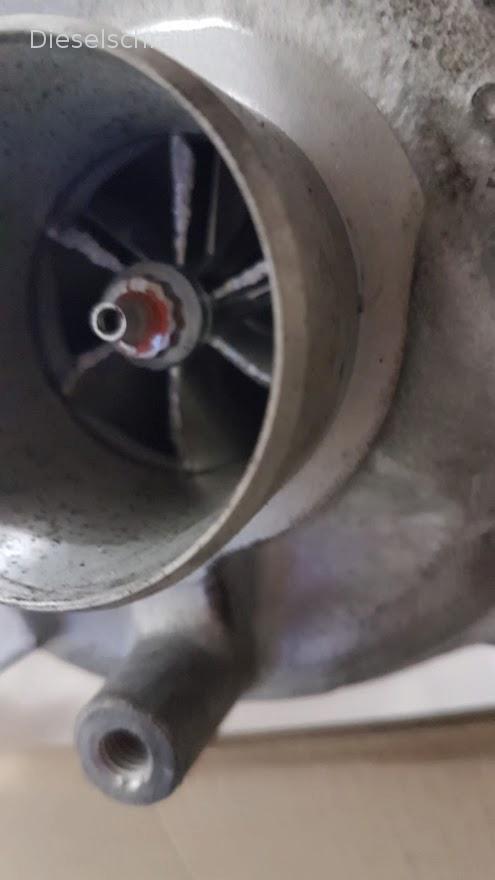
"My A3, with the BKD engine (2.0 140HP), recently suffered a turbocharger failure on the highway. Initially, it felt like a broken or clogged catalytic converter, as the boost pressure only came on much later. Upon disassembly, it was found that the shaft was okay, and the exhaust side appeared to be in order externally. However, the intake side had accumulated a significant amount of debris. The turbocharger repair specialist suspects that several plastic particles entered the turbocharger over a prolonged period from the crankcase ventilation system, although it's unlikely that foreign particles could have entered through the air filter." The entire system had been untouched for almost a year, and upon disassembly, it appeared to be in good condition - therefore, I'm ruling out the air filter as the cause.
Has anyone ever experienced something like this before? Does anyone have any experience with it? I would like to research and rule out possible causes before installing a turbocharger.
The issue occurred during relatively relaxed driving. At 140 km/h, the power suddenly reduced, but didn't completely disappear. With my previous turbo failure, it happened abruptly, including smoke. This time, there was no smoke and no unusual noises, leading me to suspect a slipped pressure hose or vacuum hose. I couldn't find anything wrong, so I drove a few meters while monitoring the target vs. actual boost pressure via OBD, and noticed that the turbocharger was building pressure with a delay.
VG, Steffen.
| Description: |
| Turbolader nach Fremdpartikel? |
|
| File size: |
41.42 KB |
| Viewed: |
345 times |
|
ALH +Stufe 1
Translated on 03-07-2026, 15:19.
|
|
| Back to top |
Profile PM Garage |
 |
dieselschrauber
Administrator

Joined: 04/12/2002
Posts: 18113
Karma: +800 / -0
Location: St.Gallen
2018 Volkswagen T6 
|
| 17-09-2021, 12:24 Subject: BKD: Cause of turbocharger damage on the compressor side? |
Quote |
|
Hello Steffen,
I'm not aware of anything comparable in the Audi A3. Is the mother that the compressor wheel is screwed onto still in place? I can't really tell from the picture.
If this came loose, it could have caused the damage. Or maybe not, it's all speculation. My suspicion is that the mother would have disassembled everything in the same way.
Regarding foreign plastic particles from the cooling water system, I am not aware of any issues. However, I would still replace the cooling water system with the oil separator as a precautionary measure.
I am aware of turbocharger damage caused by ice particles in various T6 TDI models. Under unfavorable conditions, ice can form in the intercooler or intake manifold during the winter. If this happens, the compressor wheel will be damaged.
Therefore, in my case, the KGE (cooling unit) is thermally insulated so that it remains warm even when driving in temperatures below freezing. 
What is the mileage on your BKD engine?
Best regards, Rainer.
Translated on 03-07-2026, 15:19.
|
|
| Back to top |
Profile PM WWW Garage |
|
bubu
Joined: 01/17/2009
Posts: 38
Karma: +2 / -0
1998 Volkswagen Golf
Premium Support
dieselschrauber likes this. |
| 17-09-2021, 13:50 Subject: BKD: Cause of turbocharger damage on the compressor side? |
Quote |
|
Hello Rainer, hello everyone.
The engine was still running, and the car was also driving with delayed, but full boost pressure from around 2200 rpm. Of course, I wouldn't have tested that if I hadn't been absolutely sure it was only in limp mode. No oil leaks, no unusual noises, and no warning lights. The bearing is perfect, both axially and radially.
It's quite possible that it happened gradually and that it wasn't noticeable on the highway because it didn't occur at engine speeds above 2000 rpm. The last turbocharger failure, a little over a year ago, was caused by a loose nut. After I got used to the new turbocharger, I then noticed coolant leaks on the exhaust side twice. It's also noticeable by a slight vibration at idle when coasting, which it didn't do just a few weeks ago.
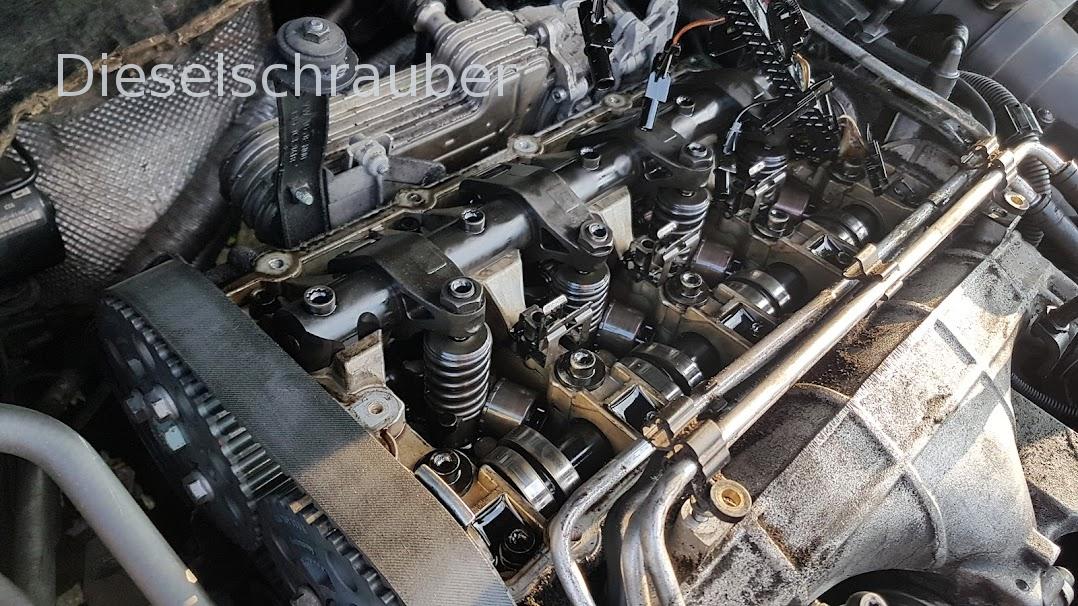
The car has 270,000 km on the clock, it ran perfectly, and it was supposed to last even longer. Fuel efficiency is always a consideration, but due to many other recent repairs and my attachment to the vehicle, I'm willing to invest some money. I'm not sure yet how much it will cost, but the parts I need to replace include the valve cover with crankcase ventilation, the turbocharger and intercooler, the cylinder head (without camshafts), the timing belt (which unfortunately needs to be replaced again), and the PD wiring harness – it's likely to be expensive. I still believe that the common rail injectors have some remaining lifespan, as I have meticulously monitored their fuel quantity variations over the past few weeks.
I only see a somewhat affordable solution in acquiring a PD engine and camshafts, installing them into a new cylinder head from AMC or (?), possibly an original VW head (apparently the head gasket issue has been resolved), and having a workshop install the entire assembly, including the timing belt. While a repair manual is available, I still have a lot of respect for the task.
Starting with the turbocharger and other related work, I could probably handle it myself. I wonder if anyone would be interested in helping out? I really don't want to pay an extra 1000 euros for someone to replace a part that I can easily replace myself, simply because I'm afraid of getting dirty before work.
VG, Steffen
PS: I think most people would probably give up on it, but my ALH, which has been running with 110kW for many years (including injectors and software from here), has now completed three trips around the world and survived approximately 350,000 km. Meanwhile, he was also extremely helpful and reliable.
| Description: |
| BKD: Cause of turbocharger damage on the compressor side? |
|
| File size: |
44.61 KB |
| Viewed: |
347 times |
|
| Description: |
| BKD: Cause of turbocharger damage on the compressor side? |
|
| File size: |
228.74 KB |
| Viewed: |
344 times |
|
| Description: |
| BKD: Cause of turbocharger damage on the compressor side? |
|
| File size: |
66.11 KB |
| Viewed: |
326 times |
|
| Description: |
| BKD: Cause of turbocharger damage on the compressor side? |
|
| File size: |
36.44 KB |
| Viewed: |
385 times |
|
ALH +Stufe 1
Translated on 03-07-2026, 15:19.
|
|
| Back to top |
Profile PM Garage |
|
|


 Bookmarks
 Links
Links Garage
 FAQ, Legal Notice & Privacy
 RSS Feed
 Register
 Login
Login

