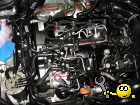
P2263 indicates a problem with the turbocharger's boost pressure performance and occurs in both TDI and TSI engines. The engine control unit (ECU) detects that the actual boost pressure does not match the required performance. The most common cause in TDI engines is carbon buildup on the variable turbine geometry (VTG) vanes.
What does P2263 mean?
The turbocharger (often VTG = variable turbine geometry in TDI engines) controls the boost pressure using adjustable guide vanes. The control unit compares the actual boost pressure with the target value. If the actual boost pressure falls below the required level or if the adjustment mechanism is not responding, the error code P2263 is set. This is often preceded by a malfunctioning VTG mechanism.
Typical symptoms:
- Engine control light is on.
- Loss of power, especially under load.
- Emergency mode
- Jerky acceleration.
- Whistling or hissing sounds.
Most common causes:
- VTG turbine vanes clogged/stuck (most common cause in TDI engines).
- Vacuum booster for the VTG control unit is leaking/defective.
- Faulty N75 boost pressure control valve.
- Leak in the charge air system (hoses, intercooler).
- Turbocharger worn out or damaged.
Diagnosis with VCDS:
-
Autoscan: P2263 in the engine control unit (01 - Engine).
- Measurement block 011 (TDI) or 115 (TSI): Compare desired/actual boost pressure.
- Perform actuator diagnosis for the N75 / VTG valve.
- Check the intercooler system for leaks using a fog machine or soapy water.
- Check the vacuum sensor of the VTG control unit for leaks.


 Bookmarks
 Links
 Garage
 FAQ, Legal Notice & Privacy
 RSS Feed
 Register
 Login