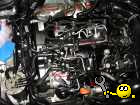
200,000 km with the VW T6 TDI, my practical experience report. What annoyed me, what was great?
When my new VW T6 Transporter arrived in 2018, the idea was clear and had been planned for a long time: a vehicle that combines office, workshop, and leisure activities. Not a camper van in the traditional sense, but a mobile office – a workspace during the day, and a windsurfing transport vehicle on weekends. After approximately 200,000 kilometers, it's time for an honest assessment.
The vehicle.
VW T6 Transporter van, 2.0 TDI with 110 kW (150 hp), 6-speed manual transmission (code SAY), manufactured in 2018. I specifically ordered it with a manual transmission - the DSG might be good, but those who shift themselves have one less worry. Also, during a previous vacation, I spoke with a T6 owner whose vehicle was out of service in the workshop with a DSP issue at around 100,000 km. I really wanted to avoid those kinds of "vacations," which is why I always use the manual gear shift.
For the engine, I opted for a compromise between performance and reliability, which is why the biturbo-TDI engines were excluded from consideration due to reliability concerns (known issues with oil consumption and expensive repairs in case of turbocharger failure). The base equipment was a mix of luxurious and spartan features: two speakers in the front, the "Composition Audio" radio with a meager total power output of approximately 30 watts for all channels combined. Additionally, there was the typical VW "leather" trim, which turned out to be a PU imitation after three years and became porous. Furthermore, it included a tinted rear window and rear side windows. A 2. The battery system, including its charging electronics, was configured simultaneously.
Conversion to a mobile office.
The van was gradually converted. In the back, a bench seat and sleeping platform, as well as a furniture unit from Summermobil, were installed. The radio was supplemented with two rear speakers in the tailgate – the cable routing through the A-pillars and roof lining was more complicated than expected, and the sound quality with the standard radio was rather disappointing. Honestly, I never thought it could be that bad; the front speakers produced a tinny, cheap sound. Bitumen mats used for soundproofing in the doors, side panels, and tailgate provided a noticeable improvement.
A reverse camera with a built-in Wi-Fi hotspot and an app for rear visibility is included, along with the wiring for everything you might need on the road: a second battery, a 230V fuse, a charger, and power outlets located behind the passenger seat.
After a few years, the standard auxiliary heater was upgraded to a parking heater using a Webasto timer and a control unit from Danhag.
The long cargo space is ideal for windsurfing equipment. An important feature, and a deciding factor for the standard "Ocean T6" models: The ability to load equipment under the rear sleeping bench. Masts and sails can be stored lengthwise, while boards can be placed on the rear seats (leaving only one seat available in the back) or on the roof. The high payload capacity and flat loading floor make loading easy - no need to fiddle with folding seats.
A great way to transport them is with simple ratchet straps from boating accessories, combined with heating insulation as a base: the best idea ever. No roof rack, the car doesn't get any taller without a load.
Repairs and wear and tear - a timeline.
AGR pipe (approximately 70,000-80,000 km).
If you smell exhaust fumes inside the car, the EGR pipes are the first things to suspect. These corrugated pipes often crack at the flange or in the corrugated section – in my 150 hp engine, this happened at around 75,000 km. The front pipe (04L 131 521 AR) is easily accessible, while the rear pipe, located near the turbocharger, requires a lift. The corresponding gaskets are 04L 131 547 S and 03L 131 547 P. A detailed repair report can be found in the forum:
https://community.dieselschrauber.org/en/viewtopic.php?t=31088
Spline shaft and sealing ring on the transmission (approximately 100,000 km).
At approximately 100,000 km, the transmission developed a leak on the left driveshaft. The radial seal (oil seal) of the stub shaft was the cause. The repair is feasible if you know how: Remove the driveshaft (avoid prying on the metal ring, it's better to pull it sharply at the inner joint), remove the stub shaft, remove the old seal using a homemade tool. Important: Replace the retaining ring (VAG 7H0 407 297) at the same time - it will get damaged when removed and won't seal properly otherwise. The complete instructions are available here:
https://community.dieselschrauber.org/en/viewtopic.php?t=31276
https://community.dieselschrauber.org/en/viewtopic.php?t=31292
Serpentine belt (120,000 km).
The 1555 type V-ribbed belt was replaced according to the maintenance schedule at 120,000 km. Access is from the right wheel arch. The tensioner deserves special attention - a faulty tensioner can, in the worst case, block the timing belt, which would result in engine damage. Secure with a 4mm drill bit, then move the tensioner with a 16mm wrench. However, the V-ribbed belt has been a constant source of trouble; several tensioners have failed (seized). The noises caused by insufficient tension are frightening, but the experience of driving several thousand kilometers with this issue showed that it was harmless as long as the pulleys and belt guides were okay. Ultimately, a solution was found with a shorter V-ribbed belt, type 1550, which is 5mm shorter. The belt routing with air conditioning is documented here:
https://community.dieselschrauber.org/en/viewtopic.php?t=31640
Front shock absorbers and driveshaft inner joints (approximately 141,000 km).
At 141,000 km, I noticed two problems: The front shock absorbers were defective, and the left inner joint of the driveshaft showed significant wear on the internal teeth. Although the car was primarily driven on long distances, the left stub axle needed to be replaced. The stub axle connects the differential to the driveshaft. A bit early for a van in this price range.
Front engine mounts (approximately 140,000 km).
"Engine load shift during acceleration and deceleration in the 2,000-3,000 RPM range - the front engine mount was increasingly deteriorating, with a gap large enough to fit a whole finger. The correct replacement part is VAG 7H0 199 848 D (for 6-speed and 7-speed DSG, not the G-variant for 5-speed)." After the exchange, the feeling of unease lessened, but it wasn't completely gone.
https://community.dieselschrauber.org/en/viewtopic.php?t=31610
Rear shock absorber.
The rear shock absorbers were also replaced. VW documents in Technical Information Bulletin 2010609/13 that the standard shock absorbers only start to engage with a larger amount of compression for comfort reasons. However, with age, the damping noticeably deteriorated, especially on one side. The replacement is straightforward - tighten the screws while the suspension is compressed, so that the rubber components are not permanently stressed. Tighten to 25 Nm, then 75 Nm, and then another 180 degrees. Below: 150 Nm, then rotate 90 degrees further.
https://community.dieselschrauber.org/en/viewtopic.php?t=31285
Steering play (approximately 150,000 km).
Around 150,000 km, play developed in the steering wheel – 3-4 mm, which was annoying when driving on the highway in ruts. The cause was the interlocking square tubes at the cross joint of the steering shaft in the footwell. A steel retaining ring with an inner diameter of 24 mm, placed on the outer square tube and slightly compressed, eliminated the play. It's not witchcraft, but the steering system isn't something to be tinkered with lightly.
https://community.dieselschrauber.org/en/viewtopic.php?t=31826
Transmission fluid change (approximately 170,000 km).
The first transmission oil change for the SAY transmission: 2.7 liters of CASTROL Transmax Manual V SAE 75W-80 (specification VW G 052 171). The drained oil was dark in color but without any metal shavings - the overall condition of the transmission was better than expected. The fill plug is located at the top rear of the differential; with a little patience, it can be removed without a pump. Important: For transmissions without a fill plug, the reverse gear switch (02T 945 415 P) must be removed, and the oil must be added through a 10 mm hose.
https://community.dieselschrauber.org/en/viewtopic.php?t=31858
https://community.dieselschrauber.org/en/viewtopic.php?t=31287
Rear engine mount (approximately 175,000 km).
The rear engine mount (VAG 7E0 199 849 F) was so worn internally that the metal core within the rubber was almost completely free to move. The damage was only visible when the mount was removed and had likely been present for thousands of kilometers. After replacing the front and rear engine mounts, the vibrations during load changes were significantly reduced, but they are not completely gone. The remaining vibrations likely originate from the right driveshaft or half-shaft.
https://community.dieselschrauber.org/en/viewtopic.php?t=31861
Wipe seal.
A classic problem that dragged on for years: First, the pump leaked (electrical tape wrapped around the suction nozzle provided a temporary fix), then the hose connections. In the end, a piece of silicone tubing, directly attached to the pump nozzle and secured with a cable tie, permanently solved the problem. The pump is accessible through a flap located in the left front wheel well.
https://community.dieselschrauber.org/en/viewtopic.php?t=31644
Genuine leather shift bag.
After the original PU leather imitation developed holes for the third time, each after about three years, a gear stick cover made of genuine leather (actually a BMW replacement part) was installed. The cost was minimal, and its durability has been excellent ever since, and it looks great. The renovation can be completed in an afternoon with hot glue, scissors, and a little patience.
https://community.dieselschrauber.org/en/viewtopic.php?t=31746
Not affected (lucky).
Coolant loss due to cylinder head cracks: The 2.0-TDI engines of the CXEB/CXFA/CXGB/CXHA/CXHB series can develop cracks in the cylinder head, especially the 150 kW versions. The cylinder head has been revised multiple times by the manufacturer (for the CXEB from June 2016, and for the others from October 2017). Fortunately, mine was not affected.
https://community.dieselschrauber.org/en/viewtopic.php?t=29734
Consumption and daily life.
The average fuel consumption in everyday driving is around 6.5 to 7.5 liters - it can be lower on the highway, but higher with a loaded vehicle and roof rack. This is perfectly acceptable for a van of this size. The 150 horsepower is sufficient for relaxed driving, and even with a full load, you won't become an obstacle to traffic. If you want, you can actually drive the car for short periods below 5 liters per 100km, but in that case, you'll be stuck behind trucks on the highway. Why only for short periods? It has been shown that with this driving style, the DPF (Diesel Particulate Filter) no longer regenerates automatically because it doesn't get hot enough. As a result, after a few hundred kilometers, the engine control unit initiates the active regeneration process to burn off the accumulated particulate matter, which consumes a significant amount of fuel in the process. Driving in a very fuel-efficient manner only makes sense if you know that you will later need to accelerate, for example, due to winding roads or other situations where you need to apply more power.
Conclusion after 200,000 km.
The T6 is an honest car. It does what it's built to do: reliably cover miles, offer plenty of space, and even allow for self-repair when necessary. The weaknesses are well-known and mostly manageable: AGR pipes tend to crack early, engine mounts eventually fail, inner joints of the drive shafts wear out, and the interior doesn't live up to the price. The 2.0 TDI engine with the SAY manual transmission runs and runs; the transmission oil still looked good at 170,000 km.
Would I buy it again? Yes. The technology still has room for improvement in terms of reliability, but the practical value is absolutely enormous. Knowing what I know now, I would invest more in soundproofing and a decent radio/speaker system from the beginning. Now, an Android radio from Erisin has been installed, and there are decent speakers in the front: Finally, the sound is what it should always have been. And order a matching accessory bag made of genuine leather at the same time.


 Bookmarks
 Links
Links Garage
 FAQ, Legal Notice & Privacy
 RSS Feed
 Register
 Login
Login